

ARLINGTON, Va. — A brand new workplace consolidating the event and buying of autonomous techniques right into a single entity would be the Navy’s first effort beneath the brand new period of Pentagon acquisition, USNI Information has realized.
The Portfolio Acquisition Government Robotic Autonomous System (PAE RAS) will soak up the event of as much as 66 applications throughout 18 completely different places of work beneath a single acquisition skilled that will report on to the assistant secretary of the Navy for analysis, improvement and acquisition (RDA), in line with a draft model of the consolidation plan reviewed by USNI Information.
“That is our first PAE and they’re shifting,” appearing RDA Jason Potter mentioned Tuesday whereas talking on the American Society of Naval Engineers Expertise, Techniques and Ships convention.

The draft plan from late October follows a Sept. 3 memo in making a deputy assistant secretary for robotics and autonomous techniques. A evaluation to restructure the RAS was led by RDA army deputy Vice Adm. Seiko Okano.
The PAE place will oversee applications that vary from the XL Unmanned Underwater Automobile program, to the rising Modular Assault Floor Craft (MASC), and the swarming small unmanned floor system will nest beneath PAE RAS.
It’s unclear if the PAE might be a army or civilian or when the DASN might be named.
The PAE portfolio might be answerable for about $19 billion in acquisitions throughout the 60 applications over the subsequent 5 years. Three main unmanned aerial techniques — MQ-4 Triton long-range reconnaissance plane, the Marines MQ-9A Reaper drone and the MQ-25A provider tanker — value about $15.3 billion aren’t coated beneath the brand new PAE RAS.
Underneath the draft plan, the primary two main duties for the brand new PAE might be to steer the competitors for MASC and tackle the acquisition duty for Protection Autonomous Warfare Group (DAWG), an effort born from the Replicator Initiative. Each strains have seen a funding increase of $3.6 billion from the Reconciliation Act supplemental invoice.
Congress put aside $2.1 billion for what’s now the MASC program — the Navy’s effort to construct an unmanned vessel that will act as an adjunct journal and a sensor platform for manned ships, superseding the earlier giant and medium unmanned floor car applications. The MASC will notionally carry two 40-foot transport containers and cruise at a crusing pace of 25 knots for as much as 2,500 nautical miles. In parallel, the Military and Navy have developed the containerized MK-70 Typhon launcher that may subject Tomahawk Land Assault Missiles and the Normal Missile household.
DAWG is the brand new acquisition program designed to tackle the mission of the Replicator Initiative that seeks to resolve particular operational issues like a Chinese language amphibious invasion of Taiwan. The Navy has stood up small USV models to check unmanned vessels that may inform the Pentagon’s “hellscape” plan that will swarm aerial, floor and undersea drones to assault an adversary. The Reconciliation Act put aside $1.53 billion for small USVs.
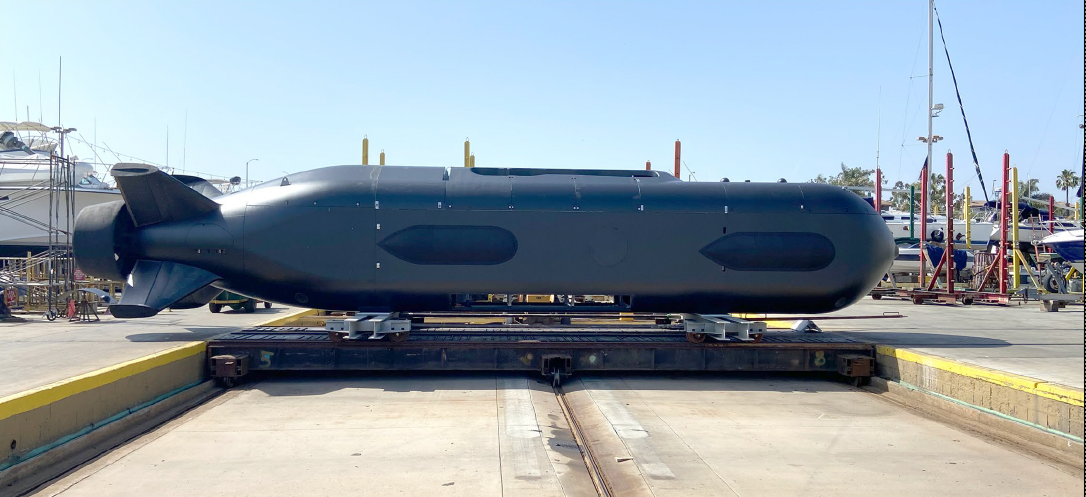
Different early efforts for the PAE embody shifting the Navy away from Boeing’s Orca for the Navy’s XLUUV program and Black Sea’s GARC for the service’s small USV program, discovering a small UAV to be used on guided-missile destroyers and new command and management software program, in line with the draft plan.
The draft PAE RAS plan was assembled forward of Protection Secretary Pete Hegseth’s Nov. 7, “Arsenal of Freedom” speech, which highlighted new reforms for the protection acquisition system and a necessities course of that focuses on pace.
“Pace to supply is now our organizing precept,” Hegseth mentioned. “If our warfighters die or our nation loses as a result of we took too lengthy to get them what we wanted, we now have failed. It’s that easy. The sense of urgency has slipped an excessive amount of, and if you have a look at what we face, we now have to recapture it.”
Source link


