Reactive Power, Stability, and the Silent Path to Blackout
Introduction — voltage collapse happens before blackouts
When ships lose power, crews often focus on engines, breakers, or fuel. In many cases, the first failure occurred electrically, inside the excitation system — long before the blackout.
AVR and excitation failures are dangerous because:
- they are poorly understood
- symptoms are subtle
- alarms are often ignored
- recovery windows are short
What excitation actually does onboard ships
The excitation system:
- controls rotor magnetic field
- determines output voltage
- supplies reactive power
- stabilises parallel operation
Without excitation:
- voltage collapses
- motors stall
- protection trips
- PMS logic destabilises
The diesel engine can be running perfectly — and the ship still blacks out.
AVR operating modes — and why they matter
- Voltage control — maintains terminal voltage
- Reactive droop — enables load sharing
- Excitation limiting — protects rotor from overheating
- Manual mode — emergency operation only
ETO trap:
Manual AVR mode is often misunderstood as a “safe fallback”. In reality, it removes automatic stability control and increases blackout risk if used incorrectly.
🔧 Regulatory anchors (explicit)
IEC 60092-301
Requires:
- stable voltage under varying load
- excitation systems appropriate to generator design
- protection against over-excitation
SOLAS Chapter II-1, Regulation 42
Voltage stability is implicit in the requirement to supply essential services.
A generator producing unstable voltage is not supplying power, even if frequency is correct.
🔻 Real-World Case: MV Dali — Reactive Power and Loss of Control (2024)
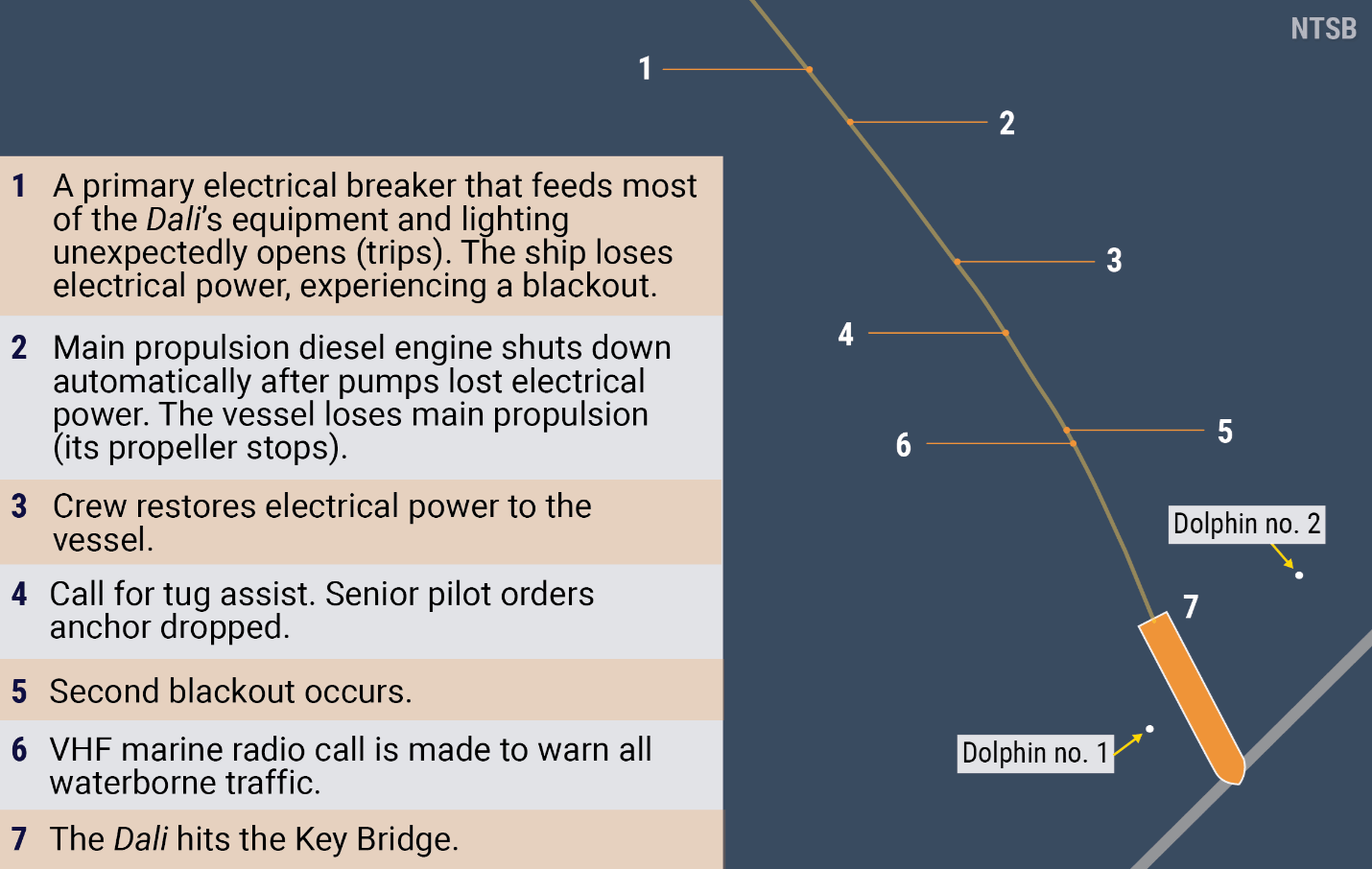
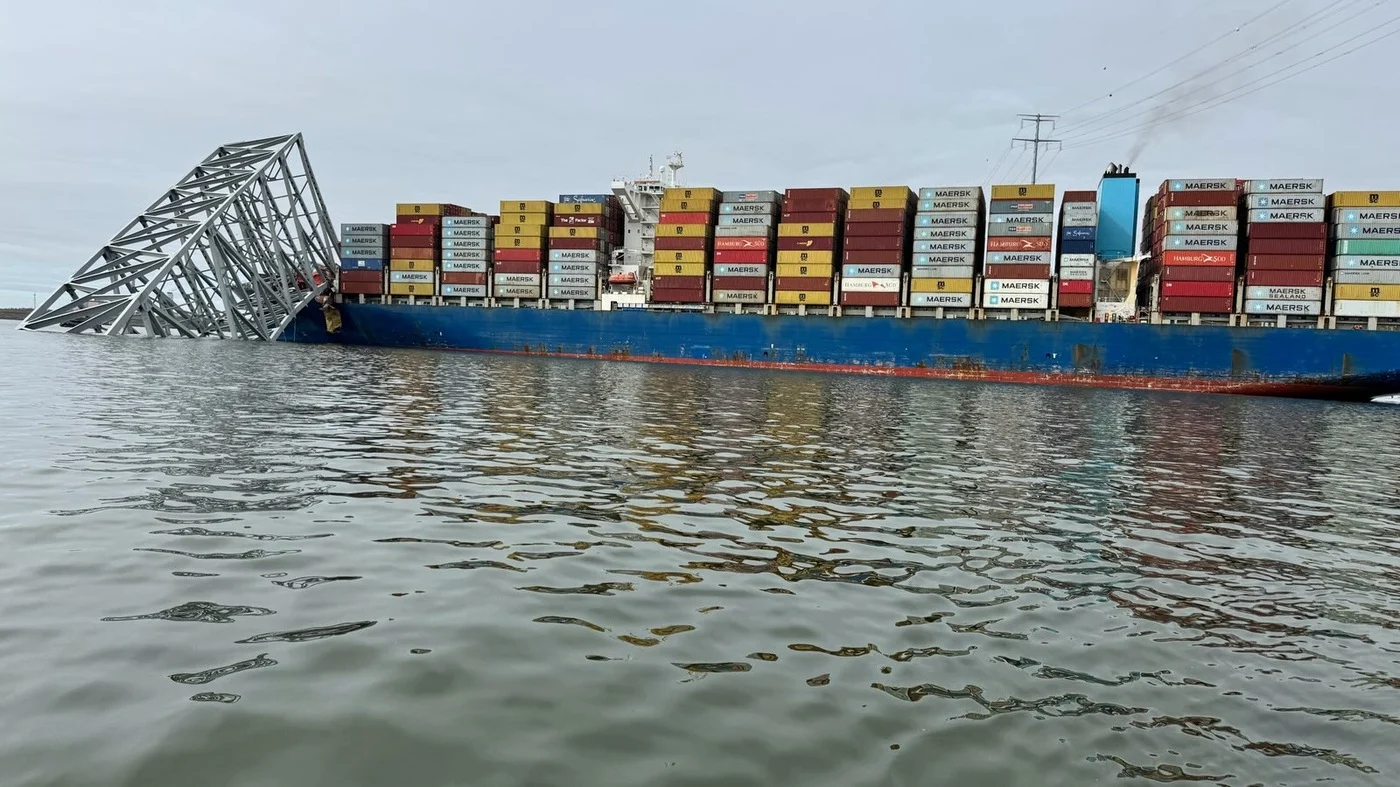
In the MV Dali Baltimore incident, early reporting and expert commentary strongly suggest that electrical instability preceded total blackout.
While final reports are pending, the sequence highlights a known vulnerability:
- reactive power demand spikes during manoeuvring
- bow thrusters and auxiliaries load the system
- excitation reaches limit
- voltage collapses
- protection trips generators
- blackout occurs faster than recovery allows
This pattern has been documented repeatedly across the industry.
Excitation limits — the invisible wall
Generators have hard limits on:
- field current
- rotor temperature
- magnetic saturation
When excitation hits its limit:
- voltage drops suddenly
- AVR cannot respond
- motors draw more current
- collapse accelerates
ETO judgement is recognising how close you are to that wall.
Why excitation problems cascade
Voltage drop causes:
- motors to stall
- current to increase
- protection to trip
- PMS to shed loads too late
- generators to trip sequentially
By the time alarms escalate, the system may already be unrecoverable.
Knowledge to Carry Forward
AVR and excitation systems are not “fine-tuning devices”. They are stability governors.
Many ship blackouts begin not with fuel or engines, but with reactive power exhaustion. When excitation collapses, protection follows — and recovery time may be shorter than stopping distance.
If you don’t actively monitor excitation margins, you are already operating blind.
Tags
ETO, AVR, Excitation Systems, Reactive Power, Voltage Collapse, MV Dali, Marine Blackout, IEC 60092, Ship Electrical Stability