ENGINE ROOM → Auxiliary & Support Systems
System Group: Thermal Energy & Steam Generation
Primary Role: Provision of controlled thermal energy for fuel, heating, and auxiliary processes
Interfaces: Fuel Conditioning · Heating Systems · Cargo Systems · Waste Heat Recovery · Feedwater Treatment
Operational Criticality: Intermittent but High Consequence
Failure Consequence: Thermal shock → tube failure → loss of heating → cascading auxiliary failure
Steam systems do not fail dynamically.
They fail thermally, and usually long after the mistake that caused the failure.
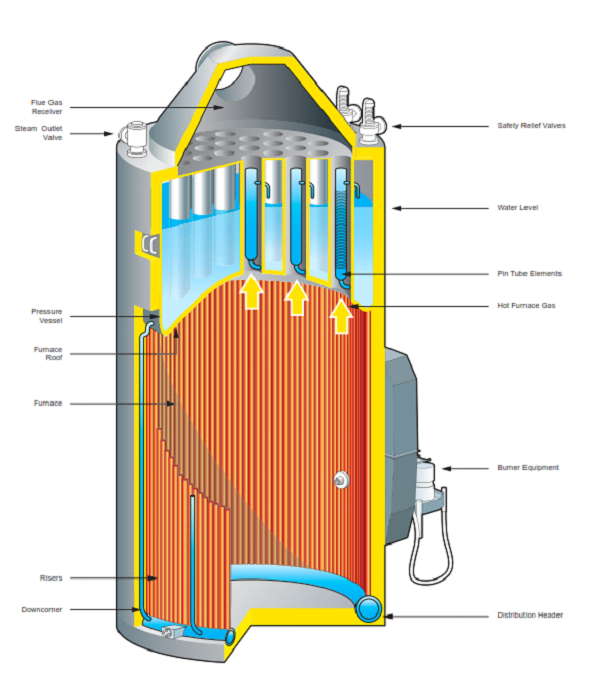
Position in the Plant
Boilers occupy a strange position in modern engine rooms. They are often idle, lightly loaded, or treated as legacy equipment — yet they remain essential for fuel heating, tank warming, domestic services, cargo operations, and emergency redundancy.
From an engineering perspective, steam systems are energy reservoirs, not just heat sources. They store thermal energy, pressure, and chemical potential simultaneously. This makes them inherently dangerous when poorly understood and deceptively forgiving when mistreated — right up until they are not.
Boilers rarely fail because they are old.
They fail because they are operated intermittently without respect for thermal inertia.
Contents
System Purpose and Design Intent
Boiler Types and Operating Philosophy
Steam Generation and Pressure Reality
Feedwater, Chemistry, and Oxygen Control
Thermal Inertia, Standby Operation, and Cycling
Distribution, Traps, and Condensate Return
Control, Safeties, and Human Interaction
Failure Development and Damage Progression
Human Oversight and Engineering Judgement
1. System Purpose and Design Intent
The design intent of marine steam systems is reliable heat delivery, not continuous operation.
Auxiliary boilers are sized to provide sufficient steam for:
- fuel oil heating
- tank warming
- domestic services
- cargo or deck machinery (where applicable)
They are not designed to operate efficiently at very low load, nor to be repeatedly started and stopped without consequence.
Steam systems assume stable operation within defined pressure and temperature bands. Outside these bands, stresses accumulate invisibly.
2. Boiler Types and Operating Philosophy
Most modern vessels employ either:
- oil-fired auxiliary boilers
- exhaust gas economisers (EGE)
- or a combination of both
Oil-fired boilers provide controllable heat independent of main engine load. EGEs recover waste heat but are thermally dependent on propulsion operation.
Both systems suffer when used as on-demand utilities rather than managed thermal plants.
EGEs, in particular, are vulnerable to soot fouling, cold corrosion, and thermal cycling damage during intermittent main engine operation.
3. Steam Generation and Pressure Reality
Steam pressure is not just an output parameter.
It defines boiling behaviour, energy density, and system stress.
Rapid pressure changes induce:
- tube expansion mismatch
- drum stress
- weld fatigue
Low pressure operation is not benign. At reduced pressure, boiling becomes more violent, carryover increases, and water chemistry control becomes more difficult.
A boiler that “holds pressure” while cycling aggressively is accumulating fatigue.
4. Feedwater, Chemistry, and Oxygen Control
Feedwater quality determines boiler life.
Oxygen is the primary enemy. Even small ingress through poorly vented tanks, leaking heaters, or make-up errors accelerates corrosion dramatically.
Water treatment does not eliminate corrosion.
It slows it.
Poor chemistry control results in:
- pitting at tube sheets
- under-deposit corrosion
- scale formation reducing heat transfer
Failures often appear sudden, but the damage has usually been progressing for years.
5. Thermal Inertia, Standby Operation, and Cycling
Thermal inertia is the defining characteristic of steam systems.
Boilers respond slowly to load changes, and they cool even more slowly when shut down. Repeated cycling between cold and hot states induces:
- differential expansion
- gasket creep
- tube distortion
Standby boilers kept “just warm” are often in the most damaging condition. Temperature gradients exist, but pressure is insufficient to stabilise boiling behaviour.
This is where most auxiliary boiler damage originates.
6. Distribution, Traps, and Condensate Return
Steam distribution systems fail quietly.
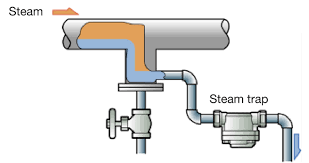
Steam traps stick open or closed. Condensate lines fill with debris. Water hammer develops intermittently, then disappears, masking its cause.
Poor condensate return introduces:
- oxygen
- cold shock
- chemical imbalance
A boiler problem often originates far downstream in the distribution network.
7. Control, Safeties, and Human Interaction
Boiler safeties are robust, but not intelligent.
Low water trips, pressure relief valves, and flame safeguards prevent immediate catastrophe. They do not prevent long-term damage.
Frequent trips indicate operational mismatch, not nuisance faults.
Manual intervention — bypassing safeties, forcing burners, ignoring warm-up sequences — shortens boiler life dramatically.
8. Failure Development and Damage Progression
Boiler failures progress through:
- chemistry imbalance
- fouling and corrosion
- reduced heat transfer
- local overheating
- tube rupture or structural failure
The visible failure is the final event in a long chain.
9. Human Oversight and Engineering Judgement
Engineers protect boilers by:
- minimising thermal cycling
- controlling feedwater chemistry rigorously
- respecting warm-up and cool-down times
A boiler that “still works” may already be structurally compromised.
Judgement preserves boilers. Convenience destroys them.
Relationship to Adjacent Systems and Cascading Effects
Steam system failure propagates into:
- fuel viscosity instability
- tank heating loss
- cargo system shutdown
- increased electrical load from alternatives
Boilers underpin thermal stability across the vessel.