Damen ASD Tug 2713 Fuel Flexible receives class and flag state approval
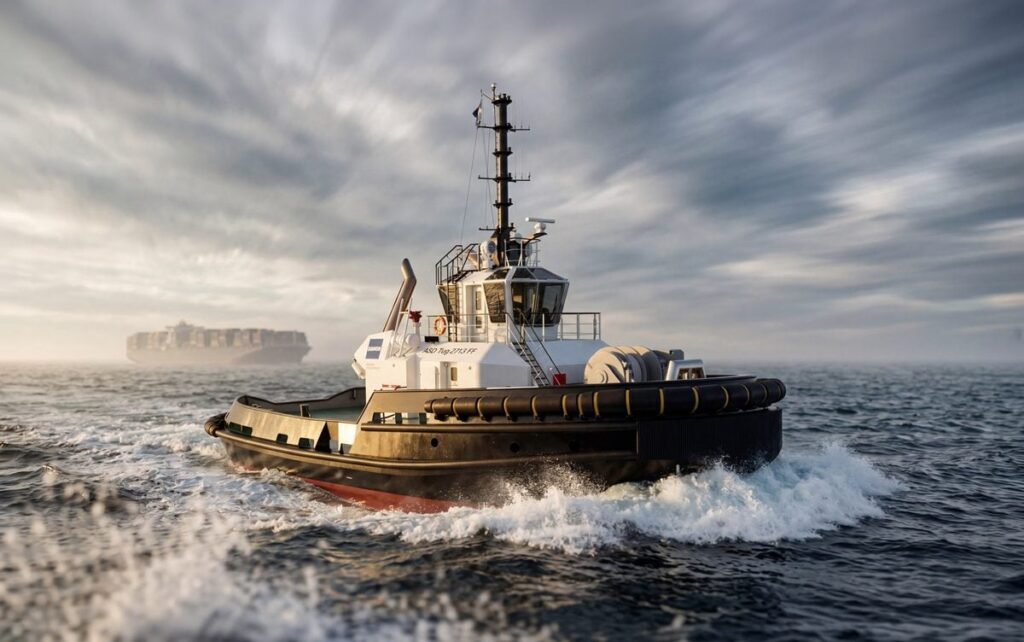
Damen ASD Tug 2713 Fuel Flexible receives class and flag state approval
gCaptain
Total Views: 0
May 20, 2026
Damen Shipyards Group has received class and flag state approval for its
ASD Tug 2713 Fuel Flexible (FF)
to operate on methanol fuel. The approval was issued by Bureau Veritas and the Kingdom of the Netherlands flag state, respectively. It follows the approval in principle (AiP) that Damen received for its design of methanol-powered compact vessels in 2023.
The 27.25 by 12.83 metre ASD Tug 2713 FF is a multi-purpose vessel, designed to perform coastal and harbour operations including (LNG) terminal support, ship handling/berthing (push-pull, escort), oil pollution control and firefighting operations.
Built for today, ready for tomorrow
Damen’s FF Tugs
are built to perform current operations on diesel propulsion, with the possibility to sail on 100% HVO (Hydrotreated Vegetable Oil).
Growth For Estonian Flag Signals Maritime Ambitions of a Nation
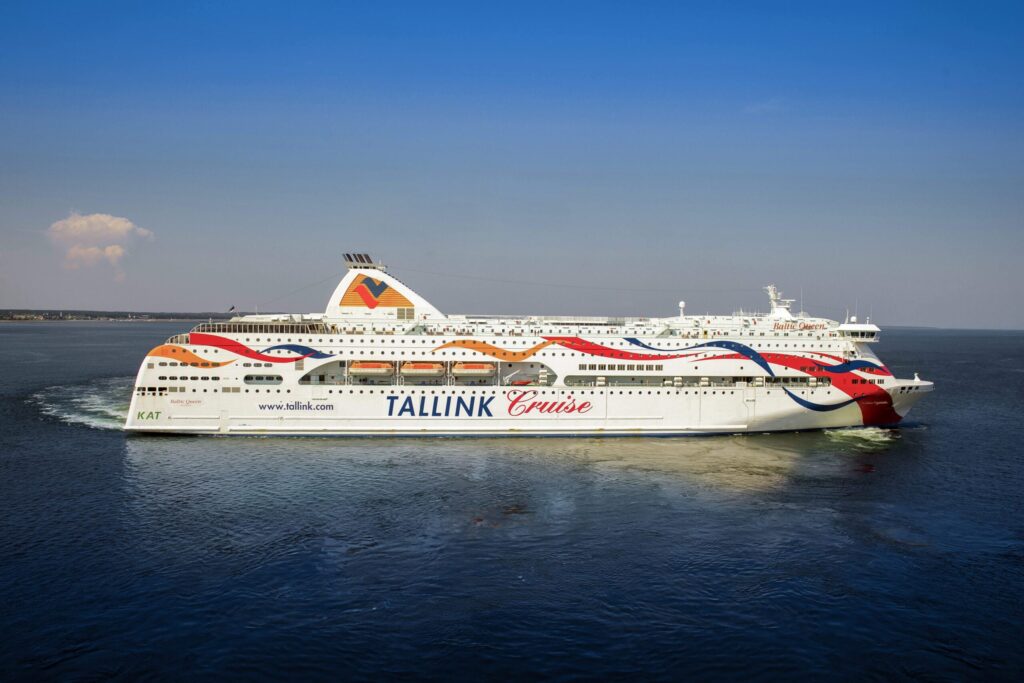
Image: Jony Karlsson (Feelm Creative)
Growth For Estonian Flag Signals Maritime Ambitions of a Nation
gCaptain
Total Views: 1
May 21, 2026
A favourable tax regime, digitally enabled administration and a business culture fostering maritime growth are attracting more – and younger – ships to the Estonian Flag.
Launched in 2020, a comprehensive package of amendments to shipping law has been the basis for successive governments to drive expansion across Estonia’s maritime economy. Through a blend of tax incentives and user-friendly processes, the Estonian Flag has emerged as a key pillar for growth, attracting substantial tonnage in a highly competitive market.
An initiative of the Estonian Transport Administration, the EST Flag is also a brand aimed at increasing visibility of the benefits of flying the Estonian flag, promoting the interests of the Estonian ship register, and strengthening international cooperation across the maritime sector. The Estonian shipping registers comprise two b
Navy Commissions Final Littoral Combat Ship as Controversial Program Comes to an End
USS Cleveland (LCS 31) sits pierside during the ship’s commissioning ceremony in Cleveland, Ohio, May 16, 2026. Navy Photo
Navy Commissions Final Littoral Combat Ship as Controversial Program Comes to an End
Mike Schuler
Total Views: 0
May 19, 2026
The U.S. Navy has commissioned USS Cleveland (LCS 31), officially closing out the
Littoral Combat Ship
program after more than two decades marked by cost overruns, mechanical failures, and shifting mission requirements.
The ceremony took place Friday in Cleveland, Ohio, with Acting Secretary of the Navy Hung Cao praising the crew as the ship entered active service.
“Today we celebrate the sailors who breathe life into this ship,” Cao said during the ceremony.
IMO Adopts First-Ever Global Rules for Autonomous Ships
A conceptual design by Rolls-Royce of an 1,000 TEU unmanned feeder vessel. Image credit: Rolls-Royce
IMO Adopts First-Ever Global Rules for Autonomous Ships
Mike Schuler
Total Views: 0
May 21, 2026
The International Maritime Organization has adopted the world’s first international framework governing autonomous commercial ships, marking a major milestone in shipping’s push toward remotely operated and fully
autonomous vessels
.
The new non-mandatory International Code of Safety for Maritime Autonomous Surface Ships, or MASS Code, was adopted this week during the Maritime Safety Committee’s 111th session in London, according to the IMO.
“IMO has adopted the first-ever MASS Code — a global framework for Maritime Autonomous Surface Ships,” the organization said in a social media post. “A milestone that puts IMO at the forefront of regulating emerging technologies, enabling innovation while keeping safety, accountability and the human element central to shipping.”
The code represents years
IMO and WMU launch handbook on gender mainstreaming in the maritime sector
IMO and WMU launch handbook on gender mainstreaming in the maritime sector
in
International Shipping News
21/05/2026
The World Maritime University (WMU) and the International Maritime Organization (IMO) have released a new Handbook on Gender Mainstreaming in the Maritime Sector, calling for action to address persistent gender inequality across the global maritime industry.
The handbook, authored by WMU Professor Momoko Kitada, was launched on the International Day for Women in Maritime on 18 May. Professor Kitada is also the recipient of the 2026 IMO Gender Equality Award.
The publication is the first of its kind, aimed at closing the gender gap in the maritime sector, where women account for just 1% of the world’s seafaring workforce and hold only 19% of ministerial roles responsible for maritime affairs.
The new handbook was launched as part of an event held at IMO headquarters in London to mark the International Day for Women in Maritime 2026.
A practical tool
The handbook provide
Panama Canal Near Capacity as Hormuz Crisis Drives Surge in U.S. Energy Exports
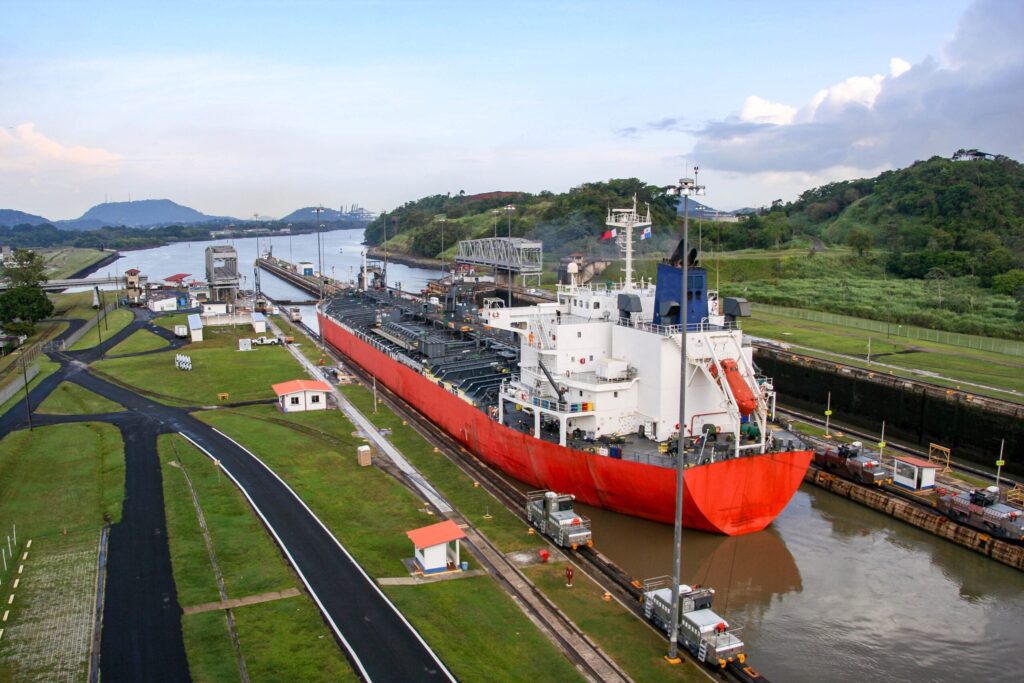
Photo: evenfh / Shutterstock
Panama Canal Near Capacity as Hormuz Crisis Drives Surge in U.S. Energy Exports
Mike Schuler
Total Views: 0
May 21, 2026
Traffic through the
Panama Canal
is climbing sharply as disruption in the Strait of Hormuz drives more U.S. energy exports toward Asia and Pacific markets, pushing the waterway close to full operating capacity just as forecasters warn a potentially severe El Niño could return later this year.
“So far this year, ship transits via the Panama Canal have increased 8% y/y to a daily average of 38, driven by the tanker sector,” said BIMCO Shipping Analysis Manager Filipe Gouveia in the shipping association’s latest “Shipping Number of the Week.”
Transits have surged even higher in recent weeks.
BIMCO
said vessel movements through the canal rose 16% year-on-year over the past five weeks as the Iran war and reduced traffic through the Strait of Hormuz disrupted Persian Gulf exports and boosted demand for U.S.
Hormuz Closure Could Send Oil to $200 and Trigger Global Recession, Wood Mackenzie Warns
Stock Photo: Anatoly Menzhiliy / Shutterstock
Hormuz Closure Could Send Oil to $200 and Trigger Global Recession, Wood Mackenzie Warns
Mike Schuler
Total Views: 0
May 20, 2026
A prolonged closure of the Strait of Hormuz could become the most severe global energy supply shock in decades, with oil prices potentially nearing $200 per barrel in a worst-case scenario, according to new analysis from Wood Mackenzie.
The consultancy said more than 11 million barrels per day of Gulf crude and condensate production remains curtailed, while more than 80 million tonnes per year of LNG supply — roughly 20% of global supply — is still inaccessible to global markets.
“The
Strait of Hormuz
is the most critical chokepoint in global energy markets, and a prolonged closure would become far more than an energy crisis,” said Peter Martin, Wood Mackenzie’s head of economics. “The longer disruption persists, the greater the impact on energy prices, industrial activity, trade flows and global economic growth.
EmissionLink successfully completes FuelEU pooling submissions for over 600 vessels

EmissionLink successfully completes FuelEU pooling submissions for over 600 vessels
in
International Shipping News
21/05/2026
EmissionLink, the integrated emissions management service, says FuelEU compliance has moved beyond regulation to become a commercial optimisation challenge, after completing its first FuelEU Maritime pooling cycle with 90% of shipowners opting to pool.
EmissionLink has supported the compliance process for more than 600 vessels and helped clients navigate one of the most complex new regulatory frameworks facing the shipping industry, through its inaugural pooling submission.
The process was completed without disruption to clients and included the successful resolution of technical and regulatory issues, including complexities around ice-class vessels. This enabled participating companies to meet their obligations while retaining commercial flexibility and avoiding the pressure of last-minute, trader-led decision-making.
The first compliance cycle has already chan
New UAE Pipeline Bypassing Hormuz Now 50% Complete, ADNOC CEO Says
FILE PHOTO: People walk past a logo of Abu Dhabi National Oil Company (ADNOC) during the annual energy industry event Abu Dhabi International Petroleum Exhibition and Conference (ADIPEC) in Abu Dhabi, United Arab Emirates, November 3, 2025. REUTERS/Amr Alfiky/File Photo
New UAE Pipeline Bypassing Hormuz Now 50% Complete, ADNOC CEO Says
Reuters
Total Views: 6357
May 20, 2026
By Yousef Saba and Ahmad Ghaddar
DUBAI, May 20 (Reuters) – A new crude oil pipeline that bypasses the Strait of Hormuz and which the United Arab Emirates began building last year is now 50% complete, the CEO of state oil giant ADNOC, Sultan Al Jaber, said on Wednesday.
Iran has largely kept the waterway critical for global oil and gas supplies shut to all ships apart from its own since the
U.S.-Israeli strikes
in February, sending energy prices and inflation surging, fanning fears of an economic downturn.
The Abu Dhabi Media Office
publicly revealed
the project’s existence for the first time last week, saying the UA
Hormuz Becomes a Holding Queue: Iran’s Toll Regime, Bilateral Carve-Outs, and a Bifurcating Strait
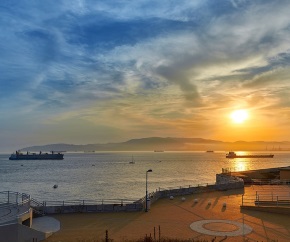
Hormuz Becomes a Holding Queue: Iran’s Toll Regime, Bilateral Carve-Outs, and a Bifurcating Strait
in
International Shipping News
21/05/2026
A
t a Glance
Iran is moving to formalize a state-administered transit-toll regime under the new Persian Gulf Strait Authority (PGSA), with reported per-transit payments of up to $2 million settled in Chinese yuan and Bitcoin transfers to IRGC-linked wallets.
Six India-flagged vessels transited inbound on May 18 as a coordinated cluster following bilateral engagement with Iran, indicating functional safe-passage arrangements outside the coalition framework.
Two near-simultaneous vessel seizures off Fujairah on May 14 followed Iranian warnings to the UAE by 8 to 12 hours, with HUI CHUAN and EDRIS both boarded in the same operational window.
Three IRGC-linked high-speed craft were observed at the stern of the previously struck VLCC BARAKAH on May 15, with the vessel still stationary in the central Strait corridor through May 18.
IRGC small-craft post