IMO MEPC 84: Revisiting The Net Zero Framework
IMO MEPC 84: Revisiting The Net Zero Framework
in
International Shipping News
06/05/2026
The 84th session of the IMO’s Marine Environment Protection Committee (MEPC 84) held extensive discussions on the Net-Zero Framework (NZF). This was the first opportunity to do so following the adjournment of the extraordinary session in October 2025. Although there were divergent positions on key elements such as establishing a fund, MEPC 84 agreed to continue discussions on a revised framework to ensure consensus.
Iranian oil tanker may have evaded US blockade
Iranian oil tanker may have evaded US blockade
in
International Shipping News
06/05/2026
One Iranian oil tanker may have slipped through a US blockade of Persian Gulf shipping, according to TankerTrackers.com, a firm that monitors vessel movements using satellite imagery.
The very large crude carrier Huge, sailing under Iran’s flag, signaled on Sunday that it was off Bali’s coast. The vessel had not appeared on digital ship-tracking systems for months. Samir Madani, co-founder of TankerTrackers.com, said satellite imagery confirmed the vessel’s location near Bali.
US and Iran Closing in on Memorandum to End War, Pakistani Source Says
A map showing the Strait of Hormuz and a 3D printed oil pipeline are seen in this illustration taken March 23, 2026. REUTERS/Dado Ruvic/Illustration
US and Iran Closing in on Memorandum to End War, Pakistani Source Says
Reuters
Total Views: 0
May 6, 2026
May 6 (Reuters) – The United States and Iran are closing in on an agreement on a one-page memorandum to end the war in the Gulf, a source from mediator Pakistan familiar with the negotiations said.
The Pakistani source said a report earlier by the U.S. media outlet Axios on the proposed memorandum was accurate.
Cargo ship attacked within Strait of Hormuz on May 5: UKMTO
Cargo ship attacked within Strait of Hormuz on May 5: UKMTO
in
International Shipping News
06/05/2026
An unidentified cargo ship was attacked by an unknown projectile in the Strait of Hormuz, the UK Maritime Trade Operations said on X, formerly known as Twitter, on May 5.
The incident was reported at 1830 GMT on May 5, UKMTO said. “Environmental impact is unknown,” it said.
French carrier CMA CGM on May 6 confirmed an attack on its vessel called CMA CGM SAN ANTONIO.
“The CMA CGM Group confirms that one of its vessels, the CMA CGM SAN ANTONIO, was the target of an attack yesterday while transiting the Strait of Hormuz, resulting in injuries among crew members and damage to the vessel,” the company told Platts, part of S&P Global Energy, over email.
According to S&P Global Commodities at Sea, the 2800 TEU vessel was destined for Mundra port on India’s west coast, previously having called Khalifa port in the UAE on April 30.
Two other incidents were reported on May 4, the Joint Maritime I
Adnoc Appears to Export Second LNG Shipment Through Hormuz
FILE PHOTO: People walk past a logo of Abu Dhabi National Oil Company (ADNOC) during the annual energy industry event Abu Dhabi International Petroleum Exhibition and Conference (ADIPEC) in Abu Dhabi, United Arab Emirates, November 3, 2025. REUTERS/Amr Alfiky/File Photo
Adnoc Appears to Export Second LNG Shipment Through Hormuz
Bloomberg
Total Views: 1
May 6, 2026
By Stephen Stapczynski
May 6, 2026 (Bloomberg) –Abu Dhabi National Oil Co. appears to have been able to export a second liquefied natural gas shipment through the Strait of Hormuz, according to ship-tracking data compiled by Bloomberg, even as the Iran war halts most traffic.
The
Mraweh
tanker, which is owned by Adnoc, was seen loaded with a cargo near northern Indonesia on Wednesday, with Japan listed as its next destination, after not transmitting a location for over two weeks, shipping data shows.
Ten ships transit Strait of Hormuz after US announces ship escort plan: CAS
Ten ships transit Strait of Hormuz after US announces ship escort plan: CAS
in
International Shipping News
06/05/2026
Ten ships used the Strait of Hormuz on May 4 after the US military announced “Operation Project Freedom” to guide ships through the critical passageway that has been essentially blocked by Iran for weeks, S&P Global Commodities at Sea said in a May 5 report.
The traffic, up from nine ships May 3, consisted of four landing craft, one cable layer, two Iran-linked general cargo ships, one limestone carrier, one China-owned container ship, and a US-sanctioned Iran Handy gas carrier, CAS said.
The Nooh Gas LPG tanker, sanctioned by the US, was among the seven ships that exited the Strait of Hormuz on May 4, CAS said.
The US started its Operation Project Freedom on May 4, with US Central Command reporting on X that two US-flagged ships were escorted through the strait by US forces.
A.P. Moller-Maersk said in a statement that the Alliance Fairfax, one of the US-flagged car car
France Moves Aircraft Carrier to Red Sea With Eye on Hormuz Mission
French aircraft carrier Charles De Gaulle departs from Souda Bay, on the island of Crete, Greece, April 7, 2026. REUTERS/Stefanos Rapanis
France Moves Aircraft Carrier to Red Sea With Eye on Hormuz Mission
Reuters
Total Views: 0
May 6, 2026
PARIS, May 6 (Reuters) – France on Wednesday deployed its carrier strike group to the Red Sea as part of planning for a potential mission to secure the
Strait of Hormuz
, urging Washington and Tehran to consider the proposal given the global economic impact of their competing blockades.
Fresh exchanges of fire on Monday underscored the stakes as the U.S. and Iran struggle for control of the narrow waterway, a vital artery for global energy and trade, shaking a fragile four-week-old truce and reinforcing rival maritime blockades.
“The reason why we must make a renewed effort today is simply that the blockade of Hormuz continues, the damage to the world’s economy is therefore becoming more and more pronounced, and the risk of a prolongation of hostili
The illusion of reopening: What if Iran maintains control?
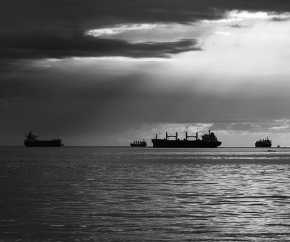
The illusion of reopening: What if Iran maintains control?
in
International Shipping News
07/05/2026
T
o restore flows to pre-conflict levels, a full reopening of the Strait of Hormuz must occur without Iranian-imposed conditions on the freedom of vessel movement. This remains unlikely under current dynamics. If Iran retains operational control, transit volumes may increase from current levels but will fall short of full normalization.
Market & Trading Calls
A full reopening of the Strait of Hormuz requires unconditional access.
LR: Orderbook growth and significant developments in reducing methane slip highlight LNG’s role in maritime decarbonization
LR: Orderbook growth and significant developments in reducing methane slip highlight LNG’s role in maritime decarbonization
in
International Shipping News
07/05/2026
A
new edition of Fuel for thought: LNG sets out how LNG continues to offer a competitive compliance pathway as EU and IMO regulations tighten.
Lloyd’s Register (LR) has released its latest Fuel for thought: LNG report, offering a refreshed and data-driven assessment of LNG’s evolving role as a mature and significant fuel in transition for the shipping industry.
As of March 2026, the dual-fuel LNG fleet has reached 1,665 vessels, with an additional 982 on order — expanding the gas-fuelled fleet. Although recent developments may have created uncertainty that has impacted investment in alternative fuels, LNG continues to be the key alternative fuel in the existing orderbook.
Growth is being driven particularly by the container sector, which is on course to more than double its LNG capable fleet, while cruise, tanker and PCC/R
BIMCO Warns Abrupt ‘Project Freedom’ Pause Complicates Hormuz Risk Calculus
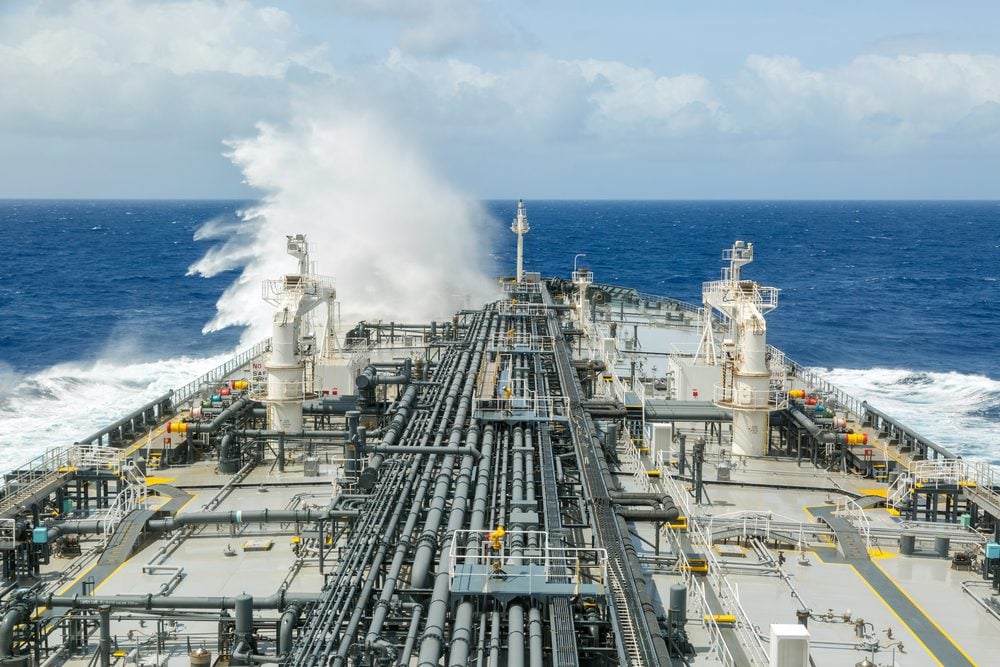
Photo: Anatoly Menzhiliy/Shutterstock
BIMCO Warns Abrupt ‘Project Freedom’ Pause Complicates Hormuz Risk Calculus
Mike Schuler
Total Views: 0
May 6, 2026
The world’s largest shipping association said the Trump administration’s
abrupt suspension
of “Project Freedom” has injected fresh uncertainty into an already volatile operating environment for commercial vessels trapped inside the Persian Gulf.
In comments to gCaptain, BIMCO Chief Safety & Security Officer Jakob Larsen said the short-lived U.S. effort briefly enabled a few U.S.-flagged of ships to exit safely, but emphasized that transits through the Strait of Hormuz without coordination with Iran still carried “significant risk.”
“Changes announced at short notice or changes that are surprising, such as the sudden suspension of ‘Project Freedom’, are a challenge for shipowners attempting to assess the risks and planning for leaving the Persian Gulf,” Larsen said.
Despite the ongoing disruption, Larsen said BIMCO members report that