U.S. Marines Board Iranian Tanker in Gulf of Oman
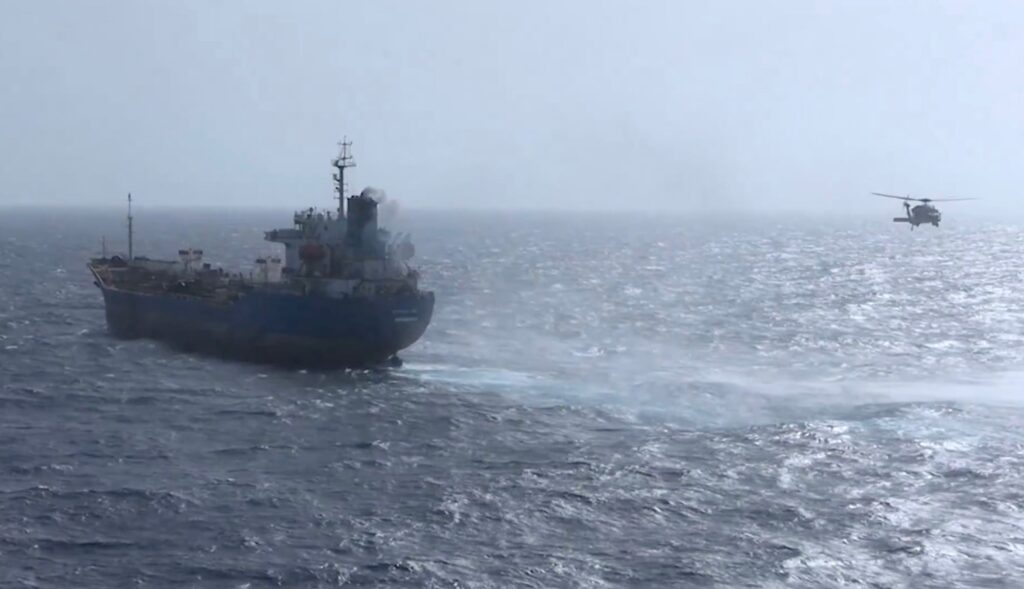
An Iranian-flagged oil tanker suspected of violating the U.S. blockade is seen in the Gulf of Oman as a U.S. military helicopter operates nearby during a CENTCOM interdiction operation.
Heidmar Maritime Holdings Corp. Grows Managed Fleet With Five Strategic Crude Tanker Additions Amid Record Market Conditions
Grows Managed Fleet With Five Strategic Crude Tanker Additions Amid Record Market Conditions
in
International Shipping News
21/05/2026
Heidmar Maritime Holdings Corp. announces the addition of five vessels to its commercially managed fleet, further strengthening its position as a leading commercial and pool management operator in the global crude tanker sector.
The Company has expanded its commercially managed fleet with the following additions:
● One state-of-the-art eco-design newbuilding Suezmax tanker, built in 2026
● Two Suezmax tankers, built in 2009 and 2013, respectively
● One VLCC tanker, built in 2006
● One MR1, built in 2006
The fleet additions come at a pivotal and highly favorable moment for the crude tanker sector. The closure of the Strait of Hormuz following the events of late February 2026 triggered an unprecedented dislocation in crude tanker markets, with VLCC earnings reaching a record $423,736 per day in early March before normalizing as trade flows adjusted.
Inside Iran’s Expanding Hormuz Transit System: Checkpoints, Diplomatic Deals and Passage Fees
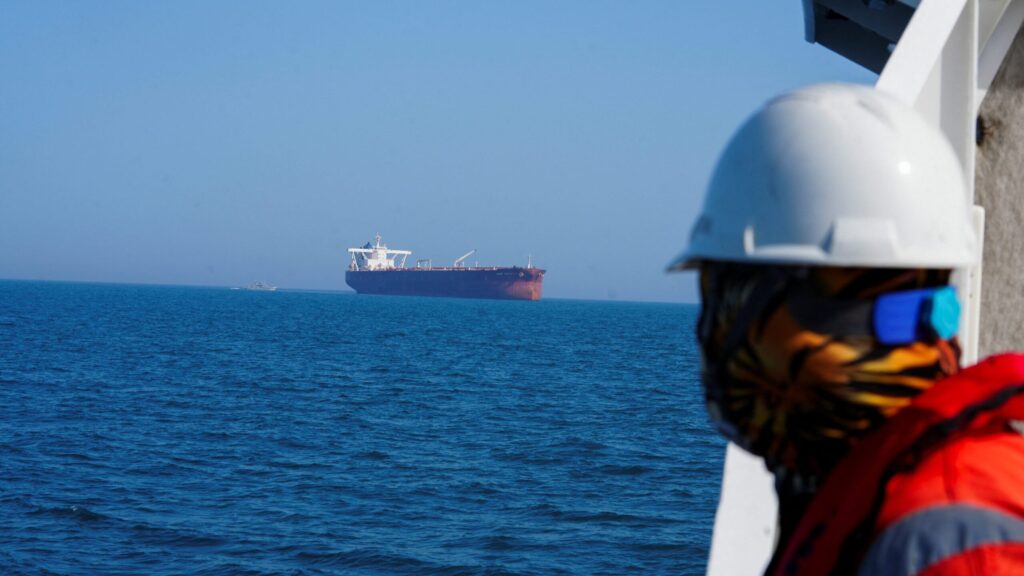
The Malta-flagged tanker Agios Fanourios I, an oil tanker that sailed through the Strait of Hormuz, arrives in Iraq’s territorial waters off Basra,Iraq April 17, 2026. REUTERS/Mohammed Aty
Inside Iran’s Expanding Hormuz Transit System: Checkpoints, Diplomatic Deals and Passage Fees
Reuters
Total Views: 0
May 20, 2026
DUBAI, May 20 (Reuters) – The tanker crew gathered their courage and carefully navigated along a route designated by Iran, hugging the coastline and maneuvering their hulking vessel between island checkpoints through the
Strait of Hormuz
.
The 330-meter-long
Agios Fanourios I
, laden with Iraqi crude oil and bound for Vietnam, had been bottled up off the coast of Dubai since late April. But on May 10 it set off for the strait after a direct deal with Iran overseen by Iraq’s prime minister.
Iran’s orders to the tanker were part of a complex, multi-tiered mechanism that the country has deployed for clearing vessels through the Strait of Hormuz.
South Korean, Chinese Supertankers Attempt Strait of Hormuz Exit
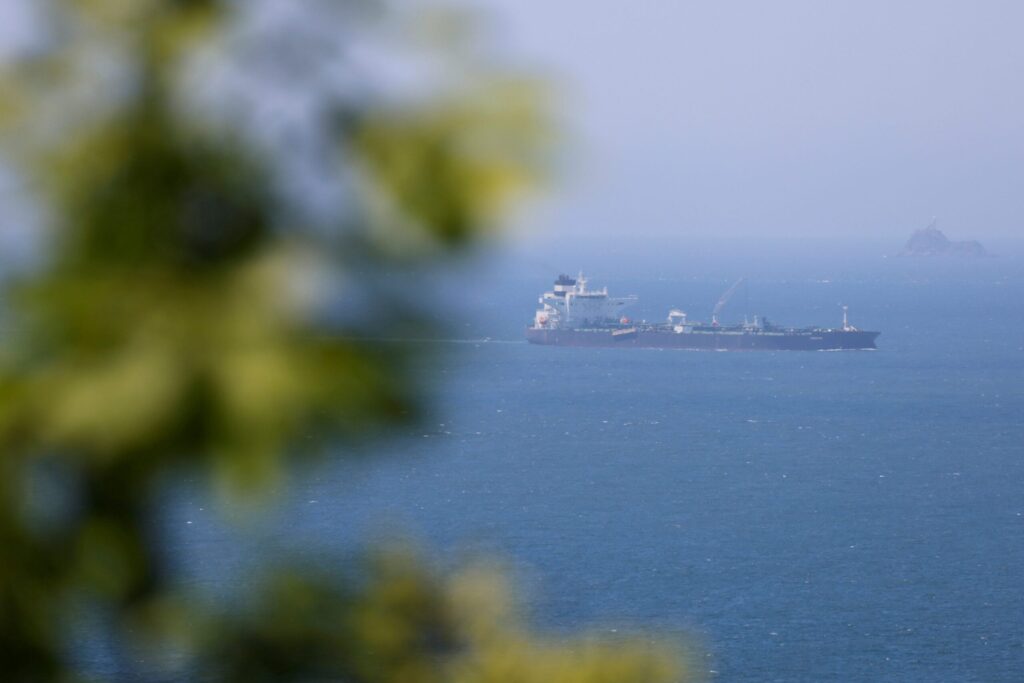
The crude oil tanker Odessa, carrying UAE crude after passing through the Strait of Hormuz with its Automatic Identification System transponder turned off, navigates the waters at Daesan port, where it is expected to discharge crude oil, in Seosan, South Korea, May 8, 2026. REUTERS/Kim Soo-hyeon
South Korean, Chinese Supertankers Attempt Strait of Hormuz Exit
Bloomberg
Total Views: 0
May 20, 2026
By Weilun Soon
May 20, 2026 (Bloomberg) –A South Korean-flagged supertanker appears to be attempting to transit the Strait of Hormuz, which, if successful, would be the first crossing of such a vessel from the East Asian nation.
The
Universal Winner
, laden with Kuwaiti crude, began signaling Wednesday morning that it was in the waterway, just south of Iran’s Larak Island that sits along a Tehran-approved route for Hormuz transits, ship-tracking data show.
The very large crude carrier is owned by Seoul-based HMM Co. and is signaling Ulsan in South Korea as its destination.
UK Opens Door to Diesel and Jet Fuel Made From Russian Crude
Stock Photo: SOMKIET POOMSIRIPAIBOON / Shutterstock
UK Opens Door to Diesel and Jet Fuel Made From Russian Crude
Mike Schuler
Total Views: 0
May 20, 2026
The UK government has quietly loosened part of its Russia sanctions regime, issuing a new general trade licence that allows imports and related trade involving diesel and jet fuel refined in third countries from Russian crude oil.
The new authorization, published Tuesday by the UK Department for Business and Trade, creates a standing exemption to restrictions that had targeted so-called “laundromat refinery” trade flows—where Russian crude is processed abroad and re-exported as refined fuels.
The license took effect Wednesday and is of indefinite duration.
Under the license, prohibitions covering Russian-origin processed oil products will no longer apply to diesel (under commodity codes 2710 19 42 and 2710 19 44) and Jet fuel (under commodity code 2710 19 21).
The authorization applies only when the fuels are refined in a third countr
DNK launches first-of-its-kind programme to protect vessels from electronic signal interference
DNK launches first-of-its-kind programme to protect vessels from electronic signal interference
in
International Shipping News
21/05/2026
DNK, Norway’s leading war risk mutual insurance provider, has launched a programme to offer members advanced systems to protect against the growing threat of Global Navigation Satellite System (GNSS) signal interference. This industry-first programme allows members to select among vendors specialising in A-PNT services to lower premiums and provide secure, accurate and reliable positioning, navigation and timing data.
According to DNK’s CEO Svein Ringbakken, the programme is consistent with DNK’s mission to utilise digital technologies to provide comprehensive war risk insurance services for Norwegian-owned or controlled vessels and mobile units, helping to safeguard assets from war, terror, piracy, and cyberattacks.
“Over the past five years, we have seen a sharp in increase in GNSS interference, especially in the Black Sea, the Baltic Sea and more
Shipping Industry Issues Stark New Hormuz Transit Guidance as Risks Mount
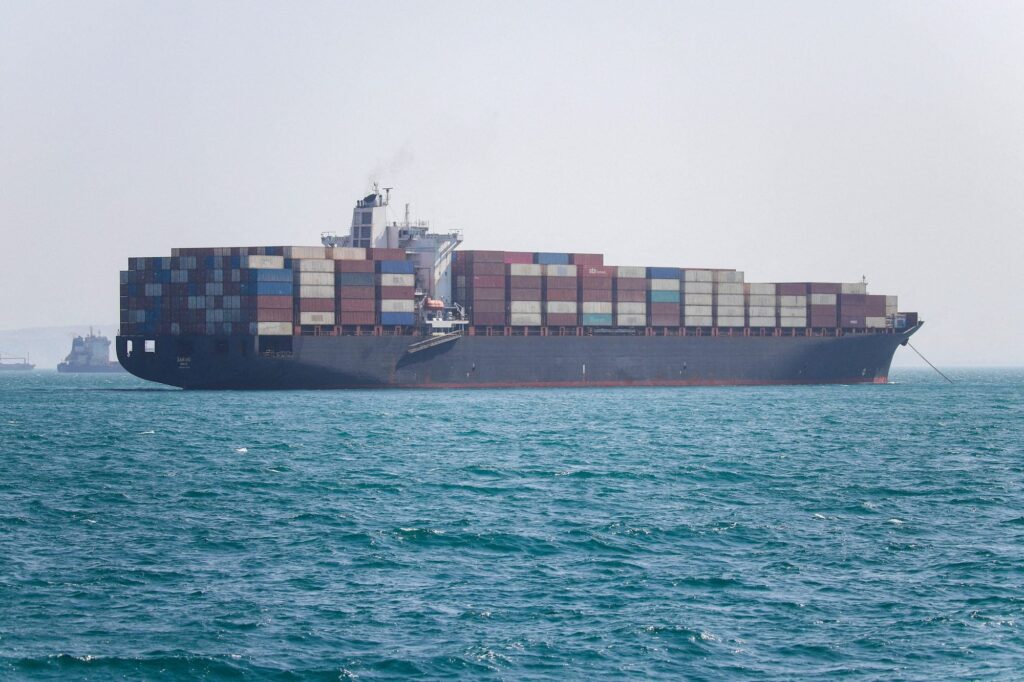
Vessels in the Strait of Hormuz near Bandar Abbas, Iran, May 4, 2026. Amirhosein Khorgooi/ISNA/WANA (West Asia News Agency) via REUTERS
Shipping Industry Issues Stark New Hormuz Transit Guidance as Risks Mount
Mike Schuler
Total Views: 0
May 20, 2026
The global shipping industry has released sweeping new guidance for vessels transiting the
Strait of Hormuz
, warning that even if the waterway remains technically open, conditions inside the chokepoint may still be too dangerous for safe navigation.
The
22-page advisory
, issued jointly by major industry groups including BIMCO, International Chamber of Shipping, INTERTANKO, OCIMF, INTERCARGO, and IMCA, paints one of the clearest pictures yet of the deteriorating operational environment facing merchant ships in and around the Strait of Hormuz.
The document warns that vessels may face a “high workload and high-stress operating environment” where kinetic threats, electronic warfare, heavy congestion, mines, drones, AIS spoofing, and navigati
Damen ASD Tug 2713 Fuel Flexible receives class and flag state approval
Damen ASD Tug 2713 Fuel Flexible receives class and flag state approval
gCaptain
Total Views: 0
May 20, 2026
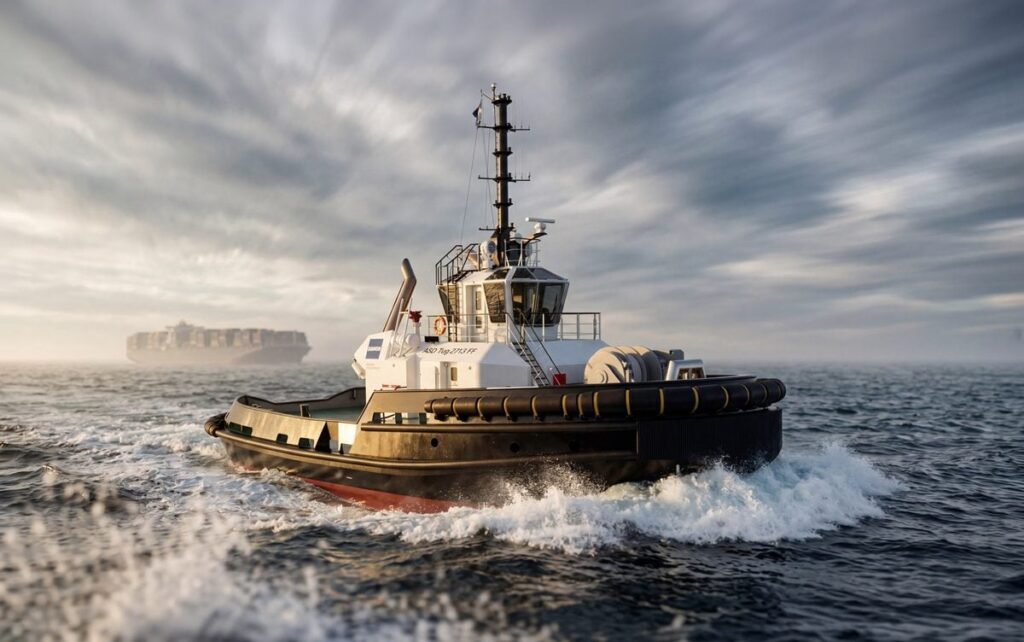
Damen Shipyards Group has received class and flag state approval for its
ASD Tug 2713 Fuel Flexible (FF)
to operate on methanol fuel. The approval was issued by Bureau Veritas and the Kingdom of the Netherlands flag state, respectively. It follows the approval in principle (AiP) that Damen received for its design of methanol-powered compact vessels in 2023.
The 27.25 by 12.83 metre ASD Tug 2713 FF is a multi-purpose vessel, designed to perform coastal and harbour operations including (LNG) terminal support, ship handling/berthing (push-pull, escort), oil pollution control and firefighting operations.
Built for today, ready for tomorrow
Damen’s FF Tugs
are built to perform current operations on diesel propulsion, with the possibility to sail on 100% HVO (Hydrotreated Vegetable Oil).
Navy Commissions Final Littoral Combat Ship as Controversial Program Comes to an End
USS Cleveland (LCS 31) sits pierside during the ship’s commissioning ceremony in Cleveland, Ohio, May 16, 2026. Navy Photo
Navy Commissions Final Littoral Combat Ship as Controversial Program Comes to an End
Mike Schuler
Total Views: 0
May 19, 2026
The U.S. Navy has commissioned USS Cleveland (LCS 31), officially closing out the
Littoral Combat Ship
program after more than two decades marked by cost overruns, mechanical failures, and shifting mission requirements.
The ceremony took place Friday in Cleveland, Ohio, with Acting Secretary of the Navy Hung Cao praising the crew as the ship entered active service.
“Today we celebrate the sailors who breathe life into this ship,” Cao said during the ceremony.
IMO Adopts First-Ever Global Rules for Autonomous Ships
A conceptual design by Rolls-Royce of an 1,000 TEU unmanned feeder vessel. Image credit: Rolls-Royce
IMO Adopts First-Ever Global Rules for Autonomous Ships
Mike Schuler
Total Views: 0
May 21, 2026
The International Maritime Organization has adopted the world’s first international framework governing autonomous commercial ships, marking a major milestone in shipping’s push toward remotely operated and fully
autonomous vessels
.
The new non-mandatory International Code of Safety for Maritime Autonomous Surface Ships, or MASS Code, was adopted this week during the Maritime Safety Committee’s 111th session in London, according to the IMO.
“IMO has adopted the first-ever MASS Code — a global framework for Maritime Autonomous Surface Ships,” the organization said in a social media post. “A milestone that puts IMO at the forefront of regulating emerging technologies, enabling innovation while keeping safety, accountability and the human element central to shipping.”
The code represents years