Australia Bans Liberian-Flagged Bulker From Ports Amid Crackdown on Crew Exploitation
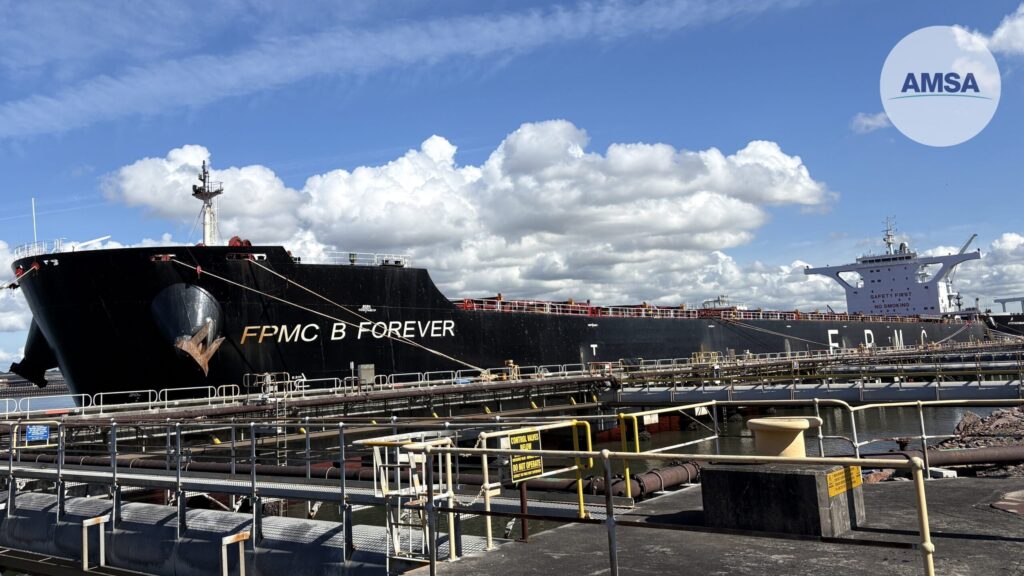
Liberia-flagged tanker FPMC B Forever at the Port of Newcastle, Australia, where inspectors from the Australian Maritime Safety Authority detained the vessel after discovering crew wage violations and unlawful charges for potable water. Photo courtesy AMSA.
Australia Bans Liberian-Flagged Bulker From Ports Amid Crackdown on Crew Exploitation
Mike Schuler
Total Views: 0
May 7, 2026
Australia has banned another foreign-operated ship from its ports after inspectors discovered seafarers had been underpaid and unlawfully charged for drinking water, escalating a widening crackdown on labor abuses in global shipping.
The Australian Maritime Safety Authority (
AMSA
) said the Liberia-flagged bulk carrier
FPMC B Forever
, operated by Taiwan-based Formosa Plastics Marine Corporation, was detained in the Port of Newcastle on April 23 following a port state control inspection that uncovered multiple breaches of the Maritime Labour Convention (MLC).
Inspectors found the crew had been underpaid by n
Oil Shock Far From Over: Energy Giants Warn Global Fuel Supplies May Stay Tight for Months After Iran Deal
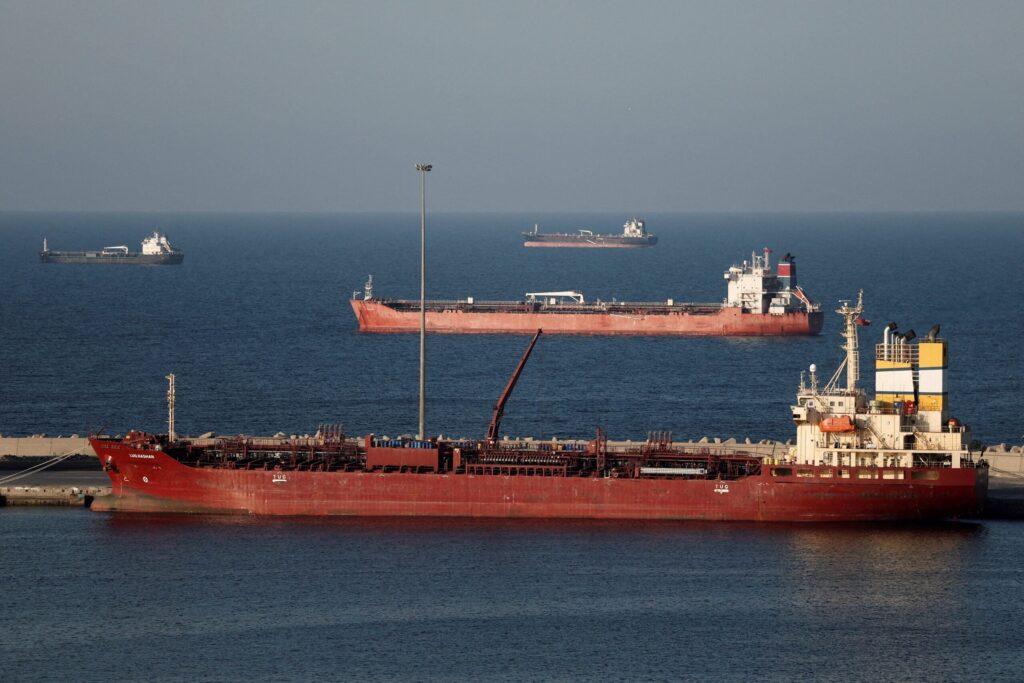
Luojiashan tanker sits anchored in Muscat, as Iran vows to close the Strait of Hormuz, amid the U.S.-Israeli conflict with Iran, in Muscat, Oman, March 7, 2026. REUTERS/Benoit Tessier
Oil Shock Far From Over: Energy Giants Warn Global Fuel Supplies May Stay Tight for Months After Iran Deal
Reuters
Total Views: 0
May 7, 2026
LONDON, May 6 (Reuters) – Oil supplies are set to tighten further in coming weeks even if the U.S. and Iran agree on a peace deal to end their
war
because it will take weeks for oil shipments to resume from the Middle East Gulf and reach refiners worldwide – so oil companies will continue to deplete storage tanks to meet peak summer demand.
The world has used temporary buffers – commercial stockpiles, oil in transit or held in storage at sea and emergency reserves – to offset the shock from the war in the Middle East.
Odfjell SE 1Q26 results: Solid operational performance amid market uncertainty
Odfjell SE 1Q26 results: Solid operational performance amid market uncertainty
in
International Shipping News
07/05/2026
Highlights – 1Q26
Odfjell’s strong safety performance continued amid a more challenging environment.
Four vessels are currently inside the Strait of Hormuz, one owned and three time chartered. All crew members are safe, and the shore team remains in close contact with each vessel to ensure their continued security.
Time charter earnings ended at USD 167 million, compared to USD 168 million in 4Q25.
TCE per day was USD 27,232 versus USD 27,978 in 4Q25. Weaker earnings also reflect initial negative effects from the conflict in the Middle East Gulf, including increased ballasting, rerouting, and higher provisioning and insurance costs.
EBIT of USD 46 million, compared to USD 53 million in 4Q25.
Net result contribution from Odfjell Terminals of USD 2.3 million, versus USD 1.8 million in 4Q25.
Net result of USD 32 million, compared to USD 38 million in the previous quarte
S. Korea: Foreign ministry rejects Trump’s claim over Korean ship sailing alone in Hormuz
Korea: Foreign ministry rejects Trump’s claim over Korean ship sailing alone in Hormuz
in
International Shipping News
07/05/2026
The Ministry of Foreign Affairs on Thursday rebutted U.S. President Donald Trump’s assertion that a Korean-operated vessel was attacked as it was acting on its own without U.S. protection in the Strait of Hormuz — a focal point of the ongoing war between the U.S.
Seoul National University, San Diego State launch shipbuilding program to train US workforce
Seoul National University, San Diego State launch shipbuilding program to train US workforce
in
Shipbuilding News
07/05/2026
As part of U.S.-Korea shipbuilding cooperation, a “naval architecture” major is expected to be newly established at a university in San Diego as early as early next year, and a plan to conduct credit exchanges with the Seoul National University Department of Naval Architecture and Ocean Engineering is being pursued, sources said on the 7th. Seoul National University would train personnel for the U.S. shipbuilding industry.
Seoul National University’s Department of Naval Architecture and Ocean Engineering is known as Korea’s top program for training shipbuilding professionals.
Trump Administration Launches Nuclear-Powered Shipping Push to Revive U.S. Maritime Industry
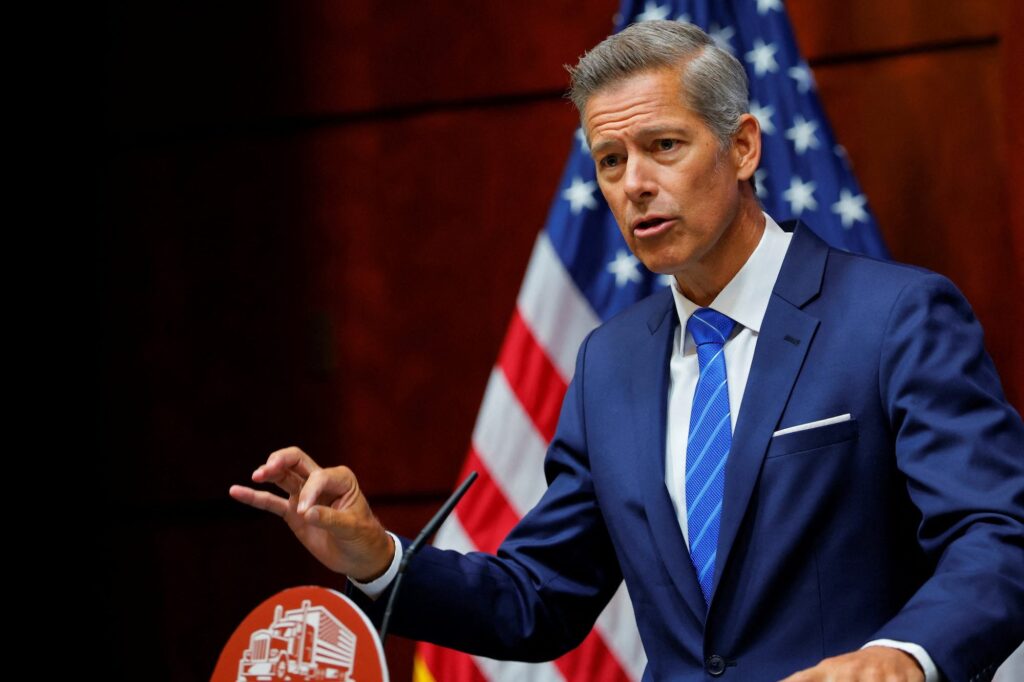
Transportation Secretary Sean Duffy a speaks during a press conference at the U.S. Department of Transportation in Washington, D.C., U.S., August 26, 2025. REUTERS/Brian Snyder
Trump Administration Launches Nuclear-Powered Shipping Push to Revive U.S.
House Labor Caucus Joins Growing Backlash Against Trump’s Jones Act Waiver Extension
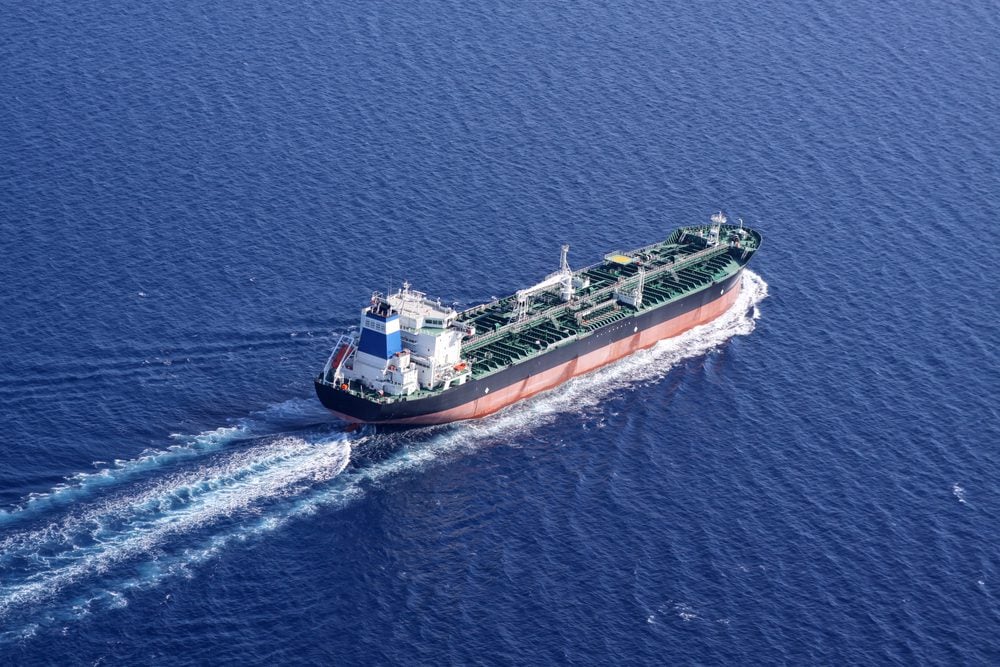
Stock Photo: Igor Karasi / Shutterstock
House Labor Caucus Joins Growing Backlash Against Trump’s Jones Act Waiver Extension
Mike Schuler
Total Views: 0
May 7, 2026
Opposition to the Trump administration’s sweeping
Jones Act
waiver extension is continuing to widen, with top House labor lawmakers now joining a growing coalition of maritime unions, domestic operators, and industry groups warning the policy is undermining the U.S. shipping industry while failing to lower fuel prices.
In a statement released Thursday, Congressional Labor Caucus Co-Chairs Donald Norcross, Mark Pocan, Steven Horsford, and Debbie Dingell blasted the administration’s decision to extend the emergency waiver another 90 days.
“We stand with American mariners who protect our nation’s industrial and shipping capacity,” the lawmakers said. “Their mission is both an economic and national security imperative.”
The waiver, first introduced in March and now
extended
through mid-August, allows foreign-flag vessels to tra
Aframax Values and Earnings Reach Record Highs
Aframax Values and Earnings Reach Record Highs
in
International Shipping News
08/05/2026
Fixed age values for eight-year-old Aframaxes stand at USD 75.17 mil, the highest levels ever seen, compared to USD 53.08 this time last year, equating to an increase of c.42%. This increase in values has largely been driven by a surge in earnings.
One-year VV spot Aframax TCEs have been hovering around all-time highs, having reached a peak of 158,000 USD/day and at the time of writing is 116, 429 USD/day. The TC market also follows a similar pattern.
Tight gas supply drives 27% jump in coal shipments to Japan, Korea and the EU
Tight gas supply drives 27% jump in coal shipments to Japan, Korea and the EU
in
Dry Bulk Market
,
International Shipping News
08/05/2026
“I
n April 2026, coal shipments to Japan, South Korea and the EU jumped 27% y/y as these countries seek alternative energy supplies to gas to meet their electricity demand. The closure of the Strait of Hormuz has disrupted LNG shipments out of the Persian Gulf and has contributed to an 8% y/y drop in global seaborne LNG shipments in April,” says Filipe Gouveia, Shipping Analysis Manager at BIMCO.
Coal shipments to Japan, South Korea and the EU typically slow down in April and May. This is tied to a seasonal decrease in electricity generation in Japan and South Korea due to lower demand for heating.
VLCC 5Y Tonnage Now Trades Above Newbuild
VLCC 5Y Tonnage Now Trades Above Newbuild
in
International Shipping News
08/05/2026
O
ur Tanker Market Monitor this week reviews developments at the end of April, focusing on the ongoing disruption in the Strait as the war-driven deadlock continues unresolved for over 60 days.
We shift our attention to the Atlantic market, where the US Gulf (USG) basin is sending strong signals of increased oil exports to the Far East. Ballasters are moving there aggressively, outpacing laden tonnage. The spotlight now turns to asset price reactions, as market conditions are being compared with major historical oil shocks, with IEA commentary indicating the current disruption is larger in scale than previous major supply disruptions.
Spotlight | Asset Benchmark Assessments — NB vs 5Y & NB vs Resale
We take a closer look at the evolution of ship price assessment in the crude carrier segment.