US, Philippines Deploy Anti-Ship Missile System During War Games
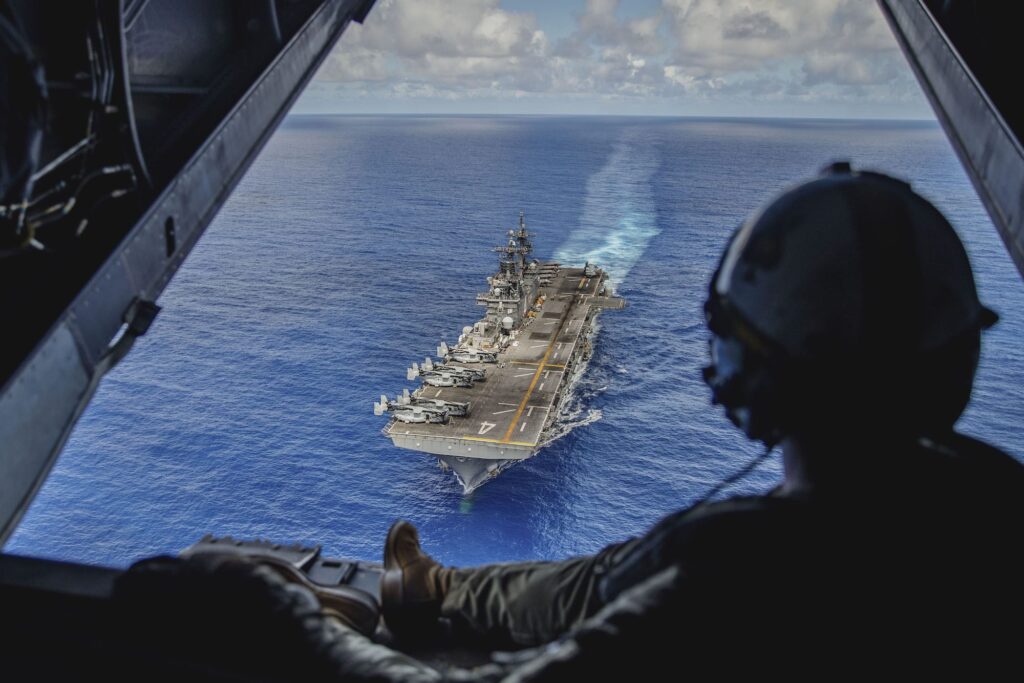
Mitchell Parcell, a V-22 tiltrotor crew chief assigned to Marine Medium Tiltrotor Squadron (VMM) 165 (Reinforced), 15th Marine Expeditionary Unit, and a native of Montana, observes the amphibious assault ship USS Boxer (LHD 4) in the Luzon Strait Oct. Marine Corps Photo
US, Philippines Deploy Anti-Ship Missile System During War Games
Reuters
Total Views: 0
May 2, 2026
By Adrian Portugal
BATANES, Philippines, May 2 (Reuters) – Philippine and U.S. forces on Saturday showcased the NMESIS anti-ship missile system in Batanes province, near Taiwan,
during annual war games
, as tensions simmer over the self-governed island that China views as its own territory.
The Philippines’ northernmost province, with about 20,000 residents, sits around 100 miles south of
Taiwan
, along the Luzon Strait, a strategic corridor on the frontline of the great power competition between the U.S.
White House Says Iran Hostilities ‘Terminated’ as War Powers Deadline Arrives
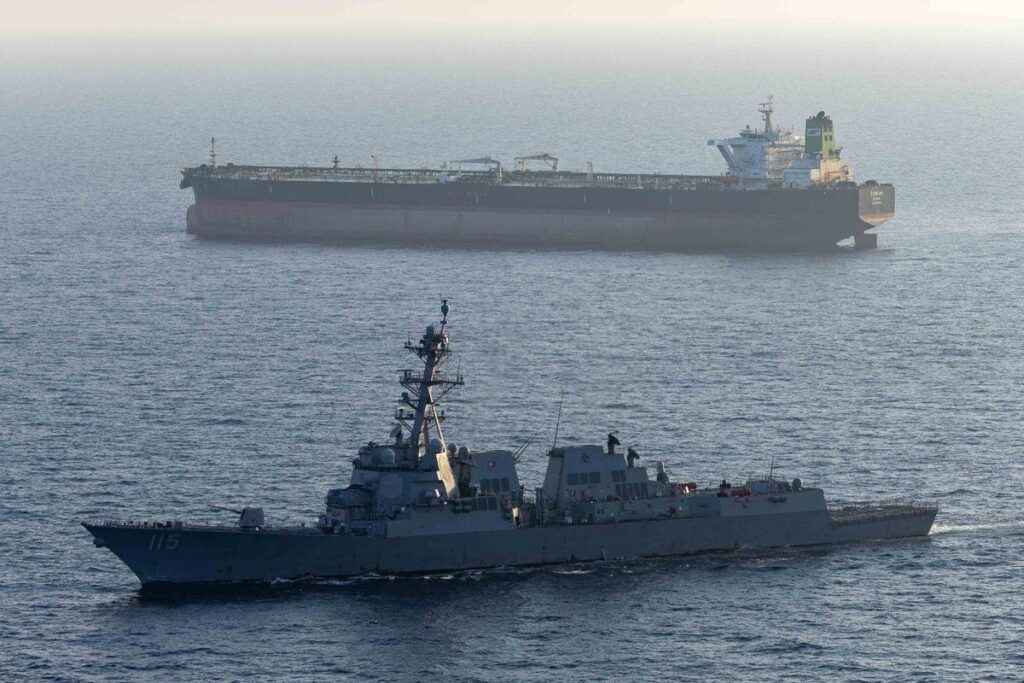
Guided-missile destroyer USS Rafael Peralta (DDG 115) enforces the U.S. blockade of Iranian ports against M/T Stream after it attempted to sail to an Iranian port, April 26, 2026. Central Command Photo
White House Says Iran Hostilities ‘Terminated’ as War Powers Deadline Arrives
Reuters
Total Views: 0
May 1, 2026
By Patricia Zengerle and Bo Erickson
WASHINGTON, May 1 (Reuters) – U.S.
US Naval Blockade Squeezes Iran’s Oil Exports, Forces Crude Onto Floating Storage
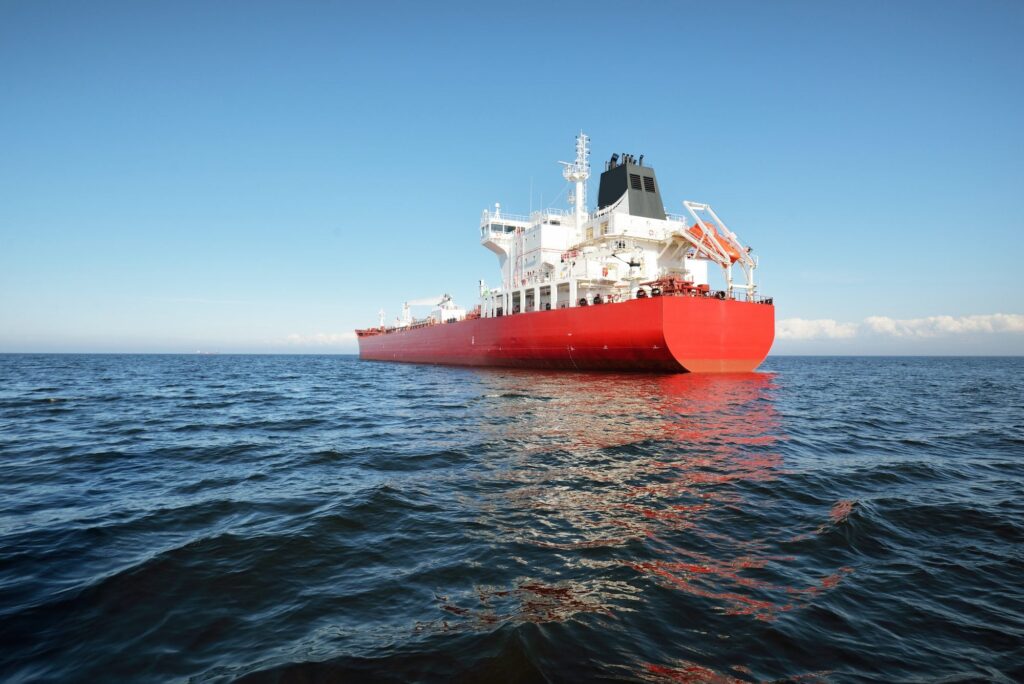
Stock Photo: Alex Stemmers/Shutterstock
US Naval Blockade Squeezes Iran’s Oil Exports, Forces Crude Onto Floating Storage
Reuters
Total Views: 0
May 1, 2026
OSLO/LONDON, April 30 (Reuters) – A U.S. naval
blockade
of Iranian ports has shrunk Tehran’s oil exports, stranding a growing stockpile of crude on tankers as Iranian storage sites run out of space, shipping data showed and analysts said.
With some vessels switching off tracking systems and U.S. forces turning back Iranian tankers, how much crude Iran is delivering to customers, particularly main customer China, is impossible to measure.
Just a handful of carriers carrying Iranian crude have left the Gulf of Oman between April 13-25, oil analytics firm Vortexa said. That’s down over 80% from a comparable period in March, when Iran exported 23.4 million barrels, LSEG data shows.
Some of Tehran’s vessels have been intercepted by the U.S.
U.S. Treasury Expands Hormuz ‘Toll’ Warning, Puts Maritime Industry on Notice
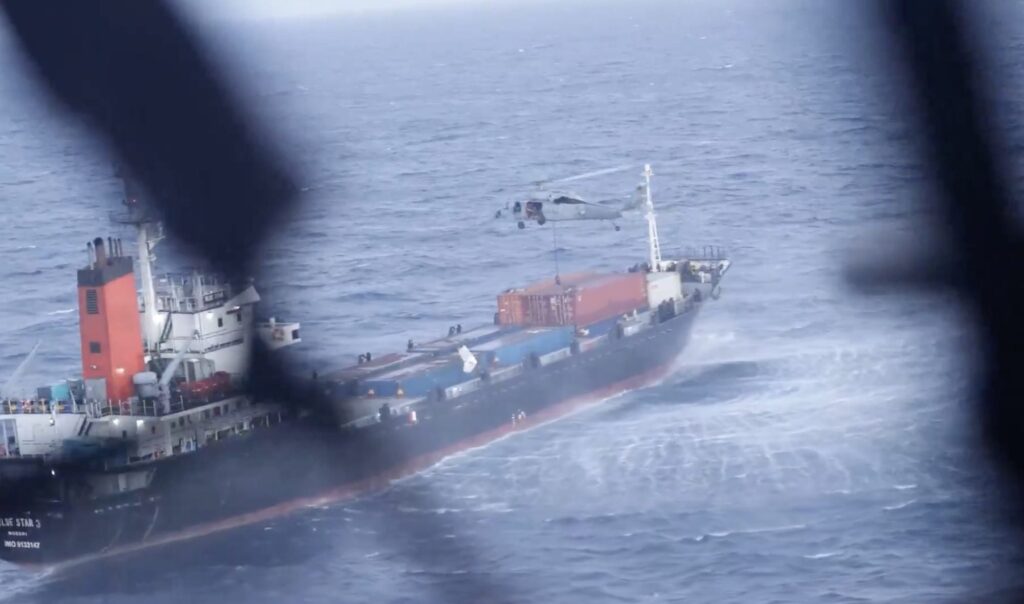
forces board the M/V Blue Star III suspected of breaching the U.S. maritime blockade on Iran, April 28, 2026. Treasury Expands Hormuz ‘Toll’ Warning, Puts Maritime Industry on Notice
Mike Schuler
Total Views: 0
May 1, 2026
The U.S.
U.S. Targets Iran–China Oil Pipeline in Dual Sanctions Move on Shipping and Finance
Stock Photo: SOMKIET POOMSIRIPAIBOON / Shutterstock
U.S. Targets Iran–China Oil Pipeline in Dual Sanctions Move on Shipping and Finance
Mike Schuler
Total Views: 0
May 1, 2026
The United States escalated its pressure campaign on Iran Friday, pairing maritime sanctions with a parallel strike on the financial channels that convert oil sales into cash, in what officials described as a coordinated effort to tighten the entire Iran–China energy trade chain.
The State Department confirmed sanctions on China-based Qingdao Haiye Oil Terminal Co., Ltd., accusing the operator of importing “tens of millions of barrels” of Iranian crude since early 2025 and facilitating billions of dollars in revenue flows to Tehran through ship-to-ship transfers and other deceptive shipping practices.
Officials said the terminal accepted cargoes linked to sanctioned vessels engaged in covert transfers, reinforcing long-standing U.S. concerns about Singapore-area STS hubs and the broader “dark fleet” ecosystem mov
IMO Climate Talks Stay Alive as Carbon Plan Survives U.S. Pushback at MEPC 84
Photo: BNMK 0819/Shutterstock
IMO Climate Talks Stay Alive as Carbon Plan Survives U.S. Pushback at MEPC 84
Mike Schuler
Total Views: 0
May 1, 2026
The International Maritime Organization has kept its landmark
shipping climate framework
alive following a week of high-stakes negotiations in London, setting up a decisive endgame later this year after deep divisions again blocked a final deal.
The outcome from MEPC 84 broadly matched expectations heading into the meeting, with the IMO Net-Zero Framework (NZF) ultimately emerging intact as the sole agreed basis for continued negotiations despite a coordinated push to weaken or reopen the proposal.
Closing the session, Secretary-General Arsenio Dominguez said talks were “back on track,” while cautioning that rebuilding trust among member states remains essential to securing agreement.
MEPC 84 was widely seen as a key political checkpoint after last year’s dramatic delay of the framework, when a razor-thin vote exposed deep geopolitical divi
Exxon, Chevron Beat Profit Estimates on War-Driven Oil Rally
Jonathan Weiss / Shutterstock.com
Exxon, Chevron Beat Profit Estimates on War-Driven Oil Rally
Bloomberg
Total Views: 0
May 1, 2026
By Kevin Crowley (Bloomberg) —
Exxon
Mobil Corp. posted stronger-than-expected earnings for the first quarter as higher oil and natural gas prices outweighed production outages from the Iran war.
Surging energy prices boosted Exxon’s first-quarter earnings by $1.7 billion, more than offsetting a $400 million blow from war-related production outages, the company said Friday. Roughly 15% of Exxon’s worldwide output remains offline, Chief Financial Officer Neil Hansen said in an interview.
Although Chevron is less exposed to Middle East disruptions, production dipped roughly 5% on a sequential basis.
Mitsui O.S.K. Lines Sees Firming Market Conditions in Dry Bulk

Lines Sees Firming Market Conditions in Dry Bulk
in
Dry Bulk Market
,
International Shipping News
01/05/2026
In the crude oil tanker market, conditions remained firm in the first half of the fiscal year, as in the previous fiscal year. From September onwards, the vessel supply-demand balance tightened due to an increase in cargo volumes following the unwinding of voluntary production cuts by OPEC+ nations, and market conditions remained at high levels.
In the product tanker market, conditions remained firm, underpinned by the strengthening of Middle East tensions and Russia-related sanctions, which supported market conditions for large vessels.
In the LPG carrier market, U.S. Trade Representative (USTR) port fee measures and U.S.-China tariff issues complicated trade patterns, resulting in increased ton-miles in terms of both sailing distance and transport volume, tightening the vessel supply-demand balance.
Shipping Interrupted: Tracking the Impact of Disruptions in the Strait of Hormuz
Shipping Interrupted: Tracking the Impact of Disruptions in the Strait of Hormuz
in
International Shipping News
01/05/2026
W
hile the situation in the Middle East remains uncertain amid stalled peace talks and the continued closure of the Strait of Hormuz, the dry bulk segment is still largely unscathed. Spot freight rates remain solid across all dry bulk segments, and the ongoing ceasefire has breathed new life into the bulker market.
The coal trades in particular may benefit from the closure of the strait. Scarcity and elevated prices in oil and gas markets will likely lead to coal switching, with countries seeking to increase coal consumption to reduce pressure on energy prices.
Hormuz disruption shows why early-warning data matters
Hormuz disruption shows why early-warning data matters
in
International Shipping News
01/05/2026
New UNCTAD dashboard tracks risks across shipping, energy, food and finance as shocks from the Strait of Hormuz spread through the global economy.
What began as a shipping disruption in one of the world’s most critical maritime chokepoints has become a wider development risk.
Since early March, UN Trade and Development (UNCTAD) has alerted that disruptions in the Strait of Hormuz are hitting far more than energy markets. The Strait carries around one quarter of global seaborne oil trade, as well as significant volumes of liquefied natural gas and fertilizers – goods that feed directly into transport costs, food production and inflation.
Ripple effects hit hard
The disruption deepened rapidly. Ship transits through the Strait fell by about 95%, while oil and gas prices, tanker freight rates, marine fuel costs and war-risk insurance premiums rose sharply.