April 27, 2026: Iran War Maritime Intelligence Daily
April 27, 2026: Iran War Maritime Intelligence Daily
in
International Shipping News
28/04/2026
Operational Overview
Maritime activity across the Strait of Hormuz and surrounding corridors remains active but uneven, with transit volumes fluctuating under continued enforcement pressure and operational uncertainty.
Following the April 25 rebound, transit activity slowed again on April 26, despite maintaining full AIS visibility across all crossings. At the same time, Gulf-wide vessel presence continued to increase, pointing to a gradual rebuild in overall system activity.
East of Hormuz, the Chabahar tanker cluster remains stable, with dark VLCC and Suezmax vessels continuing to loiter under supported conditions, reinforcing the role of eastern positioning as part of ongoing adaptation to enforcement constraints.
Across the system, vessel behavior reflects a controlled but inconsistent operating environment, where movement is possible, but still shaped by enforcement dynamics, routing dec
Critical raw materials face rising export restrictions, increasing risks to global supply chains

Critical raw materials face rising export restrictions, increasing risks to global supply chains
in
Commodity News
28/04/2026
Several key minerals that are essential inputs for digital and renewable energy technologies face high exposure to export restrictions, and the number of restrictions continues to rise, a new OECD report finds.
The annual update of the OECD Inventory of Export Restrictions on Critical Raw Materials tracks export restrictions and supports analysis of their impact on availability, prices and global supply chains. The OECD continues to monitor these measures over time. The latest edition, which analyses measures implemented through the end of 2024, shows that export restrictions on critical raw materials have increased steadily in the past 15 years, reaching an all-time high.
Europe to see some returning jet supply from the Middle East in May
Europe to see some returning jet supply from the Middle East in May
in
Freight News
28/04/2026
Europe is expected to see some jet supply loading out of Oman discharge into the region amid an opening arbitrage between the regions, according to sources close to the matter.
The Sea Penguin, an LR2 tanker is set to load at Duqm April 25 for discharge into UKC, Platts fixtures reports showed, with a lumpsum rate of $6.75 million. It previously loaded 102,000 mt of jet fuel from Korea for discharge in Malaysia on April 9.
The fixture comes as an early sign of improving arbitrage incentives. Platts assessed the jet kero FOB Arab Gulf flat price at $171/b April 23, around $1,365.90/mt.
Tanker freight behaviour diverges after the conflict shock
Tanker freight behaviour diverges after the conflict shock
in
International Shipping News
28/04/2026
T
he conflict has triggered a sharp repricing across tanker freight, but the response has not been uniform. Crude and clean tankers both rallied as disruption risk centred on the Middle East Gulf forced charterers and owners to reassess exposure to the Strait of Hormuz.
However, the underlying drivers are now diverging. Dirty freight is increasingly showing the characteristics of a disruption led rally that is becoming more selective, while clean freight continues to look more structurally supported by tighter effective vessel supply and a deeper reshuffling of trade flows.
Crude rally fragments as Atlantic tonnage rebuilds
Crude tanker freight reacted first and most aggressively.
Chokepoints and conflict: How the Hormuz crisis is exposing global shipping vulnerabilities

Chokepoints and conflict: How the Hormuz crisis is exposing global shipping vulnerabilities
in
International Shipping News
28/04/2026
The blockading of ships in the Strait of Hormuz as a result of the conflict between the United States and Iran has demonstrated how ships and seafarers have become “leverage in geopolitical disputes,” according to the head of the UN’s International Maritime Organization (IMO).
Since conflict began with the US-Israeli bombing of Iran in late February, up to 20,000 seafarers have been stranded on some 2,000 vessels in the Persian Gulf, which is bordered by Iran to the north, unable to pass safely through the narrow waterway.
Arsenio Dominguez, Secretary-General of the IMO spoke to UN News ahead of a key meeting about maritime security due to take place in the Security Council on Monday.
UN News: What is maritime security?
Arsenio Dominguez: Maritime security covers the protection of ships, ports, seafarers, and maritime infrastructure from any type of secu
Turning Off AIS While Transiting Hormuz Offers False Sense Of Security, Advises Cydome

Turning Off AIS While Transiting Hormuz Offers False Sense Of Security, Advises Cydome
in
International Shipping News
28/04/2026
Leading maritime cyber solutions expert Cydome is advising shipmanagers with assets transiting high-risk waters that disabling a vessel’s Automatic Identification System (AIS) is creating a false sense of security, as the vessel’s location and position can remain electronically visible.
In a Cydome research paper published this week, the company says turning off AIS can actually increase the risk of attack.
The advisory follows a surge in reported AIS blackouts across the Persian Gulf, including the Strait of Hormuz, amid growing concern around so-called “zombie ships” that appear to vanish from tracking systems.
The reality is that these ships and their locations remain exposed in many cases and potentially vulnerable through other connected gateways.
This research addresses a widening gap between traditional maritime security tactics and modern digital rea
Tanker Market: Ton-Mile Demand Could Shift
Tanker Market: Ton-Mile Demand Could Shift
in
Hellenic Shipping News
28/04/2026
T
he existing blockade of the Hormuz Strait could be far reaching and have long-lasting effects in the tanker market, essentially increasing ton-mile demand. In its latest weekly report, shipbroker Intermodal said that “in the VLCC market, Basrah exports are one of the main short-term variables. Iraq is one of the largest Gulf crude suppliers into Asia, and Basrah is one of the main loading points for long-haul VLCC business on the Middle East Gulf to China route, which is reflected in Baltic’s TD3C benchmark framework.
Trump to Address Iran Proposal ‘Soon’ as Oil Rises Further
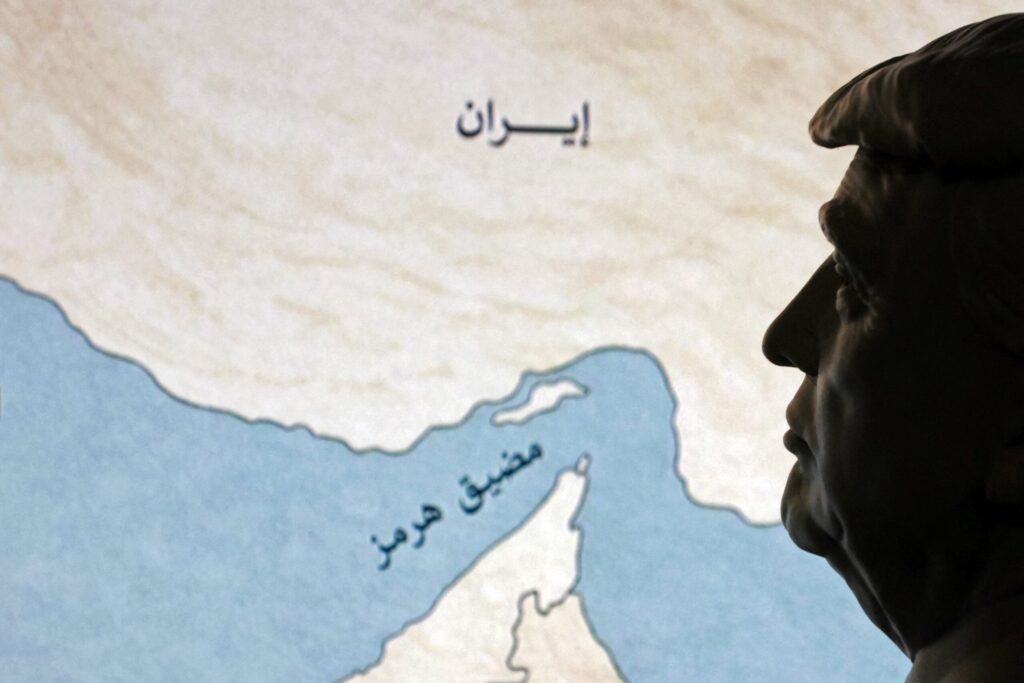
A 3D-printed miniature model depicting U.S. President Donald Trump and a map showing the Strait of Hormuz, also known as Madiq Hurmuz, are seen in this illustration taken March 26, 2026. REUTERS/Dado Ruvic/Illustration
Trump to Address Iran Proposal ‘Soon’ as Oil Rises Further
Bloomberg
Total Views: 0
April 28, 2026
By Arsalan Shahla and Eltaf Najafizada
Apr 28, 2026 (Bloomberg) –US President Donald Trump convened his national security team to discuss Iran’s proposal to end a war now in its third month and which has left thousands dead across the Middle East, as well as disrupted energy supplies.
Trump will address the matter “very soon,” White House Press Secretary Karoline Leavitt told reporters on Monday.
Wirana Market Outlook Report Shows Ship Recycling Prices Hold Steady Despite Softer Steel Markets

Wirana Market Outlook Report Shows Ship Recycling Prices Hold Steady Despite Softer Steel Markets
in
International Shipping News
28/04/2026
Ship recycling prices across key recycling destinations have remained broadly stable despite weaker conditions in steel markets, cautious buying and pressure on steel prices, Wirana Shipping’s latest market outlook report has shown. The report points to a market in which ship recyclers are largely maintaining their prices even as demand for steel remains uneven and buyers remain selective. Prices offered by ship recyclers in India, Bangladesh and Turkey have continued at current levels, while Pakistan has emerged as the market most exposed to potential softening in the coming weeks.
The report highlighted a clear disconnect between weaker steel market sentiment and ship recycling pricing.
West Africa sees bunker demand surge amid Hormuz disruptions – Monjasa

West Africa sees bunker demand surge amid Hormuz disruptions – Monjasa
in
International Shipping News
28/04/2026
Disruptions in the Strait of Hormuz linked to the ongoing Middle East crisis are reshaping global bunker demand, with West Africa “seeing the impact first-hand,” according to bunker supplier Monjasa.
Bunker demand across West Africa has risen markedly since the Iran crisis began, with particularly strong activity reported in Walvis Bay, Namibia and Lomé, Togo.
“The increase is mainly driven by availability issues following disruptions at major bunker hubs such as Fujairah, UAE rather than more vessels re-routing,” Monjasa’s Middle East & Africa general manager Casper Borgen said.
“The bunkering situation in the Middle East is more stable now, but still not fully consistent,” a Middle East-based source said.
Earlier in April, fuel availability in Fujairah tightened amid constrained supply, strict scheduling, firm nominations, and potential delays in barge availability. The re