Xeneta Weekly Ocean Container Shipping Market Update: Rates Softening

Xeneta Weekly Ocean Container Shipping Market Update: Rates Softening
in
International Shipping News
27/04/2026
The softening of container shipping rates on the European trades should not be read as a sign that the market is returning to normal. The Strait of Hormuz remains effectively closed to container shipping,
Xeneta analyst insight
Peter Sand, Xeneta Chief Analyst
“Conflict in the Middle East forced carriers to build entirely new service networks with little to no warning, including rerouting via land bridges such as Jeddah and alternative ports on the Indian Ocean coastline. On the European ocean container shipping trades, these new routing patterns are now established and carriers have reorganised capacity, meaning freight rates are easing from the spike in the immediate aftermath of conflict.
“Compared to one month ago, average spot rates from Far East are down −6% to North Europe and -13% to Mediterranean.
“The softening on the European trades should not be read as a sign tha
Drewry: Intra-Asia Container Index Gained 2%

Drewry: Intra-Asia Container Index Gained 2%
in
International Shipping News
27/04/2026
Drewry’s Intra-Asia Container Index (IACI) continued strengthening on the back of the US-Israel conflict with Iran, gaining 2% to reach $890 per 40ft container.
Intra-Asia Container Index assessment for 24 Apr 2026
• Drewry’s Intra-Asia Container Index (IACI), a weighted average of weekly spot rates across 18 major trade routes within Asia, continued strengthening on the back of the US-Israel conflict with Iran, gaining 2% to reach $890 per 40ft container. The rates are currently 26% higher than last year.
About Intra-Asia Container Index
Drewry’s Intra-Asia Container Index (IACI) reports actual spot container freight rates for major intra-Asia trade routes. The Index, which will be updated weekly (from 02 Jan 26), consists of 18 route-specific indices representing individual shipping routes and a composite index.
Economic Fury Targets Global Network Fueling Iran’s Oil Trade and Shadow Fleet

Economic Fury Targets Global Network Fueling Iran’s Oil Trade and Shadow Fleet
in
International Shipping News
27/04/2026
The U.S. Department of the Treasury’s Office of Foreign Assets Control (OFAC) sanctioned China-based independent teapot refinery Hengli Petrochemical (Dalian) Refinery Co., Ltd. China-based independent teapot refineries continue to play a vital role in sustaining Iran’s oil economy, and Hengli is one of Iran’s largest customers for crude oil and other petroleum products, having purchased billions of dollars’ worth of Iranian petroleum.
Iran War Leaves Seafarers Stranded In The Gulf
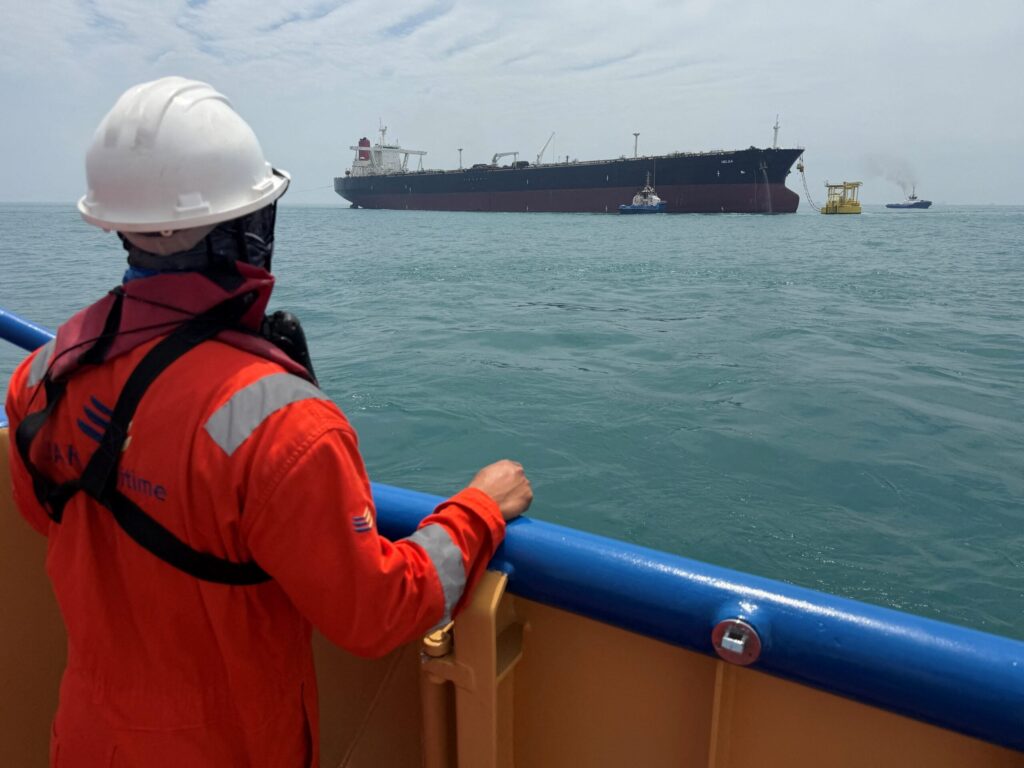
A sailor observes the oil tanker HELGA, which is moored at one of Iraq’s southern offshore oil terminals near Basra, as it prepares to load crude oil, becoming the second vessel to arrive since the closure of the Strait of Hormuz, April 24, 2026. Picture taken with a mobile phone. REUTERS/Mohammed Aty
Iran War Leaves Seafarers Stranded In The Gulf
Reuters
Total Views: 0
April 25, 2026
By Saurabh Sharma
NEW DELHI, April 24 (Reuters) – Ankit Yadav, a seafarer from India, has been stuck on a boat at an inland Iranian port for about 2-1/2 weeks, surviving with his three fellow mariners on limited rations of tomatoes and potatoes.
He is one among thousands of seafarers from India and other nations who are
stranded in and around the Strait of Hormuz,
as the war in Iran disrupts trade along one of the world’s busiest ship routes.
Ankit, who is in his early 30s, was on a small vessel carrying steel and plying between Iran, Kuwait and Oman.
US Says Navy Intercepted Iran-Linked Vessel in Arabian Sea
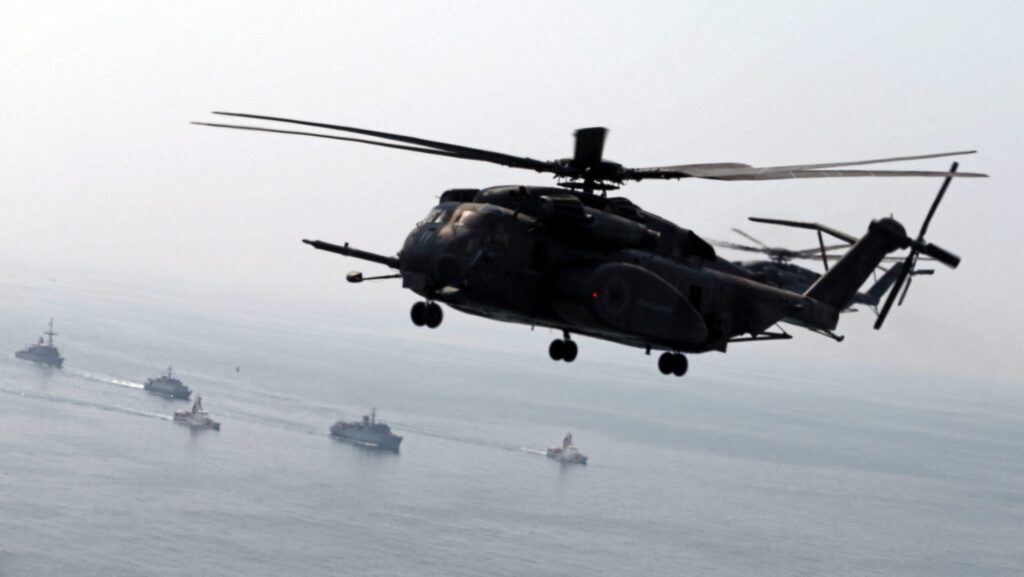
Navy MH-53E Sea Dragon helicopter flies over U.S. Mine Countermeasures Exercise (MCMEX) taking place at the Arabian Sea, September 10, 2018. REUTERS/Hamad I Mohammed
US Says Navy Intercepted Iran-Linked Vessel in Arabian Sea
Bloomberg
Total Views: 0
April 25, 2026
By Sam Kim and Tony Czuczka
Apr 25, 2026 (Bloomberg) –US naval forces intercepted a
sanctioned vessel
in the Arabian Sea on Saturday as part of the Trump administration’s blockade of Iranian energy exports, according to US Central Command.
The M/V Sevan was among 19 “shadow fleet” vessels sanctioned by the US Treasury Department on Friday for its links to “transporting billions of dollars worth of Iranian energy, oil and gas products, including propane and butane, to foreign markets,” Central Command said in a statement.
Yesterday, M/V Sevan was among 19 “shadow fleet” vessels sanctioned by the U.S.
Strait of Hormuz Remains Near-Empty With Just A Few Iran Ships Moving
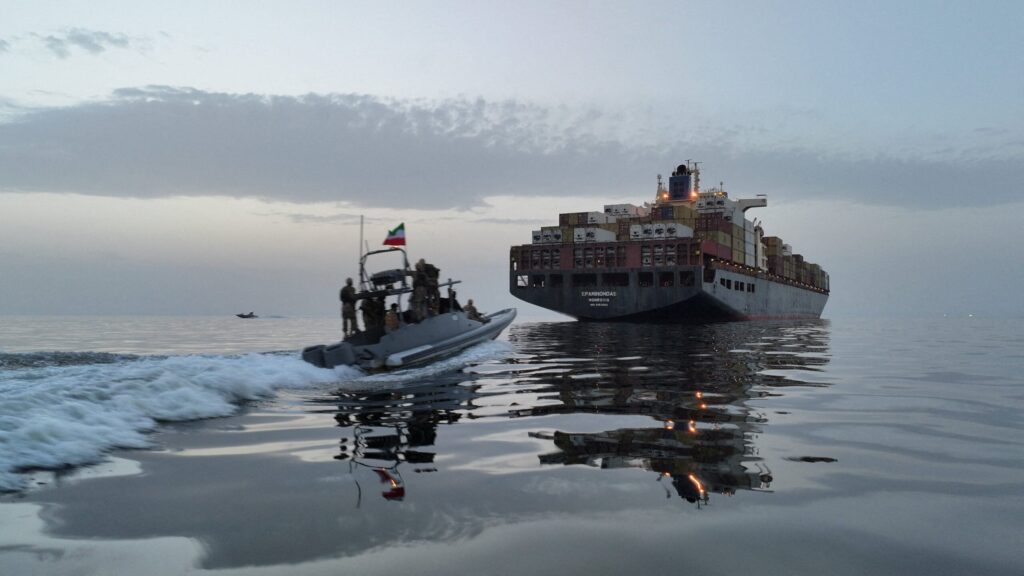
The Epaminondas ship is seen during seizure by the Islamic Revolutionary Guard Corps (IRGC) in the Strait of Hormuz, Iran, in this image obtained by Reuters on April 24, 2026. Meysam Mirzadeh/Tasnim/WANA (West Asia News Agency) via REUTERS
Strait of Hormuz Remains Near-Empty With Just A Few Iran Ships Moving
Bloomberg
Total Views: 0
April 25, 2026
By Prejula Prem and Julian Lee
Apr 25, 2026 (Bloomberg) –The
Strait of Hormuz
remains largely empty of merchant ships, with only a few Tehran-linked vessels moving through the waterway, following a tense week that saw Iranian gunboat attacks and tanker interceptions by the US Navy.
As of Saturday morning, observable traffic was down to only two very small fuel carriers and one tiny coastal cargo ship, all with ties to Tehran, leaving the Persian Gulf through the crucial waterway, vessel-tracking data compiled by Bloomberg show. No ships were observed on their way in.
While Iran continues to fill supertankers with millions of barrels, the US N
Chubb Says U.S. Hormuz Insurance Backstop Stalled as Military Convoys Fail to Materialize
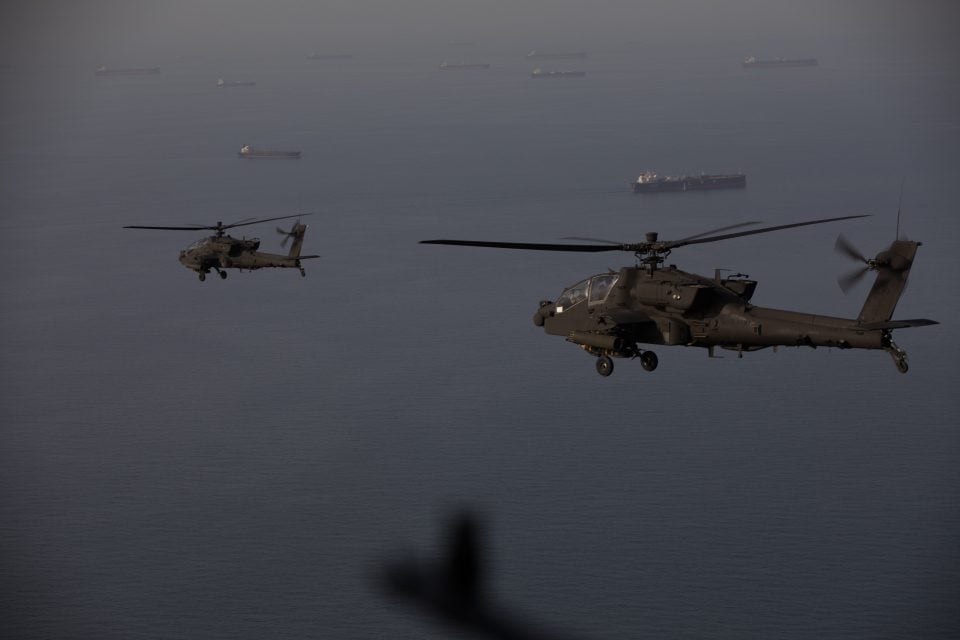
AH-64 Apache helicopters fly over the Strait of Hormuz, April 17, 2026, with multiple commercial vessels visible below, as U.S. Army crews maintain a persistent aerial presence to support freedom of navigation and monitor maritime traffic in the strategic waterway. Central Command Photo
Chubb Says U.S.
THINK Ahead: Central bankers’ balancing problems

THINK Ahead: Central bankers’ balancing problems
in
Stock News
24/04/2026
Central bankers face an unenviable task next week. Nobody knows where the crisis in the Middle East is going next. Nor is the data telling them how to act.
US boards ship carrying Iran oil as Trump threatens mine-laying boats
US boards ship carrying Iran oil as Trump threatens mine-laying boats
in
International Shipping News
24/04/2026
US Department of Defense A grey military helicopter hovers on top of a oil tanker, a soldier sliding down a rope towards the top deck as another uniformed soldier waits. The deck is lined with oil transportation equipment, including green pipesUS Department of Defense
The US says its forces have boarded a sanctioned ship carrying Iranian oil in the Indian Ocean in the country’s latest naval move against Iran.
The US Department of Defence (DoD) said in a statement it had carried out a “maritime interdiction” – the interception or inspection of a vessel by a navy on ships suspected to be hostile or in violation of the law – on the M/T Majestic X.
The US has intercepted multiple ships after imposing a blockade on maritime traffic entering and leaving Iranian ports on 13 April.
The latest interception comes as President Donald Trump ordered the US Navy to “shoot and kill” any boa
Middle East Reconstruction Poses a Carbon Shock as Shipping Bears the Climate Bill
By Aleksey Stemmer / Shutterstock
Middle East Reconstruction Poses a Carbon Shock as Shipping Bears the Climate Bill
Paul Morgan
Total Views: 0
April 24, 2026
New academic research suggests reconstruction emissions from Gaza could rival weeks of global shipping emissions, raising questions about carbon accountability.
By Paul Morgan (Opinion) – The concrete and steel needed to rebuild Gaza, Lebanon and beyond will generate more CO? than the entire global shipping fleet produces in three weeks. Yet the nations responsible face no carbon liability whatsoever, while the ships that will deliver the cement and rebar to rebuild those ruins will be taxed, metered and penalised for every tonne they emit
The bombardment of Gaza, the systematic flattening of southern Lebanon and the relentless attrition of conflict across the wider Middle East have produced, among their many catastrophic consequences, one that the international community has conspicuously declined to price: a carbon debt of stag