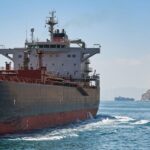
Image for representation purposes only
U.S. President Donald Trump has said that the United States could reopen the Strait of Hormuz and take control of oil flows if given more time, as the ongoing conflict with Iran continues to disrupt global shipping and energy markets.
In a post on Truth Social platform on April 3, Trump wrote that with a little more time, the US could “easily open the Hormuz Strait, take the oil, and make a fortune”.
The war began in late February with joint US-Israeli air strikes on Iran and is now close to entering its sixth week. Since the start of the conflict, Iran has effectively blocked the Strait of Hormuz, one of the world’s most important shipping routes.
The strait connects the Persian Gulf to the Gulf of Oman and carries about a fifth of the world’s total oil consumption. It is also an important route for gas and fertiliser shipments, with around 13% of global fertiliser exports passing through it.
Its closure has increased energy prices and raised concerns about supply shortages.
Trump has been saying for weeks that the US would reopen the route. Earlier, he suggested that US Navy ships could escort oil tankers through the strait.
However, US military officials later said they are not ready to escort slow-moving vessels in such a narrow waterway, where ships could be exposed to Iranian drones and missile attacks.
Even after weeks of fighting, Iran continues to control the strait and has kept up missile and drone strikes across the region. While Trump has claimed that US forces have weakened Iran’s military, the blockade remains in place.
Trump also repeated his idea of “taking the oil”, which marks a stronger tone in his statements. Under international law, natural resources like oil belong to the country where they are located.
The United States does not have any known military presence on the ground inside Iran, and no details have been shared on how it would control Iran’s oil industry. He has made similar comments in the past about oil in countries such as Iraq and Venezuela.
Earlier this week, he said a similar approach could be considered in Iran, but it would require more time and a longer conflict. At the same time, he also noted that people in the US want the war to end quickly.
During the conflict, Trump has also threatened strikes on Iran’s civilian infrastructure, including power plants and water facilities.
Iran has criticised these actions, with its foreign ministry calling recent attacks similar to tactics used by extremist groups and warning of further retaliation.
The situation in the Strait of Hormuz has added pressure on global shipping. Tanker movements have slowed, risks for vessels have increased, and insurance costs have risen.
Governments are looking for ways to ensure safe passage through the route as the disruption continues.
Amid the ongoing war, the White House has proposed a defence budget of $1.5 trillion for the next year, which would be the largest increase since World War II.
The plan includes a major rise in military spending, while reducing non-defence expenditure by shifting some responsibilities to state and local governments.
The Pentagon has also proposed about $200 billion to support the war effort and replace military supplies. The proposal still needs approval from Congress.
References: Reuters, Al Jazeera