Six Types of Shipping Crisis — And What They Mean for Freight Procurement

Six Types of Shipping Crisis — And What They Mean for Freight Procurement
in
International Shipping News
09/05/2026
Disruption is familiar. The market’s response to it no longer is. Here’s why traditional tendering strategies break down in volatile conditions — and how real-time intelligence helps shippers contract smarter.
Shippers have become remarkably good at managing disruption.
Pandemics.
U.S. Navy Disables Two More Iranian Tankers as Hormuz Blockade Enforcement Intensifies
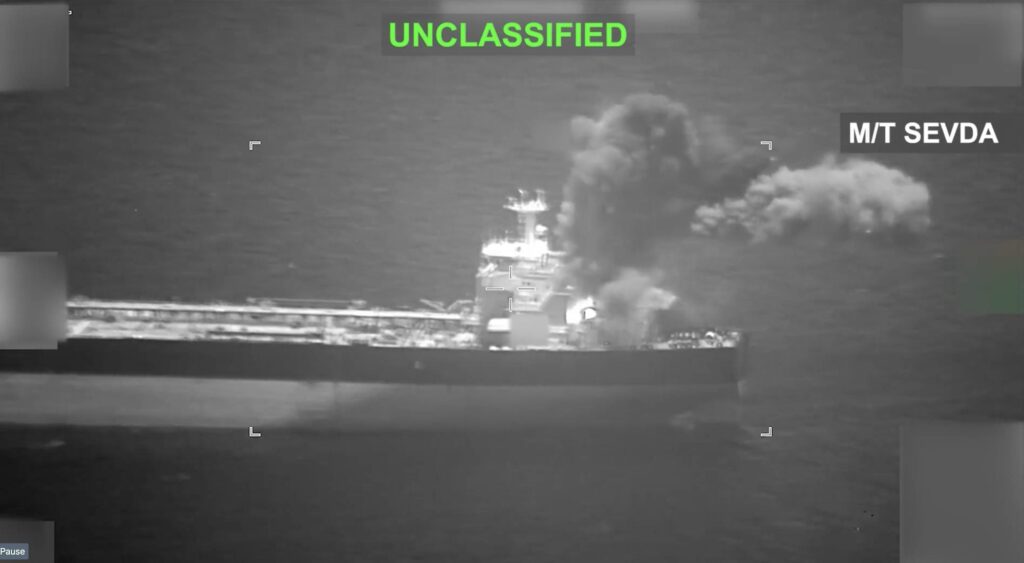
Central Command appears to show the Iranian-flagged tanker M/T Sevda after being struck by U.S. forces in the Gulf of Oman on May 8, 2026. Navy F/A-18 Super Hornet disabled the vessel while enforcing Washington’s blockade on ships entering Iranian ports.
U.S.
US, Iran Clash Near Hormuz as Response on Proposed Deal Awaited
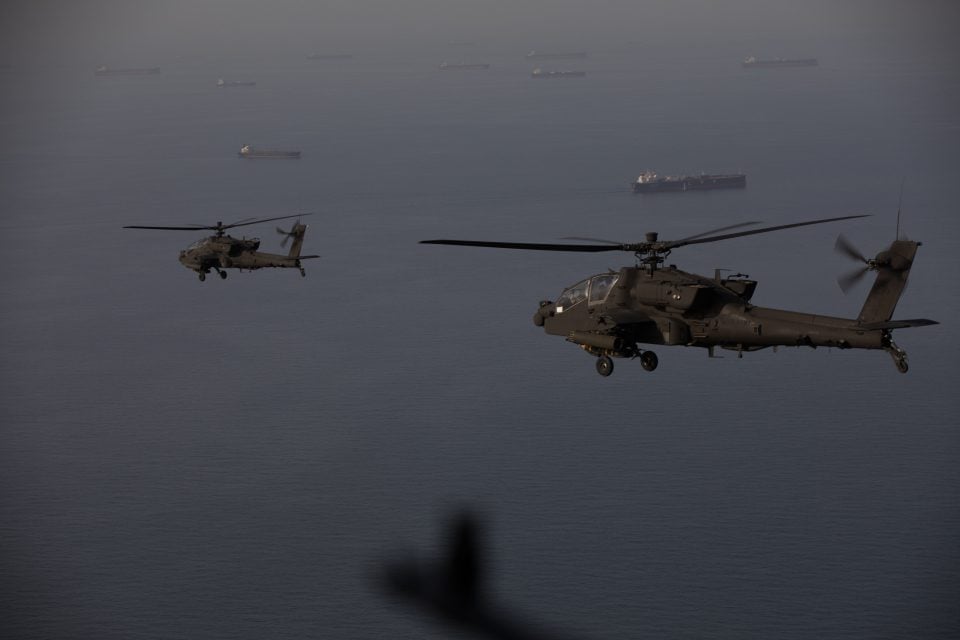
AH-64 Apache helicopters fly over the Strait of Hormuz, April 17, 2026, with multiple commercial vessels visible below, as U.S. Army crews maintain a persistent aerial presence to support freedom of navigation and monitor maritime traffic in the strategic waterway. Central Command Photo
US, Iran Clash Near Hormuz as Response on Proposed Deal Awaited
Bloomberg
Total Views: 379
May 8, 2026
By Jennifer A.
U.S. Import Slowdown Deepens as Retailers Pull Back Amid Iran Crisis
Stock Photo: Shutterstock/Avigator Fortuner
U.S. Import Slowdown Deepens as Retailers Pull Back Amid Iran Crisis
Mike Schuler
Total Views: 0
May 8, 2026
U.S. container imports are expected to remain weaker than last year through at least early fall despite a temporary rebound in May and June, according to new projections from the National Retail Federation and Hackett Associates, underscoring mounting pressure on global trade flows as economic uncertainty and
Middle East tensions
weigh on consumer demand.
The latest Global Port Tracker report paints a cautious picture for the second half of 2026, with retailers slowing inventory build-ups even as supply chains continue adjusting to tariff disruptions, inflation concerns, and the lingering fallout from the Strait of Hormuz crisis.
While import volumes are projected to rise year-over-year in May and June, NRF says the increase is largely misleading because it compares against the sharp collapse in imports that followed the Trump administ
Trump’s Feud With Germany’s Merz Puts EU Trade Deal on Edge
Photo: Sven Brandenburg/Shutterstock
Trump’s Feud With Germany’s Merz Puts EU Trade Deal on Edge
Bloomberg
Total Views: 0
May 8, 2026
(Bloomberg) —
Donald Trump
’s rift with Friedrich Merz is complicating the European Union’s push to finish its US trade deal before fresh tariffs arrive.
The US president was reluctant on Thursday to delay his threatened 25% levy on European cars and trucks because he remains angry with the German chancellor over his criticism of the war in Iran, according to a person familiar with the matter.
That’s making senior European officials anxious that failing to conclude their trade deal before Trump’s new July 4 deadline may trigger a downward spiral, the person added, speaking anonymously to describe private discussions. While officials are expressing confidence they can complete their own work by then, the window also leaves nearly two months for Trump’s personal grievances to resurface.
The situation is yet another reminder that for Trump, all policy issue
Trump’s Iran Strategy Collides with Hormuz Reality
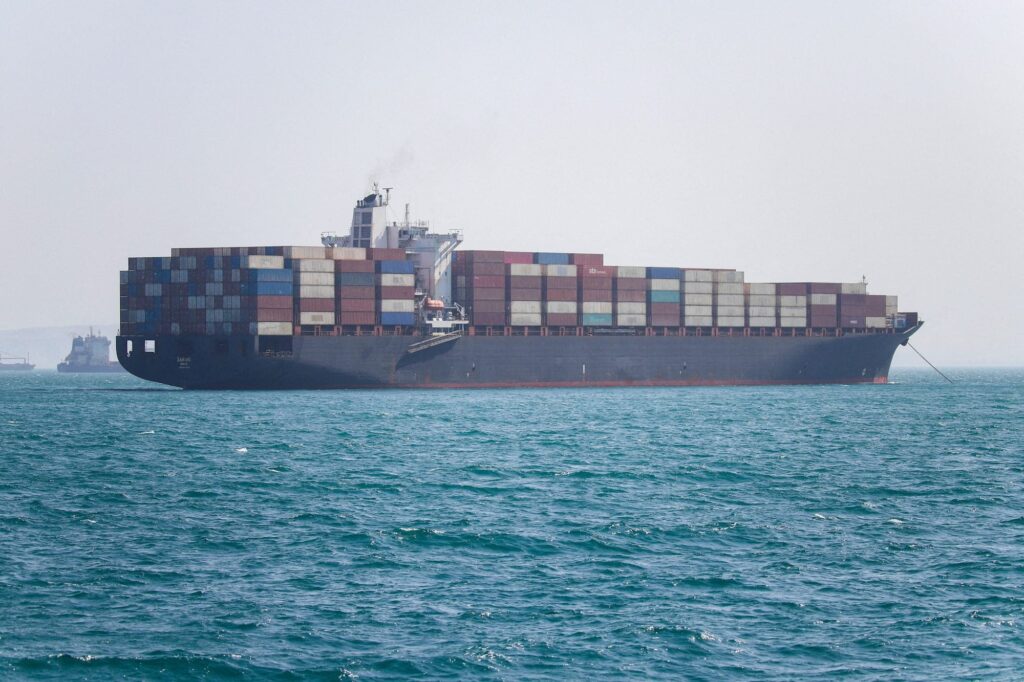
Vessels in the Strait of Hormuz near Bandar Abbas, Iran, May 4, 2026. Amirhosein Khorgooi/ISNA/WANA (West Asia News Agency) via REUTERS
Trump’s Iran Strategy Collides with Hormuz Reality
Bloomberg
Total Views: 0
May 8, 2026
By Eric Martin and Magdalena Del Valle (Bloomberg) — President Donald Trump has changed his approach as he tries to end the war against Iran: reopen the
Strait of Hormuz
at all costs and leave thorny negotiations on Tehran’s nuclear and ballistic missile programs until later.
That strategy has seen the ceasefire between the US and Iran tested as the two sides traded fire in recent days after Trump ordered US warships to provide cover for merchant vessels transiting the strait, and then
abruptly shelved “Project Freedom” on Tuesday. Iran also targeted oil facilities in the nearby United Arab Emirates.
While Trump has repeatedly said eliminating Iran’s nuclear program is the main justification for the conflict in the Middle East, the vital waterway for oil and gas flo
Qatari LNG Tanker Sailing Towards Hormuz Strait
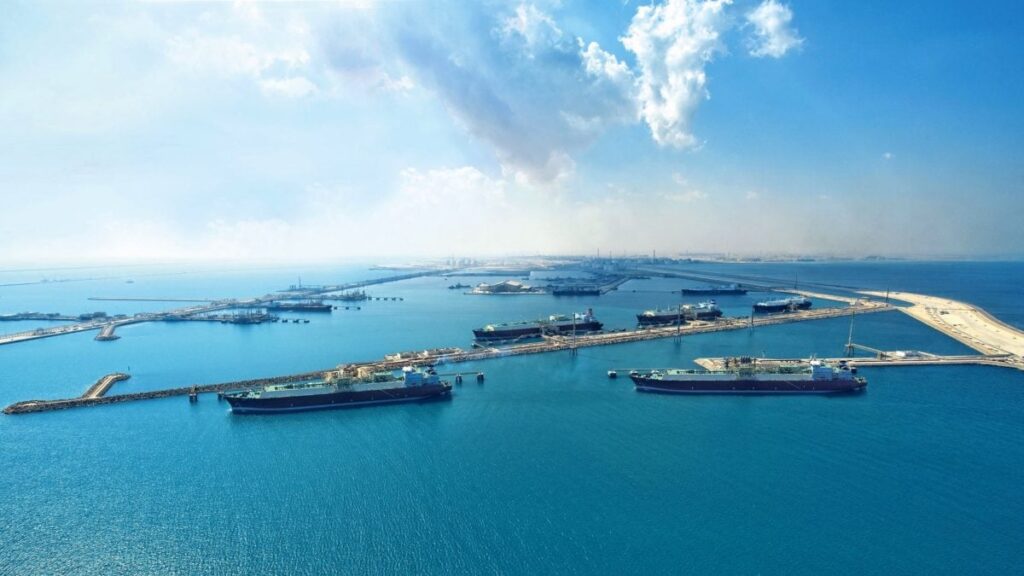
LNG carriers at the Qatari LNG export facility at Ras Laffan. Photo: RasGas
Qatari LNG Tanker Sailing Towards Hormuz Strait
Reuters
Total Views: 0
May 9, 2026
May 9 (Reuters) – Qatari LNG tanker Al Kharaitiyat was sailing towards the Strait of Hormuz on Saturday after departing
Qatar’s Ras Laffan
en route to Port Qasim in Pakistan, according to LSEG shipping data.
A successful passage would mark the first transit by a Qatari LNG tanker through the strait since the start of the war on Iran. There was no immediate comment from QatarEnergy.
The LNG is being sold by Qatar to Pakistan –
a mediator in the war
– under a government-to-government deal, according to two people familiar with the matter.
Middle East April bunker fuel demand shifts as Hormuz shipping risks unsettle trade flows
Middle East April bunker fuel demand shifts as Hormuz shipping risks unsettle trade flows
in
International Shipping News
09/05/2026
Bunker fuel demand across key Middle Eastern ports declined in April as the war created uncertainty about ship movement and constrained fuel supply, although activity at some Omani ports recovered gradually, five market participants, including traders and suppliers, told Platts, part of S&P Global Energy, May 6.
Fujairah and Dubai bunkering demand was subdued throughout April as ship movement through the Strait of Hormuz slowed amid a bearish market outlook due to the war, two traders covering Middle East markets said May 6.
“We haven’t seen any demand in April at Fujairah and Jebel Ali ports. The vessels currently roaming in the Strait of Hormuz, as well as those heading to Qatar and Kuwait, are consuming bunker fuel, but apart from that, we are not observing much vessel movement, and inquiries are also not strong,” a Dubai-based trader said May 6.
Total
UK Deploys Warship To Middle East For Potential Hormuz Mission
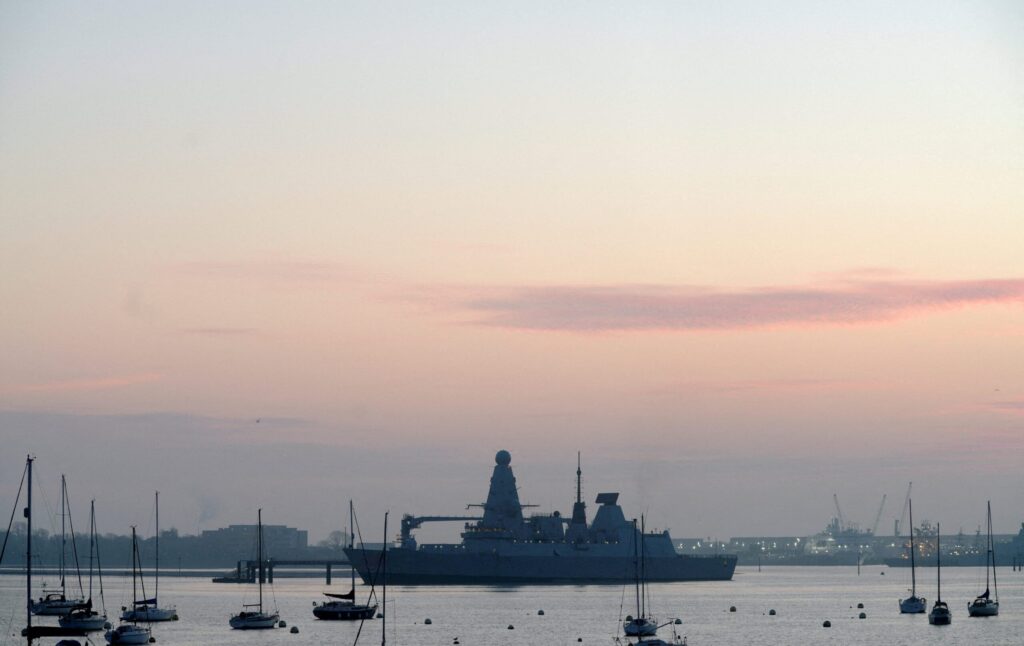
The HMS Dragon during ammunitioning operations at Upper Harbour Ammunitioning Facility (UHAF) in Portsmouth Harbour, March 4, 2026. REUTERS/Carlos Jasso
UK Deploys Warship To Middle East For Potential Hormuz Mission
Reuters
Total Views: 0
May 9, 2026
LONDON, May 9 (Reuters) – Britain said on Saturday it was deploying its warship HMS Dragon to the Middle East in preparation for a potential multinational effort to protect shipping in the Strait of Hormuz once conditions allow.
HMS Dragon
, an air defense destroyer, was sent to the Eastern Mediterranean in March, shortly after the start of the Iran war, to help defend Cyprus.
Its relocation to the Middle East follows a move by France to
deploy its carrier strike group
to the southern Red Sea, as the two countries work together on a defensive plan aimed at restoring confidence in the trade route.
“The pre-positioning of HMS Dragon is part of prudent planning that will ensure that the UK is ready, as part of a multinational coalition jointl
GMS Week 19 – BRENT BREAKS, BACKLOG HOLDS
GMS Week 19 – BRENT BREAKS, BACKLOG HOLDS
in
Weekly Demolition Reports
09/05/2026
The Week 18 thesis that the blockade had hardened into a structural reality has been challenged,
though not overturned, by the most consequential diplomatic move since February 28. Brent collapsed from the April 30 high of USD 126.41 to USD 96.73 on May 6, settling near USD 100 by May 7, after Axios reported a one-page MoU transmitted from Washington to Tehran via Pakistan. President Trump suspended “Project Freedom,” the U.S.