Hormuz Traffic at Standstill as US Vessel Seizure Widens Risk
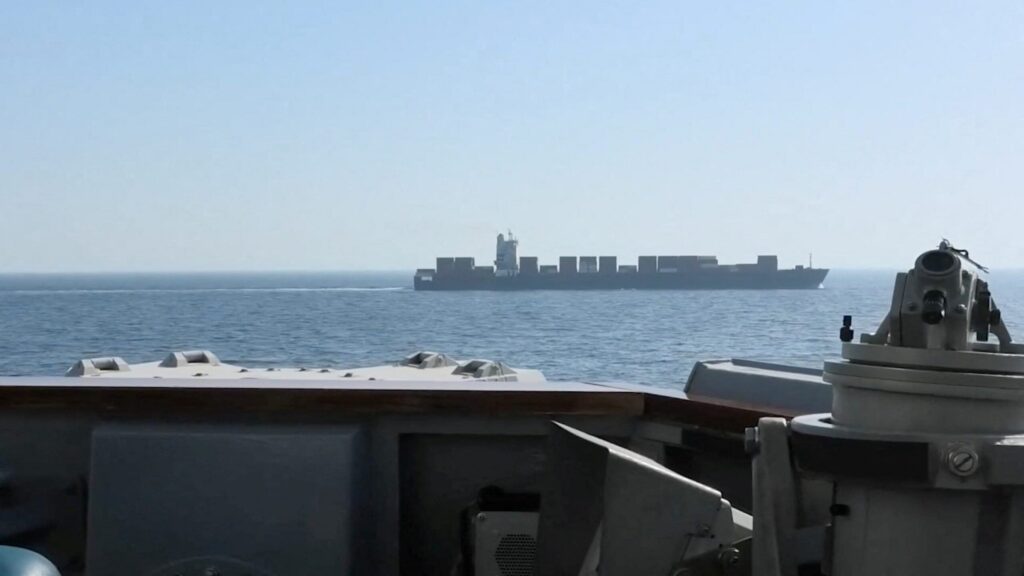
A view of Iranian-flagged cargo ship Touska as USS Spruance (DDG 111) conduts its interception in a location given as the north Arabian Sea, in this screen capture from a video released April 19, 2026. CENTCOM/Handout via REUTERS
Hormuz Traffic at Standstill as US Vessel Seizure Widens Risk
Bloomberg
Total Views: 0
April 20, 2026
By Weilun Soon
Apr 20, 2026 (Bloomberg) –Commercial traffic through the Strait of Hormuz is at a virtual standstill on Monday after a brief and confused reopening over the weekend ended with the first US
seizure
of an Iranian vessel — underscoring just how difficult it will be to restore activity in the vital strait.
Transits through the waterway have reduced to a trickle over seven weeks of war in the Persian Gulf, as Iran tightens control in retaliation for US and Israeli strikes. On Friday, that paralysis appeared to be at an end as Iran and the US announced a reopening, prompting oil to plunge and vessels to rush for the crossing — only for the situation t
FX Daily: Looking for a new steady state for the dollar

FX Daily: Looking for a new steady state for the dollar
in
Daily Currencies Ratings
20/04/2026
USD: Searching for a new steady state
Friday’s headline from Iranian authorities that the Strait of Hormuz was ‘fully open’ gave us a vision of where the dollar could be trading were this crisis over. That equated to around the 97.50/98.00 area in DXY and just over 1.18 in EUR/USD. In our April release of FX Talking, we expect the dollar to stray not too far from those levels for the remainder of the quarter.
In terms of the immediate focus, the question is whether investors will receive further positive news on renewed peace talks in Pakistan, or whether both sides will talk tough and potentially act tougher ahead of tomorrow’s deadline on the two-week ceasefire.
Hormuz shipping chaos returns as Iran reverses transit reopening
Hormuz shipping chaos returns as Iran reverses transit reopening
in
International Shipping News
20/04/2026
The brief glimmer of hope for a resumption of normal energy transit through the Strait of Hormuz has been abruptly extinguished, as Iran once again reimposed strict controls over the critical maritime chokepoint just hours after declaring it open.
A reversal of fortunes
The strategic waterway, which carries approximately one-fifth of global liquefied natural gas (LNG) supplies, saw a wave of tankers attempt to transit on Saturday.
Iranian Foreign Minister Abbas Araghchi’s Friday announcement that the strait was “completely open” in line with a ceasefire in Lebanon had triggered the attempted crossings.
However, the optimism proved short-lived.
Shipping data and maritime security reports confirmed that Iranian gunboats intercepted and fired upon several commercial vessels, including at least one container ship and a tanker, without prior radio challenge.
The sudden pivot came after
Ceasefire At Risk After US Seizes Iranian Ship, Iran Shuns Peace Talks
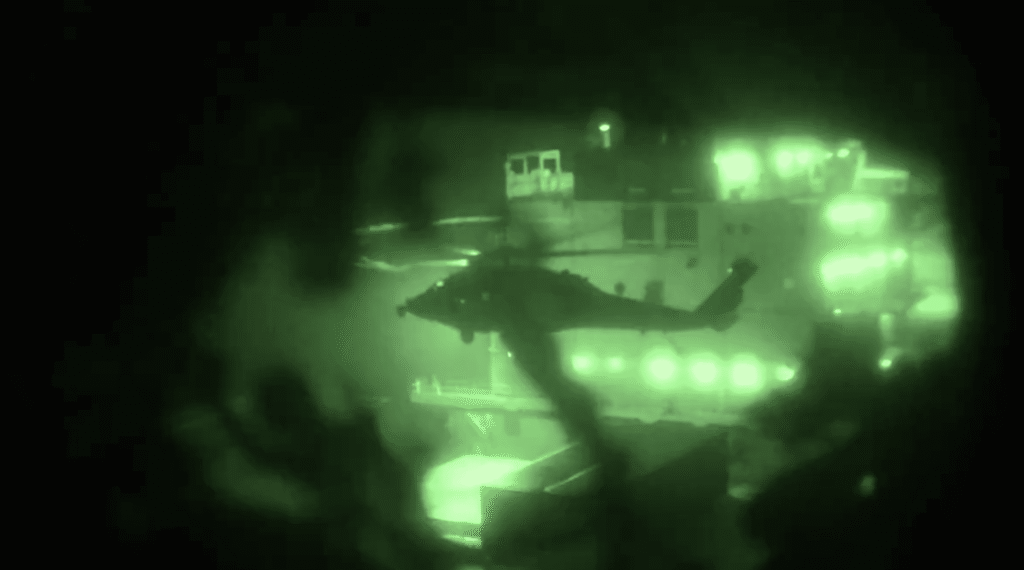
Marines from the amphibious assault ship USS Tripoli (LHA 7) rappel onto M/V Touska. (Source: US Central Command)
Ceasefire At Risk After US Seizes Iranian Ship, Iran Shuns Peace Talks
Reuters
Total Views: 0
April 20, 2026
By Parisa Hafezi and Hatem Maher
DUBAI, April 20 (Reuters) – A ceasefire between the
United States and Iran
appeared in jeopardy on Monday after the U.S. said it had seized an Iranian cargo ship that tried to run its blockade and Tehran vowed to retaliate, refusing for now to join new peace talks.
Iranian Foreign Ministry spokesman Esmaeil Baghaei said Washington has shown it was “not serious” about pursuing the
diplomatic process
and Tehran would not change its clearly stated demands, adding that it did not believe in deadlines or ultimatums when safeguarding national interests.
The U.S.
Cruise Ships Seized Brief Hormuz Reopening To Flee Persian Gulf
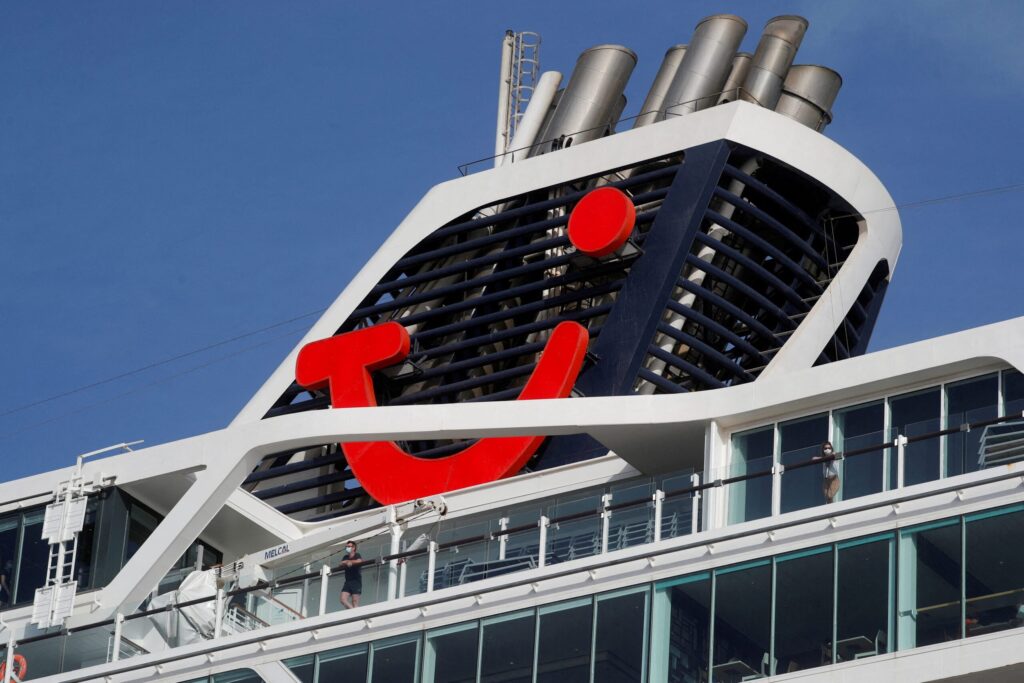
A German tourist stands on the cruise ship ‘Mein Schiff 2’ of TUI Cruises after it was docked at dawn in Malaga port, becoming the first cruise ship carrying tourists to arrive on Spain’s mainland since June 2020, amid the coronavirus disease (COVID-19) pandemic, in Malaga, southern Spain, June 15, 2021. REUTERS/Jon Nazca
Cruise Ships Seized Brief Hormuz Reopening To Flee Persian Gulf
Bloomberg
Total Views: 0
April 19, 2026
By Laura Alviž and Julian Lee
Apr 19, 2026, 11:31 AM (Bloomberg) –Several cruise ships trapped in the Persian Gulf as a result of the Iran war raced to exit through the
Strait of Hormuz over the weekend
, taking advantage of a brief reopening of the passageway.
Travel operator TUI Cruises said on Sunday that two of its vessels — Mein Schiff 4 and Mein Schiff 5 — had “successfully passed” the strait by early afternoon.
“The passage took place based on the relevant
coordination and approvals
from the authorities, in a controlled manner and with careful consideration o
China Deploys Warship For Combat Drills In Western Pacific
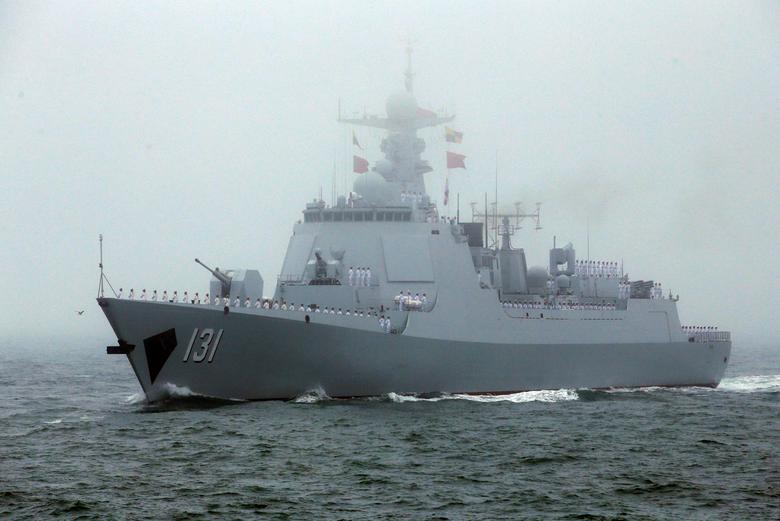
Chinese Navy’s guided missile destroyer Taiyuan takes part in a naval parade. REUTERS/Jason Lee
China Deploys Warship For Combat Drills In Western Pacific
Bloomberg
Total Views: 0
April 19, 2026
By Catherine Wong
Apr 19, 2026 (Bloomberg) –The Chinese People’s Liberation Army is pushing beyond a chain of archipelagos to hold rare military drills that could be seen as a challenge to US dominance in the Western Pacific.
The Chinese navy has dispatched a naval task group led by a
Chinese warship
— the Type 052D destroyer Baotou — to transit through the Yokoate Waterway and conduct training in the Western Pacific Ocean, according to a statement from the PLA’s Eastern Theater Command on Sunday.
The excursion signals
China’s efforts
in breaking through the first island chain, a string of Pacific archipelagos encompassing US allies and partners including
Japan
, Taiwan and the
Philippines
, forming a key defensive line aimed at containing Chinese maritime expansion.
The drills are designed to
France And Greece To Renew Defense Pact For Another Five Years
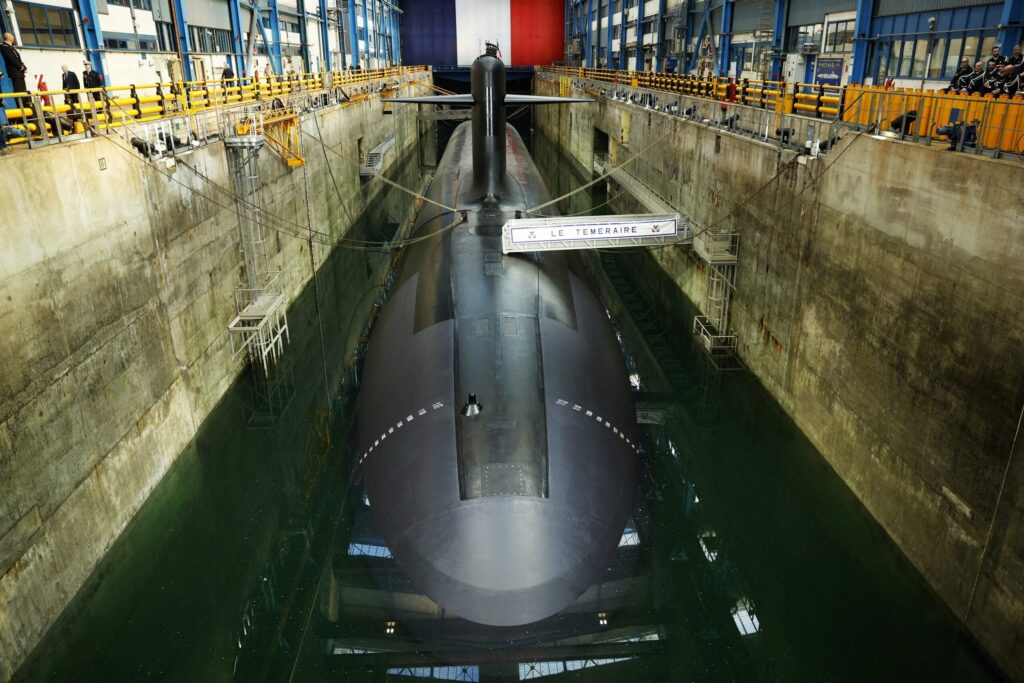
The submarine ‘Le Temeraire’ (The Bold) at the naval nuclear submarine base at Ile Longue in Crozon, France, March 2, 2026. Yoan Valat /Pool via REUTERS
France And Greece To Renew Defense Pact For Another Five Years
Reuters
Total Views: 0
April 19, 2026
ATHENS, April 19 (Reuters) – French President Emmanuel Macron will travel to Greece next week to renew a security pact between the two countries against the backdrop of the
war in Iran
, a Greek government official said on Sunday.
France and Greece,
long-standing NATO allies
, signed a security and defense agreement in 2021, which required them to come to each other’s aid if attacked and included the purchase of three
French-made frigates
and around 24 Dassault-made Rafale fighter jets by Athens.
Macron’s visit to Greece on April 24-25 will renew the agreement for a further five years, with an automatic renewal thereafter, the official said, speaking on condition of anonymity.
Macron and the Greek government will also discuss maritime
Carsten Brzeski: ECB rate hikes? Not so fast

Carsten Brzeski: ECB rate hikes? Not so fast
in
World Economy News
19/04/2026
There is renewed excitement in financial markets about how the ECB might react to the war in the Middle East, with markets now pricing in more than three rate hikes. Needless to say, in such uncertain times, almost anything is possible, and nothing can be entirely ruled out. The real question, however, is whether markets have looked beyond the headlines and taken on board the messages from Wednesday’s ECB Watchers Conference, including remarks by Philip Lane and Christine Lagarde.
At least in my own humble opinion, those remarks point to a somewhat different reaction function than what markets are now pricing.
ING: Our latest views on the major central banks

ING: Our latest views on the major central banks
in
World Economy News
19/04/2026
Federal Reserve
The Fed currently views the oil price surge as a supply shock that it can’t do much about. So far, market and consumer inflation expectations are within tolerable ranges, and there is a sense that inflation is more likely to be transitory this time around than in 2022.
While inflation is likely to test 4%, the Fed’s dual mandate is also an important consideration. Having failed to create jobs in meaningful numbers over the past 18 months, when growth was strong, the risk is that we see weaker US jobs figures on the back of geopolitical, financial-market and economic angst.
Higher energy costs are likely to be demand destructive, given that household spending power is already under pressure and confidence is at such low levels.
Reassessing the short term global aluminium outlook amid rising market risk
Reassessing the short term global aluminium outlook amid rising market risk
in
Commodity News
19/04/2026
The Middle East conflict will have a lasting impact on the global aluminium market. The initial challenge for regional producers is to secure sufficient alumina and other raw materials to maintain production, even at lower utilisation rates. Meanwhile, the closure of the Strait of Hormuz and recent risks to shipping via the Suez Canal have created obstacles to exports.
We recently updated our short-term outlook for global aluminium, using Wood Mackenzie’s Lens Metals & Mining to enhance visibility across aluminium supply, energy exposure and short-term market risk.