Strait of Hormuz: Crude at Sea, Reopening Impact, and Latest Vessel Movements

Strait of Hormuz: Crude at Sea, Reopening Impact, and Latest Vessel Movements
in
International Shipping News
20/04/2026
Based on our vessel and commodity tracking data, we currently estimate that between 15 and 16 million metric tons of crude oil are held aboard vessels within the Persian (Arabian) Gulf.
Applying a typical conversion factor for Middle Eastern crude grades (around 7.2–7.25 barrels per metric ton), this equates to approximately 108–116 million barrels currently at sea within the Gulf.
At pre-conflict throughput levels of 15–20 million barrels per day through the Strait of Hormuz, this seaborne inventory could, in purely mechanical terms, transit the Strait within roughly 6–8 days following a full reopening.
However, physical delivery to end markets in Asia would lag materially. Typical voyage times imply:
~2 weeks to southern China
~3 weeks to northern China and Japan
At the same time, terminal activity would likely resume alongside any reopening, adding fresh loading vo
Europe looks to secure shipping in Strait of Hormuz
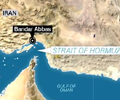
Europe looks to secure shipping in Strait of Hormuz
in
International Shipping News
20/04/2026
France and the United Kingdom have said they are ready to lead a multinational mission to help restore freedom of navigation and trade in the Strait of Hormuz, only to be deployed once peace had been agreed in the region.
But at a meeting of the coalition of nonbelligerent states in Paris on Friday, the mood remained one of caution.
A temporary ceasefire has put fighting between Iran and a US-Israeli coalition on hold until April 22. On Thursday, a 10-day ceasefire was also announced between Israel and Lebanon, the stronghold of Iranian-backed militia Hezbollah.
On Friday, both Iran and the US said the Strait of Hormuz was now “open” to commercial shipping, though the US said its blockade of Iranian ports would remain in place until a peace deal with Tehran was reached. Shortly after, on Saturday, Iran reversed its decision to open the strait, citing the US blockade of its ports.
VLCC Tanker Rates in Mixed Mode
VLCC Tanker Rates in Mixed Mode
in
International Shipping News
20/04/2026
Clean
LR2
The TC1 75kt MEG/Japan index climbed from WS543 to WS589 this week.
A voyage west also saw the TC20 90kt MEG/UK-Continent index rise $362,000 to $10.2 million.
The TC15 80kt Mediterranean/East index was consistently marked around $11.5 million this week, with the corresponding TCE at $113,000/day on Baltic description round trip.
LR1
The TC5 55kt MEG/Japan index has also been assessed up 52 points this week to W621.
A trip west on TC8 65kt MEG/UK-Continent ended the week with the index $485,000 better to $7.55 million.
MR
The TC17 35kt MEG/East Africa index remained unperturbed this week at around the WS705 mark.
On the UK-Continent, MRs this week with freight rates dipped. The TC2 37kt ARA/US-Atlantic Coast index was assessed 33 points lower than last week at WS279 with the Baltic TCE for the round trip now at $30,000/day.
In the US Gulf, MR freight bumped up and down this week. The TC14 38kt US Gulf/U
Ship managers step up with plans for stability
Ship managers step up with plans for stability
in
International Shipping News
20/04/2026
G
eopolitical tensions, market volatility and an approaching influx of newbuild vessels increase attractions of outsourcing management services for a key market constituency, writes Capt. Anurag Mathur, Managing Director, Wallem Commercial Services
Geopolitical volatility has multiplied the challenges for ship owners and the surge in vessel supply approaching through late 2026 and running into 2028 presents a strong opportunity for commercial ship managers to capture market share.
For small and local ship owners with global ambitions, a sound business case is the key ingredient for establishing a competitive edge. However, recent market uncertainties demonstrate that shipping is also increasingly complex and demands responsiveness to rapidly changing scenarios which individual owners access through the operational scale, data-based insight and broad competencies commercial managers bring to the tab
What Does AIS Have to Do with $100+ Oil, $400k/day Tankers, and Gasoline Up 25%+?
What Does AIS Have to Do with $100+ Oil, $400k/day Tankers, and Gasoline Up 25%+?
in
International Shipping News
20/04/2026
At first glance, these outcomes appear to be driven purely by geopolitics and physical disruption. However, a critical, but less visible factor sits underneath: the breakdown of trust in maritime information, specifically AIS.
WHAT IS AIS?
AIS (Automatic Identification System) is a shipborne radio system that continuously broadcasts a vessel’s identity, position, course, voyage details, etc. Under the International Maritime Organization (IMO) and the Safety of Life at Sea (SOLAS) convention, AIS is mandatory for most commercial vessels.
Singapore’s low-sulfur marine fuel arbitrage arrivals from the West to drop further in April
Singapore’s low-sulfur marine fuel arbitrage arrivals from the West to drop further in April
in
International Shipping News
20/04/2026
Singapore’s low sulfur fuel oil arrivals from the Western markets are set to decrease for a third straight month in April, partly weighed down by unviable arbitrage economics due to persistently high freight rates, while the ongoing war in the Middle East continues to block oil inflows from the region.
Singapore, the world’s largest bunkering hub, is now expected to receive around 1.4 million-1.5 million metric tons of LSFO from the West in April, down from about 1.8 million-1.9 million mt in March, multiple Singapore-based traders told Platts, part of S&P Global Energy. The March volume bore the first brunt of disruption after the US and Israel launched strikes on Iran on Feb. 28, which led Tehran to start blocking the Strait of Hormuz.
“April [arbitrage arrivals] are going to be lower.
Xeneta Weekly Ocean Container Shipping Market Update: Spot Rates Are Easing

Xeneta Weekly Ocean Container Shipping Market Update: Spot Rates Are Easing
in
International Shipping News
20/04/2026
The ocean freight market is sending very different signals depending where you look across global supply chains. Spot rates on European trades are easing.
Xeneta analyst insight
Peter Sand, Xeneta Chief Analyst
“The ocean freight market is sending very different signals depending where you look across global supply chains. Spot rates on European trades are easing – Far East to North Europe is down around 4% over the past week, Mediterranean down nearly 5%.
IEA Head Pitches Iraq-Turkey Pipeline To Bypass Hormuz
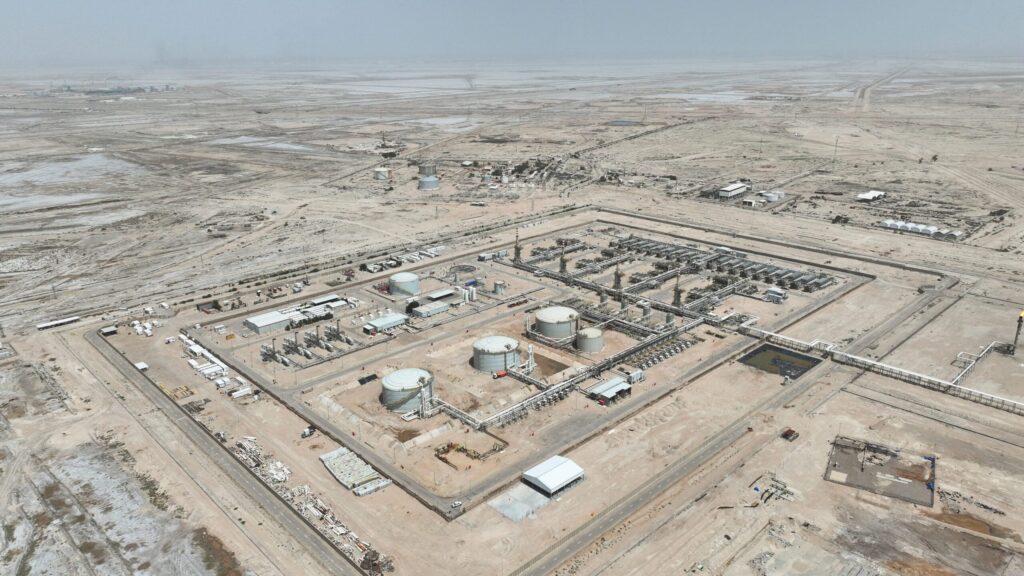
A drone view shows the Zubair Oil Field in Basra, Iraq, April 6, 2026. REUTERS/Mohammed Aty
IEA Head Pitches Iraq-Turkey Pipeline To Bypass Hormuz
Bloomberg
Total Views: 16
April 19, 2026
By Selcan Hacaoglu
Apr 19, 2026 (Bloomberg) –International Energy Agency Executive Director Fatih Birol proposed building a new oil pipeline linking Iraq’s Basra oil fields and Turkey’s Mediterranean oil terminal in Ceyhan to shift the balance away from the
Strait of Hormuz
, according to Turkish newspaper Hürriyet.
“I believe a Basra–Ceyhan
pipeline could be extremely attractive
and a very important project for both Iraq and Turkey, as well as for regional supply security—especially from Europe’s perspective,” Birol said in an interview with Hürriyet, published on Sunday. “I also believe the financing issue can be overcome.
Tanker Market: All Eyes on Hormuz Strait
Tanker Market: All Eyes on Hormuz Strait
in
Hellenic Shipping News
20/04/2026
T
he resumption of crude oil flows and ships from the Strait of Hormuz is the catalyst of any future move in the tanker market, as oil supply is currently being restricted. Meanwhile, just as things started looking rosier by Friday afternoon, Saturday proved to be a different case, with IRGC closing the Strait once again, as long as the US Naval blockade continues. As a result, dozens of ships were forced to turn back, while there were reports of firings against at least two vessels.
In its latest weekly report, shipbroker Gibson said that “given the importance of Middle East Gulf trade flows, everything else pales in comparison.
US Seizes Iranian Cargo Ship, Tehran Vows To Retaliate
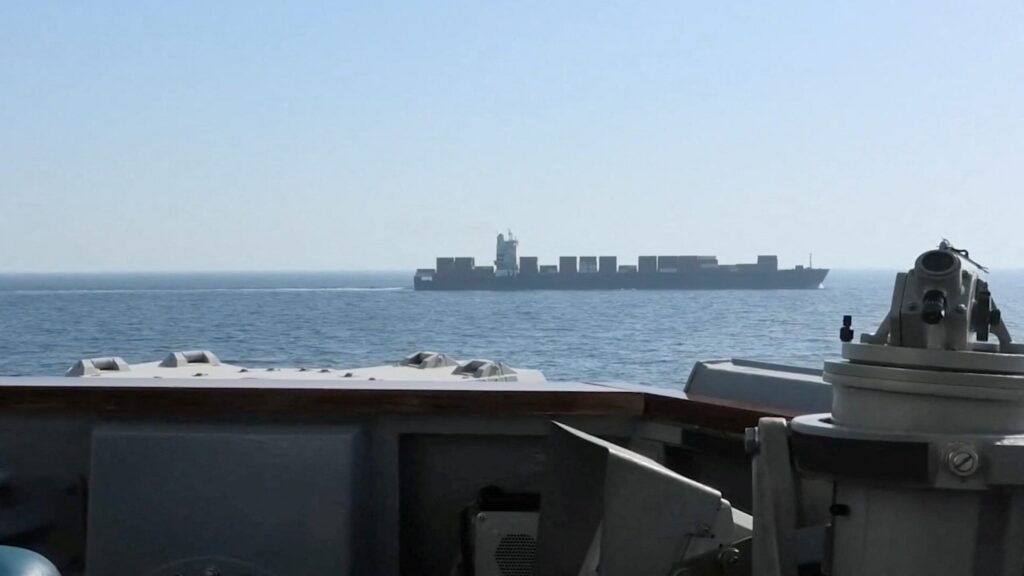
A view of Iranian-flagged cargo ship Touska as USS Spruance (DDG 111) conduts its interception in a location given as the north Arabian Sea, in this screen capture from a video released April 19, 2026. CENTCOM/Handout via REUTERS
US Seizes Iranian Cargo Ship, Tehran Vows To Retaliate
Reuters
Total Views: 0
April 19, 2026
By Daphne Psaledakis, Trevor Hunnicutt and Saad Sayeed
WASHINGTON/ISLAMABAD, April 19 (Reuters) – The United States said on Sunday that it had seized an Iranian cargo ship that
tried to run its blockade
and Iran said it would retaliate, raising the possibility that the ceasefire between the two countries might not last for even the two days it is set to remain in force.
Efforts to build a more lasting peace in the region likewise appeared to be on shaky ground, as Iran said it would not participate in a second round of negotiations that the U.S. had hoped to kick off before the
ceasefire
expires on Tuesday.
A weeks-long
blockade of shipping
that has driven global oil p