Pakistanis among hijacked oil tanker crew face food, water shortages — rights group
Pakistanis among hijacked oil tanker crew face food, water shortages — rights group
in
International Shipping News
05/05/2026
Ten Pakistani nationals among the crew of a hijacked oil tanker are facing worsening shortages of food and drinking water, a rights group said on Monday, raising alarm over their safety as the standoff drags on with no clear resolution in sight.
The oil tanker, MT Honor 25, was seized on April 21 off the coast of Somalia. Its multinational crew includes 10 Pakistanis, four Indonesians, and one national each from India, Sri Lanka and Myanmar.
Ansar Burney Trust International, a Pakistani human rights group that established contact with the Somali pirates who hijacked the vessel, said while the sailors were safe, the humanitarian situation aboard the vessel was deteriorating.
“They are currently stable but if food and medical supplies are not delivered to them promptly, the situation may become difficult,” Ansar Burney, chairman of the Pakistani human rights organ
Usage of Algorithms in Bridge Simulators to Enhance Learning
Usage of Algorithms in Bridge Simulators to Enhance Learning
Sponsored
Total Views: 0
May 5, 2026
By Capt. Abhinandan Prasad MNI
Lecturer – SUNY Maritime College, New York
In recent years, advances in computing — from artificial intelligence to adaptive learning
systems — have shown how algorithms can transform the way we work and more
importantly, the way we learn. In maritime education, where hands-on practice is just as
important as conceptual classroom theory, the potential for algorithms to refine simulator-
based training is exceptionally appealing.
Bridge Resource Management (BRM) courses, guided by STCW requirements and the IMO
Model Course for the same, aim to develop competencies ranging from clear communication
to effective teamwork.
Stop Digitizing the Problem: A Smarter Approach to Maritime Software

Stop Digitizing the Problem: A Smarter Approach to Maritime Software
Posted to
Maritime Reporter
(by
ABS Wavesight
)
on
May 3, 2026
The industry is focused on managing cost and maximizing efficiency, so why do some operators resist adopting technology, asks Captain Steve Bomgardner, CEO, ABS Wavesight
Why do some companies struggle with digital transformation? The answer is pretty clear if we trace the evolution of vessel operations over as little as the last 20 years.
At that time ships were much more heavily-crewed, but many operators progressively slimmed down crew sizes as they found they could manage with fewer seafarers and still remain compliant with minimum manning levels.
There was no digital transformation taking place – the loss of the radio operator in particular seemed to signal the opposite – but the burden of work on the crew continued to increase. A vessel might go from 25 or 30 crew to 15 or 20 which meant those onboard often had to do more work, but more quickly and u
CO₂e emissions in the Rotterdam port area rose in 2025 due to increased electricity generation for Europe
CO₂e emissions in the Rotterdam port area rose in 2025 due to increased electricity generation for Europe
in
Port News
06/05/2026
Greenhouse gas emissions at companies in the port of Rotterdam industrial cluster increased by 2.1 Mton (11%) between 2024 and 2025. This is evident from emission data published by the Netherlands Emissions Authority (NEa). The increase was primarily due to the higher levels of electricity production.
IMO MEPC 84: Revisiting The Net Zero Framework
IMO MEPC 84: Revisiting The Net Zero Framework
in
International Shipping News
06/05/2026
The 84th session of the IMO’s Marine Environment Protection Committee (MEPC 84) held extensive discussions on the Net-Zero Framework (NZF). This was the first opportunity to do so following the adjournment of the extraordinary session in October 2025. Although there were divergent positions on key elements such as establishing a fund, MEPC 84 agreed to continue discussions on a revised framework to ensure consensus.
LR: Orderbook growth and significant developments in reducing methane slip highlight LNG’s role in maritime decarbonization
LR: Orderbook growth and significant developments in reducing methane slip highlight LNG’s role in maritime decarbonization
in
International Shipping News
07/05/2026
A
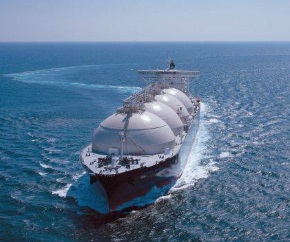
new edition of Fuel for thought: LNG sets out how LNG continues to offer a competitive compliance pathway as EU and IMO regulations tighten.
Lloyd’s Register (LR) has released its latest Fuel for thought: LNG report, offering a refreshed and data-driven assessment of LNG’s evolving role as a mature and significant fuel in transition for the shipping industry.
As of March 2026, the dual-fuel LNG fleet has reached 1,665 vessels, with an additional 982 on order — expanding the gas-fuelled fleet. Although recent developments may have created uncertainty that has impacted investment in alternative fuels, LNG continues to be the key alternative fuel in the existing orderbook.
Growth is being driven particularly by the container sector, which is on course to more than double its LNG capable fleet, while cruise, tanker and PCC/R
Ship Recycling Market Under Pressure

Ship Recycling Market Under Pressure
in
Hellenic Shipping News
07/05/2026
T
he ship recycling markets have been under pressure over the past week, although there have also been signs of slight improvement. In its latest weekly report, Best Oasis (
www.best-oasis.com
), a leading cash buyer of ships said that “the Indian market has experienced downward pressure this week, primarily driven by a sharp depreciation of the INR against the USD, which has forced local price levels lower. Despite weaker underlying fundamentals, ship recycling sentiment remains cautiously positive, with recyclers showing resilience in expectations of near-term improvement.
Cargill Global Head of Operations James Lewis elected as new Sea Cargo Charter Chair

Cargill Global Head of Operations James Lewis elected as new Sea Cargo Charter Chair
in
International Shipping News
07/05/2026
The Sea Cargo Charter (SCC) brought signatories together in Geneva last week for its sixth annual meeting, hosted by Bunge. The meeting marked a forward-looking step, as signatories explored how to build on SCC’s strong foundation and further strengthen its role in advancing climate transparency across the industry.
James Lewis, Global Head of Operations at Cargill, was appointed as the new Chair of the Sea Cargo Charter. Cargill, one of the world’s largest bulk shipping and freight-trading organisations, is a founding signatory of SCC, and two Cargill representatives have previously served in the role of Chair and Vice Chair.
“I am very excited to be taking on the role of Chair of the Sea Cargo Charter, particularly at such a pivotal time for both the Association and the wider industry.
China’s Maritime Gambit Is Backfiring—And Beijing Knows It
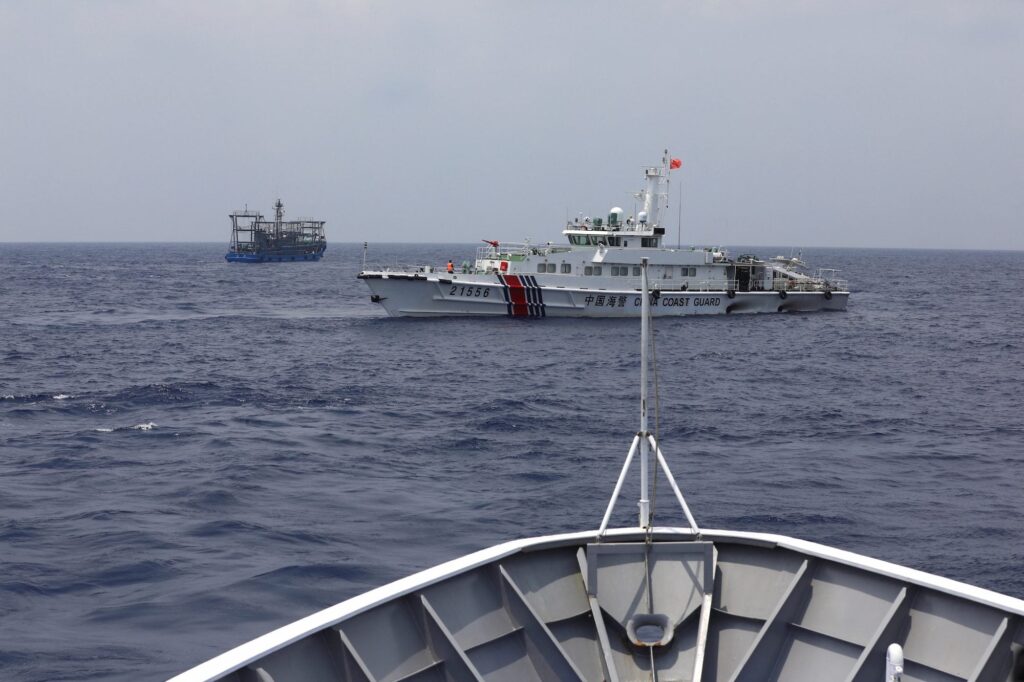
A Chinese Coast Guard ship is seen blocking the direction of a Philippine Coast Guard ship conducting a resupply mission for Filipino troops stationed at a grounded warship in the South China Sea, October 4, 2023. REUTERS/Adrian Portugal
China’s Maritime Gambit Is Backfiring—And Beijing Knows It
Erik Bethel
Total Views: 1317
May 6, 2026
By Erik Bethel – The waters around Japan are writing the future of the Indo-Pacific, and China doesn’t like what they’re saying.
For over a decade, Beijing perfected a simple formula: deploy coast guard armadas, normalize military presence in contested waters, and wait for neighbors to accept the new reality. The strategy conquered the
South China Sea
, where China now operates from artificial islands that didn’t exist fifteen years ago.
But when Beijing turned this maritime playbook against Japan, something went catastrophically wrong.
Shipping decarbonization no longer an ‘if’ – Net Zero Framework endures at MEPC 84
Shipping decarbonization no longer an ‘if’ – Net Zero Framework endures at MEPC 84
in
International Shipping News
07/05/2026
Delegates at the 84th session of IMO’s Marine Environment Protection Committee (MEPC 84) agreed to preserve the Net Zero Framework (NZF) as the central basis for continued negotiations, following intense last-minute debates over the scope and direction of the upcoming intersessional work.
In the final hours of negotiations, member states reached a compromise on the Terms of Reference (TOR) for intersessional discussions ahead of MEPC 85. While the revised text allows for the submission of additional and alternative proposals, it affirms that the NZF remains the primary reference point for advancing the IMO’s mid-term measures. A broad coalition of countries continued to defend the NZF’s core architecture, reinforcing its status as a hard-won multilateral compromise with sustained majority backing across regions.
A compromise timeline was ultimately adopted, with