Fujairah’s fuel oil inventories plunge 24% amid higher exports

Fujairah’s fuel oil inventories plunge 24% amid higher exports
in
International Shipping News
18/04/2026
Fujairah’s residual fuel oil inventories have averaged 24% lower so far in April compared to March, according to the latest data from Fujairah Oil Industry Zone (FOIZ) and S&P Global.
Changes in monthly average Fujairah stocks from March to April (so far):
Heavy distillate and residual stocks down 1.40 million bbls to 4.41 million bbls
Middle distillate stocks down 777,000 bbls to 1.24 million bbls
Heavy distillate and residual fuel oil inventories in Fujairah have dropped below 5 million bbls, reaching multi-year lows.
Fuel oil inflows into the Middle Eastern bunker hub have remained subdued this month, likely reflecting the ongoing Middle East crisis. Imports have averaged 27,000 b/d so far, up slightly from 14,000 b/d in March, according to cargo tracking data from Vortexa. All incoming volumes, for both months, have originated from Iran.
The composition of these imports has rema
Europe and Asia’s response to 60% Middle East crude export collapse reshapes global energy trade
Europe and Asia’s response to 60% Middle East crude export collapse reshapes global energy trade
in
Freight News
18/04/2026
Middle East crude exports collapsed nearly 60% between early February and early March 2026, falling from 18.7 million barrels per day (bpd) to 5.9 million bpd as the Strait of Hormuz faced paralysis, according to Wood Mackenzie’s VesselTracker. This disruption has triggered an unprecedented global energy realignment, with Europe importing record North American crude and refined products while simultaneously exporting surplus gasoline and fuel oil (FO) to Asia.
“This is not a temporary disruption but a structural shift in global energy flows,” said Javier Solis, Analyst at Wood Mackenzie – Maritime Team. “Europe’s diesel deficit and gasoline surplus, combined with Asia’s role as the balancing valve, represent a moving landscape in which pricing and flows remain tightly linked to political decisions rather than purely commercial signals.”
Dual chokepoint paralysis f
Panamax Supply Outlook as Hormuz Faces Strain
Panamax Supply Outlook as Hormuz Faces Strain
in
International Shipping News
18/04/2026
T
he ongoing uncertainty surrounding the Strait of Hormuz is impacting the Panamax dry bulk segment. According to recent media reports, a potential two-week extension to ceasefire discussions is under consideration, although this remains unconfirmed at the official level.
In this context, Signal Ocean data show that the number of Panamax vessels in ballast condition within the Strait has remained stable at around 30 (as shown in the chart below), while laden vessel counts have declined sharply from late-February highs. This divergence points to emerging delays in loading or transit for vessels operating in the region amid ongoing disruptions.
Scheduled Vessel Deliveries Highest since 2014
Panamax vessel deliveries are projected to reach a record high in 2026, with approximately 15 million dwt of new capacity entering the market, up from roughly 10–11 million dwt in the prior year.
India’s oil and gas crisis is a wake-up call for transport electrification
India’s oil and gas crisis is a wake-up call for transport electrification
in
Oil & Companies News
18/04/2026
The conflict in West Asia has once again exposed India’s vulnerability in securing oil and gas supplies. As the world’s third-largest crude oil consumer, India imports nearly 85% of its crude, and prior to the US-Iran war, 45% of those imports transited the Strait of Hormuz. When that chokepoint closed, the consequences were immediate.
A swift, multi-pronged government response helped cushion the worst immediate effects, but it also exposed how much further India needs to go.
Iran Requiring IRGC Coordination for Hormuz Transits
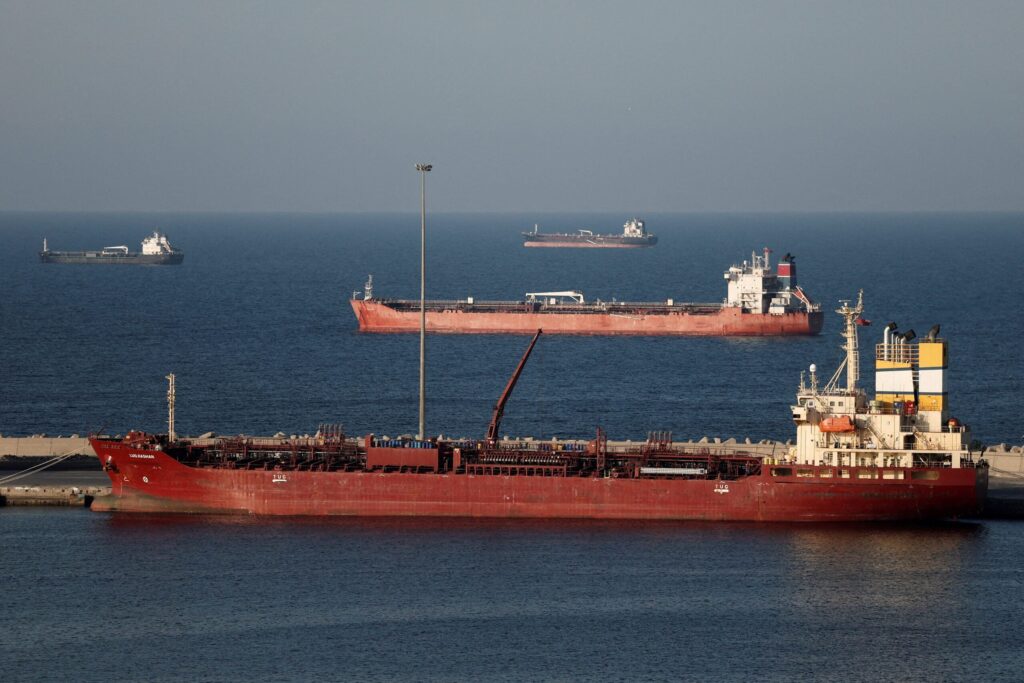
Luojiashan tanker sits anchored in Muscat, as Iran vows to close the Strait of Hormuz, amid the U.S.-Israeli conflict with Iran, in Muscat, Oman, March 7, 2026. REUTERS/Benoit Tessier
Iran Requiring IRGC Coordination for Hormuz Transits
Reuters
Total Views: 0
April 17, 2026
DUBAI, April 17 (Reuters) – All ships can sail through the
Strait of Hormuz
but this needs to be coordinated with Iran’s Islamic Revolutionary GuardCorps (IRGC), a senior Iranian official told Reuters, adding that unfreezing Iranian funds was part of the deal.
Foreign Minister Abbas Araqchi wrote on X that the strait was open after a ceasefire accord was agreed in Lebanon, while U.S. President Donald Trump said he believed a deal to end the Iran war would come “soon,” although the timing remains unclear.
The Iranian official said transits would be restricted to lanes that Iran deemed safe, adding that military vessels were still prohibited from crossing the strait.
It was not immediately clear if this included or ex
Hold the Champagne: Oil Recovery Faces Weeks of Delay as Supply Chain Shocks Deepen
Tankers sail in the Gulf, near the Strait of Hormuz, as seen from northern Ras al-Khaimah, near the border with Oman’s Musandam governance, amid the U.S.-Israeli conflict with Iran, in United Arab Emirates, March 11, 2026. REUTERS/Stringer
Hold the Champagne: Oil Recovery Faces Weeks of Delay as Supply Chain Shocks Deepen
Lori Ann LaRocco
Total Views: 1
April 17, 2026
Hold off on popping the champagne. The oil recovery will take weeks to normalize, and supply chain shocks are already here.
By Lori Ann LaRocco – Don’t be fooled by the latest
declaration that the Strait of Hormuz is “open.”
Many things still need to be put in place for that to truly happen.
Greek Shipowner Sends Biggest Oil Tanker Yet Through Hormuz
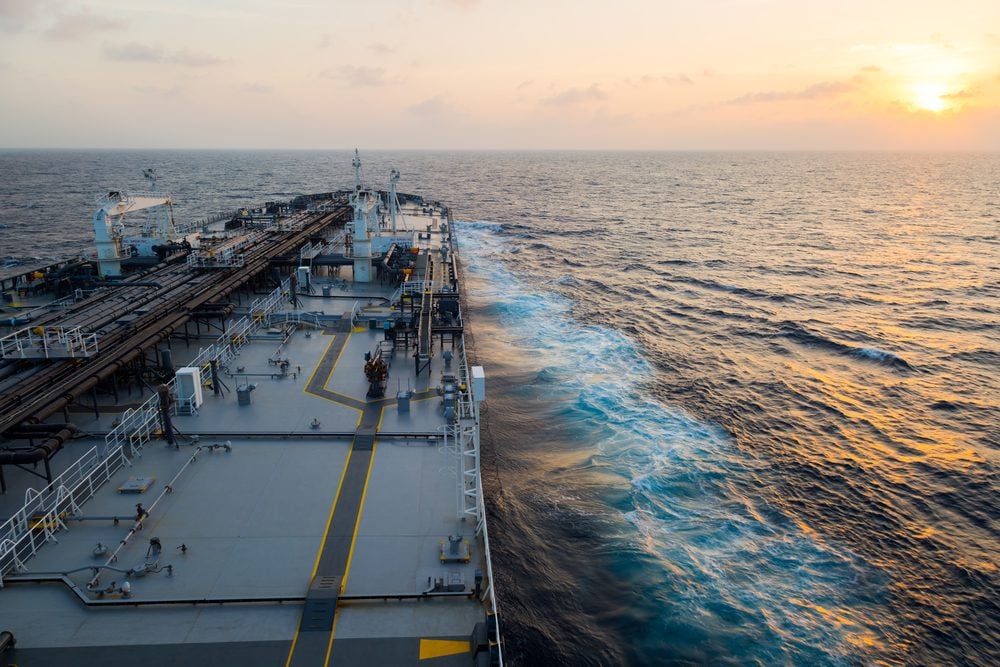
Stock Photo: Anatoly Menzhiliy / Shutterstock
Greek Shipowner Sends Biggest Oil Tanker Yet Through Hormuz
Bloomberg
Total Views: 0
April 17, 2026
(Bloomberg) — A Greek shipowner whose vessels have repeatedly braved the
Strait of Hormuz
during the Iran war sent through its biggest oil supertanker since the start of the conflict.
The
Atokos
, a Very Large Crude Carrier with a transport capacity of about 2 million barrels, signaled its location in the Indian Ocean on Friday, data compiled by Bloomberg show. That would suggest it navigated Hormuz, with its digital transponder off, over the past several days.
The ship is managed by Dynacom Tankers Management Ltd., according to industry databases, and its transit means the firm has now moved about 6.5 million barrels through the strait, making it by far the biggest non-Iranian shipper via the waterway. Dynacom didn’t immediately respond to a request for comment.
Transit via the strait, which handled about 20% of the world’s oil and a similar
Weak Demand and External Shocks Weigh on China Credit

Weak Demand and External Shocks Weigh on China Credit
in
World Economy News
17/04/2026
China’s credit outlook remains constrained by weak domestic demand, while the US-Iran war has added external pressure through weaker energy, trade and global demand, Fitch Ratings says. A ceasefire reduces the risk of a more severe disruption, but slower normalisation in oil flows and regional logistics would intensify credit pressure.
China’s main credit challenge remains persistent weak demand. Fitch’s base case is for 2026 real GDP growth of 4.3%, but an adverse scenario based on a sustained closure of the Strait of Hormuz through end-2Q26 would lower growth to 3.8%.
Korean oil tanker clears Red Sea in first since Hormuz blockade
Korean oil tanker clears Red Sea in first since Hormuz blockade
in
International Shipping News
17/04/2026
A Korean ship carrying crude oil safely passed through the Red Sea, the country’s first successful use of the bypass route to the effectively blockaded Strait of Hormuz, the Ministry of Oceans and Fisheries said Friday.
The vessel loaded crude oil at Yanbu, a Saudi Arabian port on the Red Sea.
While the Red Sea serves as an alternative route to the Strait of Hormuz, the waterway is also threatened by the Iran-backed Yemen Houthis.
The Ministry has been monitoring the situation in real time to ensure the safety of the vessel. It also provided safety information and operated a live communication channel with the ship.
The news signifies a success for the Korean government’s attempt to stabilize crude supply from the Middle East amid continuing uncertainties stemming from the Iran war, according to the Oceans Ministry.
“We will continue to do our utmost so that crude shipments to Kore
Shipping Industry Pushes Back on ‘Open’ Hormuz Narrative as Risks Persist
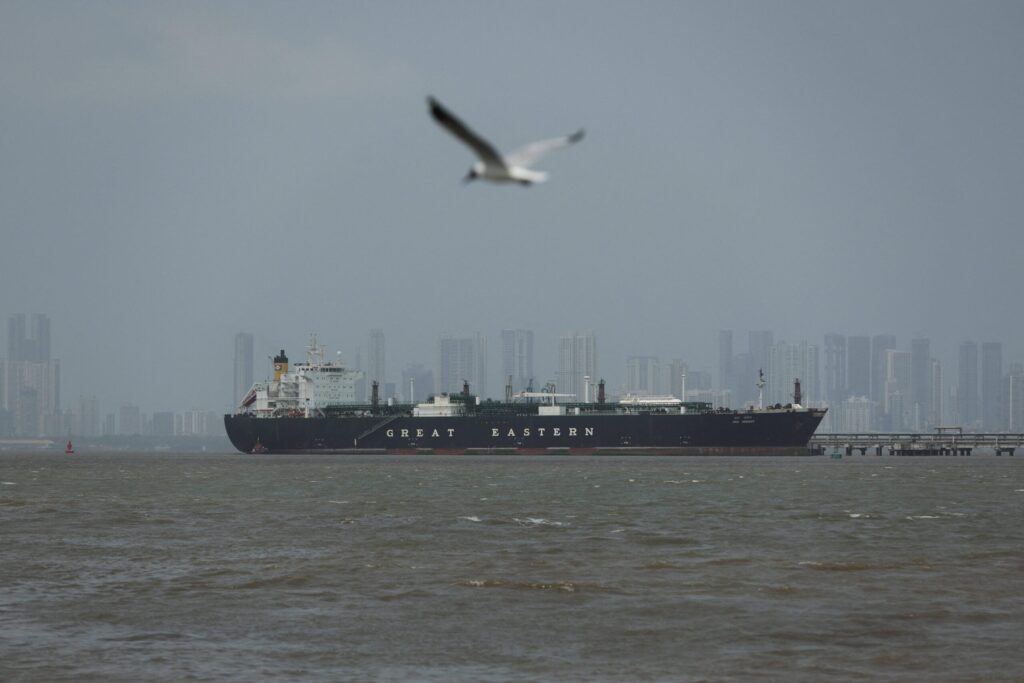
A bird flies near the Jag Vasant vessel transferring LPG at a port after transiting the Strait of Hormuz amid supply disruptions linked to the U.S-Israeli conflict with Iran, in Mumbai, India, April 1, 2026. REUTERS/Francis Mascarenhas
Shipping Industry Pushes Back on ‘Open’ Hormuz Narrative as Risks Persist
Mike Schuler
Total Views: 1
April 17, 2026
The global shipping industry is urging caution after declarations from both Washington and Tehran that the Strait of Hormuz is “open,” warning that conditions on the water remain far from normal.
Today’s messaging that the Strait of Hormuz
originates from Tehran
, which declared the Strait open to commercial shipping explicitly “in line with the ceasefire in Lebanon,” and statements made by President Trump. “[The] Strait of Iran is fully open and ready for full passage,” Trump posted to social media in an apparent reference to Hormuz.
However, Iran’s own statement makes clear that vessels are expected to follow a designated “coordinated ro