Striking the balance between profits and prosperity
Striking the balance between profits and prosperity
in
International Shipping News
12/05/2026
F
or decades, the shipping industry operated as an invisible, ultra-efficient heartbeat of a globalising world, existing on a diet of technical optimisation and predictable, if not always smooth, international relations. But today, that veneer of technical stability is being stripped away. The “golden age” of non-political trade is facing a reckoning, caught between the moral need to decarbonise and a geopolitical landscape that is described by DNV’s director of maritime markets and trade, Jakub Walenkiewicz, as a “law of the jungle”.
In conversation with NYK Group Europe’s managing executive officer and vice chairman of the International Chamber of Shipping, Carl-Johan Hagman, Walenkiewicz discussed the friction between shipping’s historical efficiency and the “turbulent” reality of modern supply chains.
In an episode of DNV’s Market Views, Walenkiewicz noted that while the world requires low
Tanker Market Volatility Could Ramp Up After UAE’s OPEC Exit
Tanker Market Volatility Could Ramp Up After UAE’s OPEC Exit
in
Hellenic Shipping News
12/05/2026
T
he tanker market’s volatility could increase in the long-term, after UAE’s decision to exit OPEC. In its latest weekly report, shipbroker Intermodal said that “in a move that challenges the coherence of one of the most well known cartels in the global economy, the UAE has announced its decision to withdraw from OPEC, ending nearly six decades of membership and removing a key producer from the bloc. Rather than an isolated policy shift, the development underscores a growing misalignment between members that have historically underpinned OPEC’s cohesion, most notably Saudi Arabia and the UAE.
Rebalancing the liquids markets amid SOH disruption
Rebalancing the liquids markets amid SOH disruption
in
International Shipping News
12/05/2026
In this Market Pulse, we analyse how the market is rebalancing after the removal of around 20 Mbd of flows through the Strait of Hormuz. The adjustment is being driven by supply cuts, refinery run reductions, limited rerouting, demand erosion, and inventory drawdowns, but remains incomplete, leaving the system structurally tighter.
Sixty days into the disruption, the Strait of Hormuz continues to operate at minimal capacity, with only limited vessel movement observed. What initially appeared as a logistical bottleneck has now evolved into a prolonged structural dislocation, significantly reducing the flow of crude and refined products from the Middle East Gulf into global markets.
As shown in Table 1, flows through the Strait have collapsed from around 20 Mbd pre-disruption to nearly 1 Mbd in April, highlighting the scale of the supply shock.
The market has responded through a multi-layered ad
Hapag-Lloyd and Kuehne+Nagel take their first joint step towards sustainable ocean shipping

Hapag-Lloyd and Kuehne+Nagel take their first joint step towards sustainable ocean shipping
in
International Shipping News
,
Shipping: Emission Possible
12/05/2026
Hapag-Lloyd and Kuehne+Nagel are further strengthening their long-standing partnership and, for the first time, collaborating on emission-reduced ocean transport solutions. As part of this agreement, Kuehne+Nagel will utilize Hapag-Lloyd’s “Ship Green” product to reduce the carbon footprint of its ocean freight shipments.
The agreement marks an important milestone in the relationship between the two companies. For the period from April to December 2026, approximately 3,300 TEU of cargo transported on the East Asia to North Europe trade lane will be covered under the agreement.
Biofuel Bunker Snapshot: POMEME barge price drop limits Rotterdam B30-VLSFO price gain

Biofuel Bunker Snapshot: POMEME barge price drop limits Rotterdam B30-VLSFO price gain
in
International Shipping News
12/05/2026
Rotterdam and Europe
Rotterdam’s B30-VLSFO (POMEME) price has increased by $35/mt in the last week. The port’s conventional VLSFO price rise has been over twice as steep, at $74/mt.
Prima Markets has assessed a $13/mt drop in its ARA POMEME barge price over the last week, a sign that biofuel feedstock prices have come down.
Rotterdam’s conventional LSMGO price has dipped $69/mt lower, outpacing a $15/mt drop for B30-LSMGO.
Consequently, the B30-LSMGO blend’s price premium over conventional LSMGO has increased from $68/mt to $122/mt during the last week.
Meanwhile, Gibraltar’s B30-VLSFO (UCOME) price has increased by $57/mt, slightly greater than the $42/mt increase in the port’s conventional VLSFO grade.
Biofuel bunker delivieres in both the ARA hub and the Gibraltar Strait require around 7-10 days of lead time, a trader said.
Singapore
Singapore’s B30-VLSFO
Somali piracy adds new strain to global shipping and trade routes
Somali piracy adds new strain to global shipping and trade routes
in
International Shipping News
12/05/2026
It’s been a nightmare two months for global shipping, with the Strait of Hormuz largely shut to commercial traffic and the threat of fresh attacks on vessels in the Red Sea.
Now, a third crisis is brewing — a resurgence in Somali piracy.
Even before the latest escalations between the United States, Israel and Iran, around half the vessels bound for Europe from Asia and the Gulf were bypassing the Red Sea and Suez Canal due to earlier strikes by the Iran-backed Houthis.
Faced with the threat of attacks around the Bab el-Mandeb Strait, the narrow chokepoint between the Red Sea and the Gulf of Aden, major shipping firms opted instead for the long detour around southern Africa.
This diversion adds two to three weeks and thousands of nautical miles to the journey, taking ships right past Somalia’s coastline — the same waters where Somali pirates staged a multiyear campaign of hijackin
Photos Appear to Show Fire Aboard Iranian VLCC Disabled by U.S. Navy
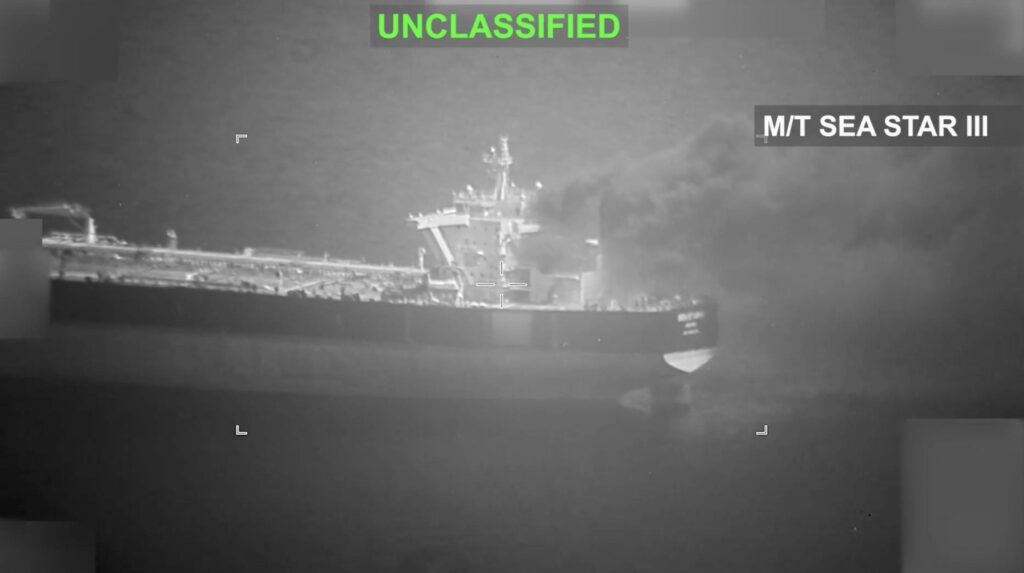
Fire and thick black smoke rise from the Iranian-linked tanker Sea Star III near Bandar-e Jask in the Gulf of Oman after the vessel was reportedly disabled by a U.S. Navy F/A-18 Super Hornet during blockade enforcement operations.
Photos Appear to Show Fire Aboard Iranian VLCC Disabled by U.S. Navy
Mike Schuler
Total Views: 0
May 11, 2026
New images circulating online appear to show damage and an active fire aboard the Iranian tanker
Sea Star III
days after the vessel was
disabled
by a U.S.
Japan’s shipbuilding stumbles as talent gap widens; Korea leverages brainpower

Japan’s shipbuilding stumbles as talent gap widens; Korea leverages brainpower
in
Shipbuilding News
01/05/2026
“There are docks and money, but no one to draw the design blueprints. Because Japan stopped cultivating talent and we seized that opening, Korea’s shipbuilding industry was able to grasp the lead in the global market.”
The assessment by the head of a Korean shipyard starkly shows the painful reality facing Japan’s shipbuilding industry. Japan, which led the global shipbuilding market in the 1980s, has now fallen behind China and Korea, with its share of new orders in the first quarter dropping to the 1% range.
MABUX: Bunker Prices to Keep Rising Next Week

MABUX: Bunker Prices to Keep Rising Next Week
in
International Shipping News
01/05/2026
During the week, the global bunker market resumed a clear upward trajectory, driven by persistent geopolitical tensions in the Middle East and the absence of any visible de-escalation signals. Market sentiment remained firmly supported by supply-side concerns and elevated risk premiums. By the end of the week, the 380 HSFO index increased by USD 26.54, rising from USD 737.03/MT to USD 763.57/MT.
The Mediterranean’s Super-Yacht Summer Is Moving West This Year
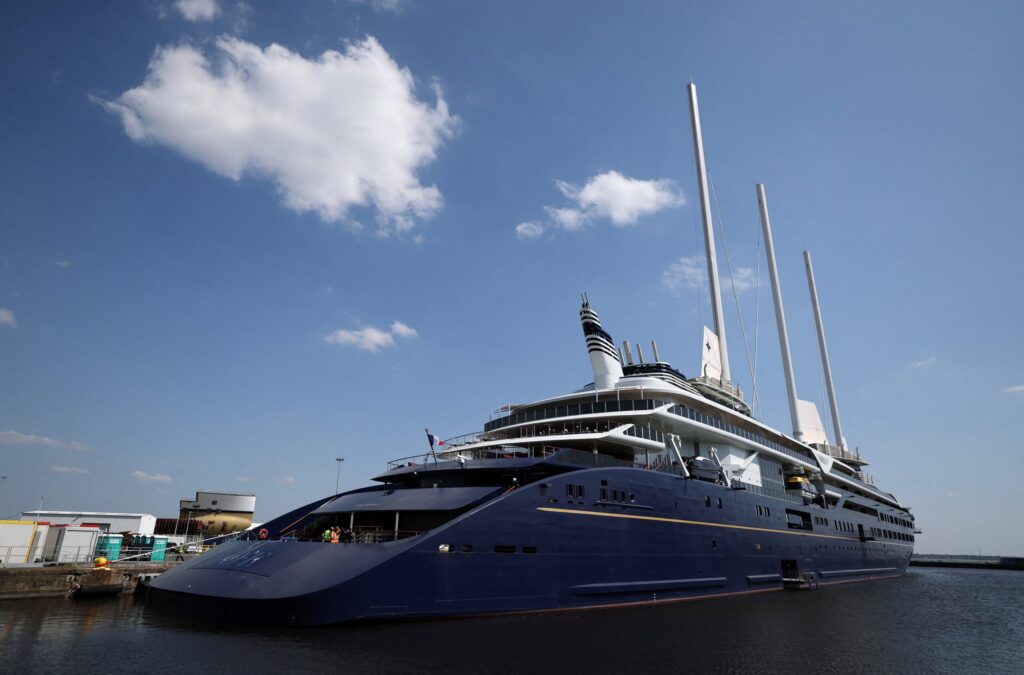
View of the Orient Express Corinthian, a luxury sailing cruise ship, moored at the Chantiers de l’Atlantique shipyard in Saint?Nazaire, France, April 28, 2026. REUTERS/Stephane Mahe
The Mediterranean’s Super-Yacht Summer Is Moving West This Year
Bloomberg
Total Views: 1
May 2, 2026
By Clara Hernanz Lizarraga
May 2, 2026 (Bloomberg) –The summer yachting season is beginning to fill up along the docks of the Mediterranean, just not in the places many in the industry expected a few months ago.
From Barcelona to Mallorca and the French Riviera, marinas are gearing up for a strong season as owners redirect their plans away from the eastern Mediterranean, where tensions linked to the war in Iran have increased security concerns in one of the world’s busiest luxury cruising corridors.
The shift is proving a boon for western Mediterranean ports, while leaving some of the largest yachts effectively stranded in the Gulf.
“France, Italy and Spain will see a very good season,” said Sasha Romashova,